


How to Improve Team Wellbeing Step by Step in the UK
- Tom Ryder Wellbeing

- Dec 3, 2025
- 7 min read

Over half of british workers say mental wellbeing at work affects their daily lives. Whether you manage a small team or a large department, understanding how health and morale influence performance has never been more urgent. This guide shows practical steps to assess, support, and strengthen every layer of your team’s wellbeing by using science-backed tools and the SCALES model, giving you insights tailored for british organisations seeking lasting impact.
Table of Contents
Quick Summary
Essential Insight | Clarification |
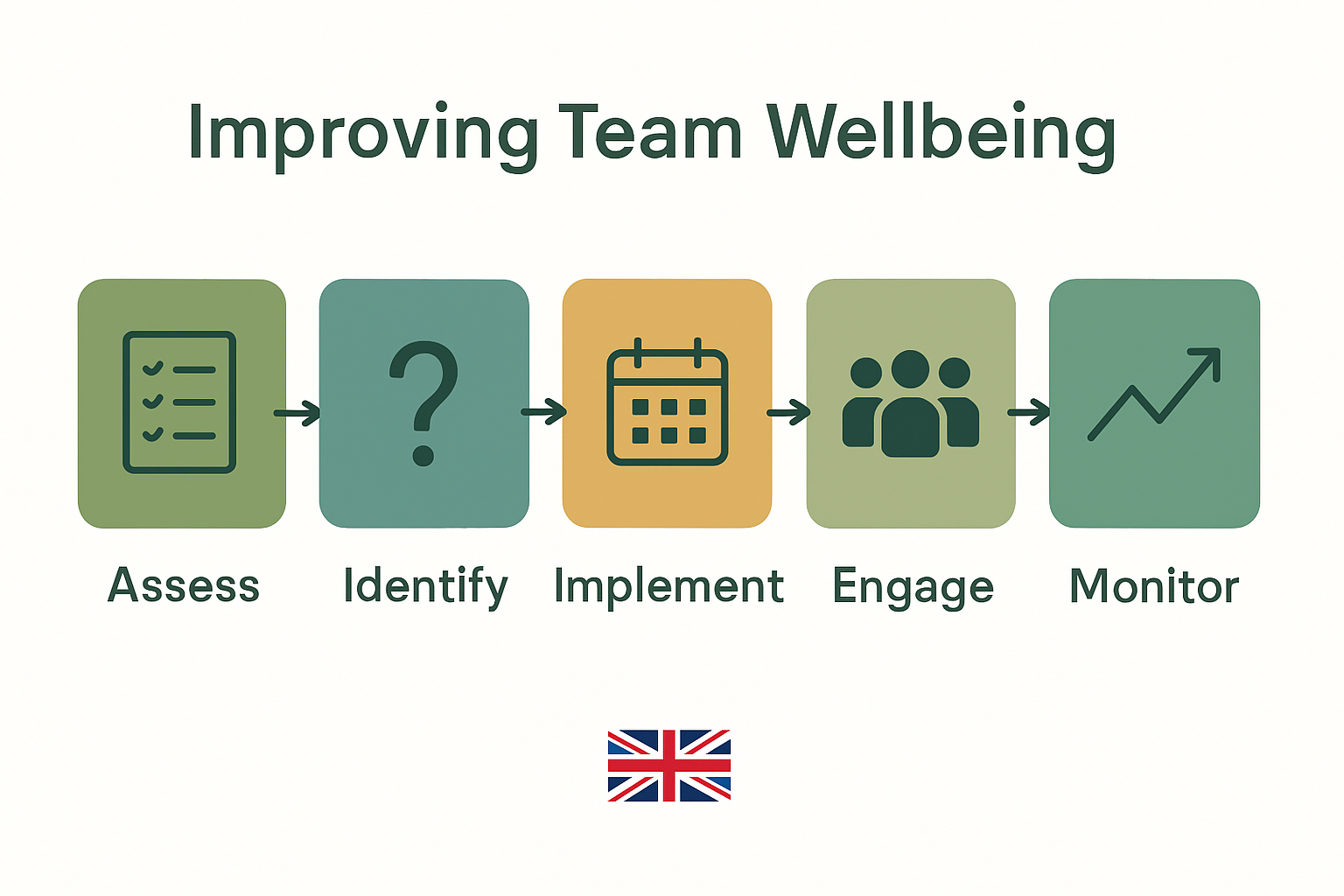
1. Assess wellbeing with SCALES | Evaluate mental health using the SCALES dimensions and validated surveys for comprehensive insights. |
2. Identify stressors systematically | Conduct in-depth staff surveys to discover unique challenges and support needs within the team. |
3. Implement tailored routines | Develop personalised wellbeing strategies that address individual and collective needs across SCALES. |
4. Foster creative engagement | Encourage collaborative activities to enhance creativity and meaningful participation among team members. |
5. Monitor and adapt strategies | Regularly track wellbeing progress and modify strategies based on data to support team growth. |
Step 1: Assess current team wellbeing using SCALES
Assessing your team’s wellbeing requires a systematic yet compassionate approach. In this section, you will learn how to effectively evaluate your team’s mental health and emotional balance using the comprehensive SCALES model.
Begin by distributing the Warwick-Edinburgh Mental Wellbeing Scale to all team members. This validated tool offers a robust framework for understanding individual and collective mental wellness. The questionnaire covers 14 key aspects of mental health, including emotional states, interpersonal relationships, and overall functioning. Ask each team member to complete the survey anonymously to ensure honest responses.
When reviewing the results, look beyond raw numbers. Examine patterns across the six SCALES dimensions sleep, creativity, activity, listening, earth connections, and social interactions. The OxCAP-MH questionnaire can provide additional insights into capability wellbeing, helping you understand how team members experience daily activities and personal safety.
Pro tip: Combine quantitative survey data with qualitative team discussions to get a holistic view of wellbeing.
Your next step will involve interpreting these results and developing targeted strategies to support your team’s mental health and performance.
Step 2: Identify key stressors and support needs
Understanding your team’s unique challenges and emotional landscape is crucial for building a supportive work environment. In this step, you will learn how to systematically identify the underlying stressors and individual support requirements that impact your team’s overall wellbeing.
Start by conducting comprehensive staff surveys that go beyond surface level questions. Design surveys that explore the six SCALES dimensions sleep, creativity, activity, listening, earth connections, and social interactions. Ask open ended questions that invite honest feedback about workplace pressures, personal challenges, and potential support mechanisms. The goal is to create a safe space for team members to share their experiences without fear of judgment.
Analyse the survey results using a structured wellbeing framework that helps you identify patterns and individual needs. Look for recurring themes such as work life balance issues, communication barriers, or specific role related stressors. Consider scheduling confidential one to one discussions to gain deeper insights into each team member’s unique challenges.
Pro tip: Anonymity and psychological safety are key to gathering authentic wellbeing insights.
With these insights gathered, you are now prepared to develop targeted support strategies that address your team’s specific emotional and professional needs.
Step 3: Implement tailored wellbeing routines
Creating personalised wellbeing strategies is crucial for supporting your team’s mental and emotional health. In this step, you will learn how to design and implement routines that address individual and collective needs across the six SCALES dimensions.
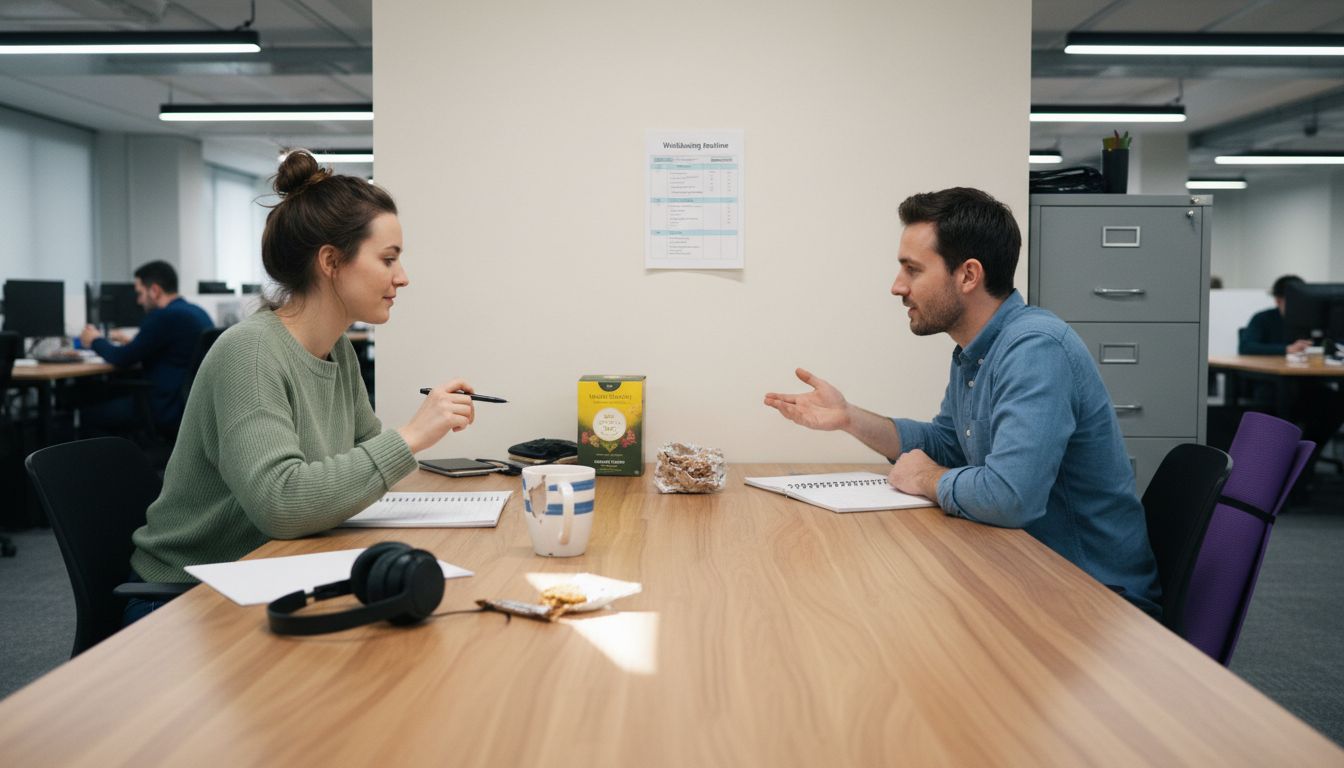
Begin by developing structured support mechanisms that allow team members to engage with their wellbeing proactively. This might include weekly check ins, dedicated reflection time, or personalised goal setting sessions. Focus on creating flexible routines that accommodate different working styles and personal circumstances. Consider introducing activities that promote each SCALES dimension such as guided meditation for sleep, creative workshops for artistic expression, team fitness challenges for physical activity, and listening circles for emotional connection.
Encourage team members to find deeper meaning in their work by connecting individual roles to the broader organizational purpose. This approach helps transform routine tasks into meaningful contributions, boosting motivation and emotional resilience. Develop individual and team objectives that align personal growth with collective goals, ensuring that each team member feels valued and understood.
Pro tip: Regularly review and adapt wellbeing routines based on ongoing feedback and changing team dynamics.
With these tailored routines in place, you are now ready to monitor progress and continue supporting your team’s holistic wellbeing journey.
Step 4: Encourage creative and active engagement
Fostering a dynamic workplace where team members feel empowered to express themselves and participate actively is crucial for sustained wellbeing. In this step, you will learn strategies to create an environment that nurtures creativity and encourages meaningful involvement across your team.
Start by implementing collaborative activities that break traditional workplace boundaries. Design interactive workshops where team members can explore different creative outlets such as group art projects, musical improvisation sessions, or storytelling circles. These activities should span the SCALES dimensions providing opportunities for physical movement, artistic expression, social connection, and personal reflection. Encourage team members to share their unique skills and perspectives, creating a space where diversity of thought and experience is genuinely celebrated.
Help your team connect their individual contributions to the broader organisational purpose. This means designing opportunities for team members to understand how their specific roles contribute to larger goals. Host regular discussions that explore the meaningful impact of your collective work, allowing each person to see themselves as an integral part of the team’s success. Consider introducing mentorship programmes, cross functional projects, and learning exchanges that enable team members to develop new skills and perspectives.
Pro tip: Create a psychological safety net where experimentation and vulnerability are viewed as strengths, not weaknesses.
With these engagement strategies in place, you are now ready to build a more connected, resilient, and motivated team ecosystem.
Step 5: Monitor progress and adjust strategies
Tracking your team’s wellbeing journey is essential for ensuring sustained growth and continuous improvement. In this final step, you will learn how to systematically evaluate your team’s progress and make informed adjustments to your wellbeing strategies.
Develop a comprehensive wellbeing dashboard that captures key indicators across the SCALES dimensions. This might include quantitative metrics like participation rates in team activities, survey response scores, and qualitative feedback from regular check ins. Schedule quarterly review sessions where you collectively analyse these insights, celebrating successes and identifying areas that need recalibration. Pay close attention to patterns in team energy, engagement levels, and individual feedback to understand the evolving dynamics of your team’s emotional landscape.
Use data driven insights to refine your approach with flexibility and compassion. This means being willing to experiment with new strategies, pilot different engagement methods, and quickly adapt when something is not working. Create an environment of psychological safety where team members feel comfortable sharing honest feedback about what supports their wellbeing and what feels challenging. Remember that wellbeing is not a destination but a continuous journey of learning, adjusting, and growing together.
Pro tip: Treat your wellbeing strategy like a living document that evolves with your team.
By maintaining this responsive and attentive approach, you will build a resilient team culture that prioritises mental health and collective flourishing.
Enhance Your Team’s Wellbeing with Practical SCALES-Based Coaching
The article highlights the challenge of improving team wellbeing through targeted steps like assessing stressors, implementing tailored routines, and encouraging creative and active engagement. If your team is struggling with issues such as stress, low energy, or difficulty balancing work and personal life these are clear signals that one or more aspects of SCALES — Sleep, Creativity, Activity, Listening, Earth, Social — may be out of tune. Understanding this dynamic is the first step towards restoring balance and resilience.
At Tom Ryder Wellbeing, we specialise in coaching that helps individuals and organisations apply the SCALES model in practical ways. Tom Ryder’s lived experience alongside NHS-approved training ensures that coaching sessions are grounded, honest, and focused on achievable steps. Whether you want to build personalised wellbeing routines or foster a creative and connected team culture the comprehensive SCALES Programme offers structured guidance to support lasting change. Act now to create a supportive environment where your team can thrive by exploring how tailored health and mindset coaching can transform your workplace wellbeing.
Frequently Asked Questions
How can I assess my team’s wellbeing effectively?
Begin by distributing the Warwick-Edinburgh Mental Wellbeing Scale to your team. Ensure the questionnaire is completed anonymously to promote honest responses, then analyse the results across the SCALES dimensions to identify areas of improvement.
What steps should I take to identify stressors in my team?
Conduct comprehensive staff surveys that explore the SCALES dimensions in-depth. Use open-ended questions to encourage team members to share their experiences and potential support needs without fear of judgement.
How can I implement tailored wellbeing routines for my team?
Create structured support mechanisms such as weekly check-ins and personalised goal-setting sessions that cater to individual needs. Incorporate activities that promote each SCALES dimension, aiming for regular updates based on feedback within 30 days.
What activities can boost creativity and engagement among team members?
Implement collaborative workshops like group art projects or storytelling circles to encourage self-expression and connection. Encourage team members to contribute ideas and talents, fostering a dynamic environment where participation is valued.
How should I monitor and evaluate my team’s wellbeing strategies?
Develop a comprehensive wellbeing dashboard to track key indicators such as participation rates and survey scores. Schedule quarterly reviews to celebrate successes and adapt strategies based on the collected data and team feedback.
How can I ensure psychological safety when discussing wellbeing?
Create an environment where team members feel safe to speak openly without judgement. Regularly encourage feedback and reassure team members that their input is vital for improving the wellbeing strategies in place.
Comments