


Workplace Wellbeing Workflow for Stress-Free Success


Workdays can start to feel overwhelming when burnout creeps in and work-life boundaries blur, especially for professionals and creatives across Essex. Addressing workplace wellbeing is not just about ticking boxes, but about developing a genuine, evidence-based approach to creating environments where people thrive. By following proven steps like honest assessment and the SCALES Model for daily wellbeing, you can find practical strategies that nurture mental health and restore balance.
Table of Contents
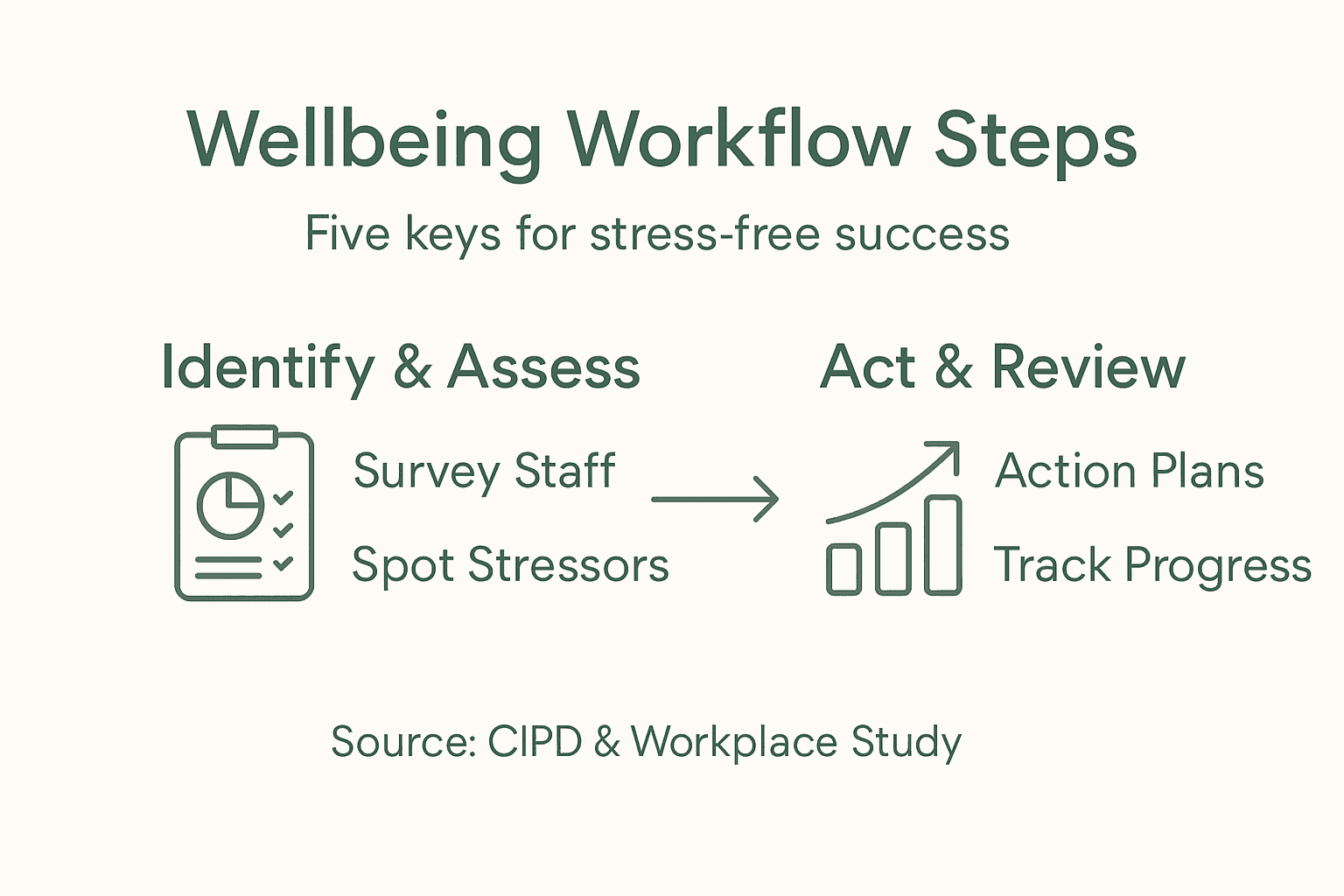
Quick Summary
Key Takeaway | Explanation |
1. Conduct comprehensive assessments | Use surveys, interviews, and health data to gain insights into employee wellbeing. |
2. Identify workplace stressors | Assess workload, communication patterns, and management practices to understand barriers. |
3. Create personalised action plans | Develop tailored wellbeing strategies through collaboration with employees for better effectiveness. |
4. Integrate SCALES Model daily | Embed the SCALES dimensions into daily routines to promote holistic employee wellbeing. |
5. Monitor and adjust interventions | Regularly track and evaluate the effectiveness of wellbeing initiatives to make necessary improvements. |
Step 1: Assess Current Workplace Wellbeing Needs
Successfully transforming workplace wellbeing requires a systematic approach to understanding your organisation’s current state. This initial assessment helps you pinpoint precise areas where targeted interventions can make significant improvements.
Beginning your workplace wellbeing assessment involves gathering comprehensive insights through multiple methods. The University of Oxford Wellbeing Research Centre recommends focusing on three critical subjective components: job satisfaction, emotional experience, and meaningfulness of work.
To conduct a thorough assessment, consider these strategic steps:
Distribute anonymous employee surveys covering psychological and emotional workplace experiences
Conduct confidential interviews to gather qualitative insights
Review existing workplace health data including sick leave, productivity metrics, and staff turnover rates
Analyse current workplace culture and communication patterns
Evaluate existing wellbeing programmes and their perceived effectiveness
These methods will help you develop a nuanced understanding of your organisation’s wellbeing landscape. The World Wellbeing Movement’s playbook suggests simplifying wellbeing drivers into six key categories, enabling targeted interventions that address specific organisational needs.
Here’s a summary of workplace wellbeing assessment methods and their unique benefits:
Assessment Method | Purpose | Business Impact |
Anonymous surveys | Gather broad employee insights | Highlights overall trends |
Confidential interviews | Uncover nuanced individual perspectives | Reveals hidden issues |
Health data analysis | Review objective workforce metrics | Quantifies intervention need |
Culture and communication review | Gauge team dynamics and values | Identifies systemic challenges |
Programme effectiveness evaluation | Assess success of current initiatives | Informs future strategy |
Effective workplace wellbeing assessment requires honest, comprehensive data collection without judgement or preconceived expectations.
Professional recommendation: Always ensure complete anonymity and psychological safety when collecting workplace wellbeing data to encourage genuine, unfiltered feedback.
Step 2: Identify Stressors and Wellbeing Barriers
Identifying workplace stressors and wellbeing barriers is a critical step in developing a comprehensive approach to employee mental health. This process requires a nuanced understanding of the complex factors that impact psychological safety and organisational performance.
The CIPD Health and Wellbeing at Work report highlights key workplace stressors that significantly impact employee wellbeing. Systematic identification involves a multi-dimensional approach to understanding potential barriers:
Analyse workload distribution and perceived pressure across different roles
Evaluate communication patterns and potential interpersonal conflict sources
Review management practices that might contribute to employee stress
Assess work environment including physical and psychological safety
Examine current support mechanisms for mental health and wellbeing
The World Economic Forum’s research emphasises the importance of a multistakeholder approach when identifying workplace mental health challenges. This means engaging employees at all levels to gather comprehensive insights into potential stressors and barriers.
Effective stress identification requires creating a culture of openness where employees feel safe sharing their genuine experiences without fear of repercussion.
Professional recommendation: Develop anonymous feedback mechanisms that encourage honest and detailed reporting of workplace stressors to ensure you capture nuanced insights into organisational wellbeing challenges.
Step 3: Develop Personalised Wellbeing Action Plans
Creating personalised wellbeing action plans transforms generic workplace strategies into targeted interventions that genuinely support individual employee needs. These tailored approaches recognise that each person’s wellbeing journey is unique and requires a nuanced, compassionate strategy.
The Work Wellbeing Playbook provides evidence-based guidance for developing comprehensive wellbeing interventions across multiple levels. When crafting personalised action plans, consider these strategic elements:
Collaborate directly with individual employees to understand their specific challenges
Map unique stressors affecting each team member’s psychological and professional experience
Establish realistic and measurable wellbeing goals
Design flexible intervention strategies that adapt to changing personal circumstances
Create consistent check-in and review mechanisms
The CIPD guidance emphasises integrating wellbeing strategies into broader organisational practices, ensuring that personalised plans align with overall workplace culture and support systems.
Effective personalised wellbeing action plans are living documents that evolve with the individual, not static checklists.
Professional recommendation: Treat each wellbeing action plan as a collaborative partnership, encouraging open dialogue and continuous refinement of strategies.

Step 4: Integrate SCALES Model Into Daily Routines
Integrating the SCALES Model into daily workplace routines transforms wellbeing from an abstract concept into a practical, actionable framework. By systematically embedding these six core dimensions into everyday work practices, you create a holistic approach to maintaining psychological and professional balance.
The Work Wellbeing Playbook advocates for systematic integration of wellbeing interventions into daily workflows. Here’s how to incorporate each SCALES dimension:
Sleep: Schedule regular sleep hygiene breaks and establish consistent rest periods
Creative: Introduce brief creative expression activities during work hours
Active: Implement movement breaks and encourage physical activity
Listen: Create spaces for emotional check-ins and self-reflection
Earth: Design workplace environments that support grounding and presence
Social: Foster connection through structured and informal team interactions
The CIPD guidance emphasises embedding wellbeing strategies through leadership commitment and cultural transformation.
Below is an overview of the SCALES Model dimensions and how each supports workplace wellbeing:
SCALES Dimension | Focus Area | Expected Benefit |
Sleep | Rest and recovery support | Reduces fatigue, sharpens focus |
Creative | Self-expression at work | Boosts engagement and morale |
Active | Encourages movement | Improves physical health |
Listen | Emotional self-check-ins | Enhances psychological safety |
Earth | Connection to environment | Increases grounding and calm |
Social | Builds team relationships | Strengthens workplace bonds |
Successful SCALES integration is not about perfection, but consistent, compassionate implementation.
Professional recommendation: Start small by introducing one SCALES dimension at a time, allowing natural adaptation and preventing overwhelming workplace changes.
Step 5: Monitor Progress and Adjust Workflows
Monitoring workplace wellbeing requires a dynamic, compassionate approach that transforms data into meaningful action. By establishing robust tracking mechanisms, you create opportunities for continuous improvement and responsive organisational support.
What Works Wellbeing guidance emphasises collecting meaningful data to evaluate intervention effectiveness. Consider these strategic monitoring approaches:
Implement regular employee wellbeing surveys with consistent, comparable metrics
Conduct quarterly individual and team wellbeing reviews
Track key performance indicators related to mental health and productivity
Create confidential feedback channels for ongoing insights
Use qualitative and quantitative measurement tools
The CIPD report underscores the importance of proactive strategy adjustment based on collected evidence, ensuring interventions remain relevant and impactful.
Effective workflow monitoring is not about surveillance, but creating supportive environments that evolve with employee needs.
Professional recommendation: Design your monitoring approach as a collaborative process, inviting employee perspectives to shape assessment methods and demonstrate genuine commitment to their wellbeing.
Transform Your Workplace Wellbeing with Practical Coaching Support
The “Workplace Wellbeing Workflow for Stress-Free Success” article highlights common challenges such as constant stress, feeling overwhelmed by workload, and difficulty maintaining balance in busy work environments. If your organisation seeks to move beyond generic wellbeing initiatives and wants personalised, practical approaches that address these issues, Tom Ryder Wellbeing offers tailored coaching solutions rooted in proven frameworks like the SCALES Model. This model addresses core areas including sleep, creativity, movement, emotional awareness, grounding, and social connection – exactly what the article emphasises as key to embedding wellness into daily routines.
Whether you represent a workplace aiming to foster a supportive culture or an individual trying to manage stress and build resilience, Stress Management Coaching and Emotional Resilience Coaching provide actionable tools grounded in real-life experience and NHS-approved training. Do not wait for burnout to take hold. Start working with coaching that helps you pinpoint stressors, develop personalised wellbeing plans, and maintain progress through compassionate, ongoing support. Explore how you or your organisation can benefit by visiting Tom Ryder Wellbeing today.
Frequently Asked Questions
How can I assess my organisation’s current workplace wellbeing needs?
Begin by gathering insights through anonymous employee surveys and confidential interviews to understand psychological and emotional experiences. Review existing workplace health data and evaluate current wellbeing programmes to pinpoint areas for improvement.
What are effective ways to identify workplace stressors and wellbeing barriers?
Analyse workload distribution and evaluate communication patterns to uncover potential stress sources. Create a culture of openness by developing anonymous feedback mechanisms to allow employees to share their experiences without fear of repercussion.
How can I create personalised wellbeing action plans for employees?
Collaborate directly with individual employees to understand their unique wellbeing challenges and establish measurable goals. Tailor intervention strategies to adapt to changing needs and ensure regular check-ins to review progress.
What steps should I take to integrate the SCALES Model into my workplace routines?
Start by introducing one dimension of the SCALES Model at a time, such as scheduling regular sleep hygiene breaks. This gradual approach enhances adaptation and ensures consistent application across the organisation, ultimately fostering a healthier workplace.
How can I monitor the progress of workplace wellbeing initiatives?
Implement regular employee wellbeing surveys and quarterly reviews to assess the effectiveness of your initiatives. Track key performance indicators related to mental health and productivity to make informed adjustments and improve overall wellbeing.
What is the importance of creating a culture of openness in workplace wellbeing?
Cultivating a culture of openness encourages employees to share their genuine experiences and challenges without fear of repercussions. This approach facilitates a better understanding of stressors and wellbeing barriers, leading to more effective interventions.
Recommended
Comments