


Improve Wellbeing Workflow: Step-by-Step Guide for Balance


Over half of British adults report feeling stress that affects their daily lives. In a fast-paced world, finding effective ways to support emotional and mental wellbeing has never been more urgent. If you want practical strategies rooted in trusted British guidance, this step-by-step approach offers clear paths for assessing your wellbeing, identifying key areas for improvement, and developing routines that genuinely help you thrive.
Table of Contents
Quick Summary
Key Insight | Explanation |
1. Assess Your Current Wellbeing | Document daily experiences across SCALES model areas to create an honest awareness of your mental and emotional state. |
2. Identify Areas Needing Balance | Use a rating system to identify SCALES domains that require attention, helping to focus your personal development strategies. |
3. Develop Personalised Routines | Create tailored wellbeing routines, focusing on activities you enjoy, to enhance your mental and emotional health sustainably. |
4. Integrate Creative and Physical Practices | Seamlessly weave creative and physical activities into your daily life to improve overall wellbeing and emotional regulation. |
5. Monitor Progress and Adjust Strategies | Keep a weekly journal to track your wellbeing activities and feelings, allowing for thoughtful adjustments for continuous improvement. |
Step 1: Assess Your Current Wellbeing Workflow
This step is about creating a clear snapshot of your current mental and emotional state, helping you understand where your energy flows and where it might be getting stuck. Think of it like a personal health audit that reveals your strengths and potential areas for improvement.
To start, grab a notebook or open a digital document where you can honestly track your daily experiences. The NHS has developed innovative tools like the Personal Wellbeing Online Diary that can inspire your approach. Begin by documenting your typical day across six key areas within the SCALES model sleep, creative activities, physical activity, emotional listening, environmental grounding, and social connections.
For each area, ask yourself reflective questions. How many hours are you sleeping? What creative outlets are you engaging with? Are you moving your body regularly? Are you paying attention to your emotional signals? How connected do you feel to your environment and social network? Write down specific observations without judgment. The goal is not perfection but honest awareness.
Pro Tip: Be brutally honest with yourself. This assessment is for your eyes only and forms the foundation of meaningful personal growth.
By completing this assessment, you will have a baseline understanding of your current wellbeing workflow. This provides the essential groundwork for developing targeted strategies to enhance your mental and emotional balance in the upcoming steps.
Step 2: Identify Core Areas Needing Balance
In this step, you will dive deeper into understanding which specific aspects of your life require attention and recalibration. The goal is to transform your general assessment into targeted insights that can guide meaningful personal development.

Leveraging the UK Measures of National Well-being framework, which outlines ten comprehensive topic areas, we will explore how these broader categories translate into your personal experience. Focus on mapping your current state against key dimensions such as personal well-being, relationships, health, and emotional resilience.
To effectively identify core areas needing balance, create a simple grid or chart dividing your life into the SCALES model domains. For each domain, rate your current satisfaction and energy levels on a scale from 1 to 10. Pay special attention to areas where positive self-perception and mood might be feeling challenged. Are there specific domains where you consistently score low? Where do you feel most drained or disconnected?
Pro Tip: Be compassionate with yourself. This assessment is about understanding and growth, not self-criticism.
By pinpointing these areas, you are setting the foundation for targeted interventions and personalised strategies that will help restore balance and enhance your overall well-being.
Step 3: Develop Personalised Wellbeing Routines
This step transforms your insights into actionable strategies that will help you systematically improve your overall well-being. You will craft tailored routines that feel authentic and sustainable, addressing the specific areas you have already identified as needing attention.
Drawing inspiration from workplace wellbeing recommendations, start by selecting targeted activities for each SCALES domain. For sleep, this might mean establishing a consistent bedtime routine. For creative outlets, schedule weekly time for a hobby that brings you joy. In the active domain, plan physical activities that you genuinely enjoy rather than exercises that feel like a chore.
The key is creating routines that feel less like obligations and more like nurturing practices. A proactive approach emphasizes shared responsibility for your mental health. This means being intentional about your choices while remaining flexible and kind to yourself.
Pro Tip: Start small. Choose 1-2 micro-habits in each domain rather than attempting dramatic overhauls.
By developing personalised wellbeing routines, you are creating a sustainable framework for ongoing personal growth and emotional resilience.
Step 4: Integrate Creative and Physical Practices
This step focuses on weaving creative expression and physical movement into your daily routine as powerful tools for enhancing mental well-being and personal resilience. You will discover ways to transform these practices from occasional activities into meaningful, sustainable habits that support your overall wellness.
Inspired by workplace wellbeing recommendations, begin by exploring creative and physical practices that genuinely resonate with you. This might mean trying a new art form like watercolour painting, sketching during lunch breaks, or experimenting with musical instruments. For physical practices, consider activities that feel more like play than exercise walking in nature, dancing in your living room, gentle yoga, or cycling through local parks.
A proactive approach to mental health encourages integrating these practices seamlessly into your daily rhythm. Aim to connect your creative and physical activities with your existing routines rather than treating them as additional tasks. Perhaps you sketch while listening to a podcast, or practice mindful walking during your commute.
Pro Tip: Experiment and stay playful. There are no rigid rules in creative and physical practices.
By integrating these practices, you are nurturing a more holistic approach to your well-being, allowing creativity and movement to become natural sources of joy and emotional regulation.
Step 5: Monitor Progress and Adjust Strategies
This critical step transforms your wellbeing journey from a static plan into a dynamic, responsive process of continuous improvement. You will learn how to track your progress thoughtfully, celebrate small wins, and make intelligent adjustments that keep your personal growth momentum moving forward.
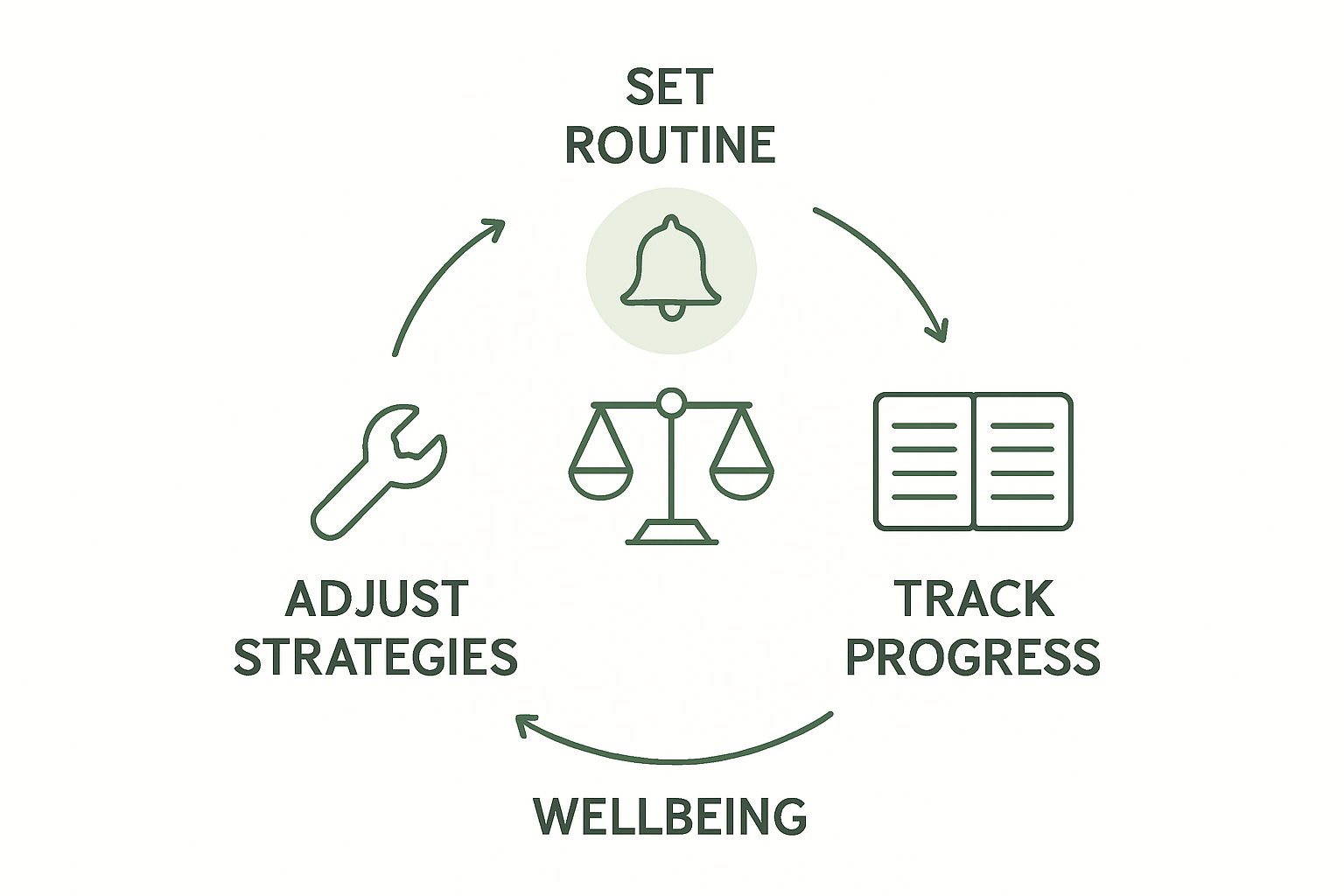
NHS guidance on evaluating health and wellbeing programmes emphasises the importance of developing a personal tracking system. Create a simple weekly reflection journal where you document your experiences across the SCALES domains. Note not just what activities you completed, but how they made you feel. Were your creative practices genuinely energising? Did your physical activities improve your mood? Pay attention to subtle shifts and patterns emerging over time.
Integrated Care System diagnostic approaches suggest regular reassessment of your strategies. Every month, review your journal and identify which practices are working well and which might need modification. Be prepared to experiment and pivot. If morning meditation feels forced, try evening reflection. If group exercise classes feel intimidating, switch to solo walks.
Pro Tip: Flexibility is strength. Your wellbeing strategy should serve you, not constrain you.
By consistently monitoring and adjusting your approach, you are building a personalised, resilient framework for ongoing emotional and mental well-being.
Achieve Lasting Wellbeing Balance with Expert Coaching
The article highlights the common struggle of feeling off balance across key areas like sleep, creativity, activity, and social connection. If you find yourself overwhelmed by stress, low energy, or difficulty maintaining healthy routines the SCALES model can help you regain control. At Tom Ryder Wellbeing, we specialise in turning these challenges into clear, manageable steps through tailored coaching and evidence-based strategies.
Explore how our unique approach rooted in the SCALES framework supports mental and emotional balance at Tom Ryder Wellbeing. Whether you want to start with 1:1 coaching, join the eight-session SCALES Programme, or engage with focused sessions on stress and work–life balance, we provide practical tools to help you create personalised wellbeing routines that stick. Don’t wait to transform your daily experience and build resilience. Take the first step today by visiting our homepage and see how you can begin your journey towards a more balanced life.
Frequently Asked Questions
How can I assess my current wellbeing workflow?
To assess your current wellbeing workflow, document your daily experiences across key areas such as sleep, creative activities, physical activity, emotional listening, environmental grounding, and social connections. Capture your observations without judgement to gain honest awareness of your mental and emotional state.
What specific areas should I focus on to improve my wellbeing?
Identify core areas needing balance by creating a grid for the SCALES model domains and rating your satisfaction and energy levels from 1 to 10 for each domain. Pay special attention to areas where you feel drained or disconnected, allowing you to target specific aspects for improvement.
How do I develop personalised wellbeing routines?
To develop personalised wellbeing routines, select 1-2 activities from each SCALES domain that resonate with you, such as a consistent bedtime routine for sleep or scheduling time for a creative hobby. Start small to ensure these routines feel enjoyable and sustainable rather than burdensome.
What types of creative and physical practices can I integrate into my daily routine?
Integrate creative practices like sketching or playing music and physical activities such as walking in nature or gentle yoga into your daily life. Choose those that you genuinely enjoy and aim to connect them to existing routines, making them a natural part of your day.
How can I monitor my progress effectively?
Monitor your progress by keeping a weekly reflection journal to document your activities and how they make you feel across the SCALES domains. Review your journal monthly to identify successful practices and areas needing adjustment, allowing you to adapt your strategies for ongoing personal growth.
What should I do if my wellbeing strategies do not seem to be working?
If your wellbeing strategies are not effective, be flexible and willing to experiment with different approaches. Adjust your routines based on what feels right for you, such as trying evening reflection instead of morning meditation, to find the best fit for your needs.
Recommended
Comments