


Role of Mindset in Success: Essential Guide


Over 1,000 british students in a landmark study showed that mindset shapes not just academic performance but overall wellbeing. How we think about our abilities influences whether we overcome setbacks or stay stuck in place. Exploring the science behind mindset helps reveal how simple shifts in perspective can unlock greater motivation, resilience, and success across every area of life.
Table of Contents
Key Takeaways
Point | Details |
Understanding Mindset | Mindset shapes how individuals perceive challenges and personal growth, significantly influencing success. |
Fixed vs. Growth Mindset | A growth mindset allows for adaptability and resilience, while a fixed mindset limits abilities to static traits. |
Real-World Outcomes | Growth mindset individuals achieve better performance in academics, professional development, emotional wellbeing, and relationships. |
Building a Positive Mindset | Developing a positive mindset is a learnable skill that requires self-awareness, reframing challenges, and commitment to continuous learning. |
Defining Mindset and Its Influence on Success
Understanding mindset is crucial to unlocking personal potential and achieving meaningful success. At its core, mindset represents the collection of beliefs and attitudes that shape how individuals perceive challenges, respond to setbacks, and approach personal growth. Essentially, your mindset acts as an internal operating system that determines how you interpret experiences and navigate life’s complex landscape.
Researchers have identified two primary mindset categories: fixed mindset and growth mindset. Individuals with a fixed mindset believe their abilities are static and predetermined, viewing intelligence and talent as unchangeable traits. Conversely, those with a growth mindset demonstrate greater adaptability and resilience, understanding that skills can be developed through dedication and strategic effort. A landmark study exploring mindset dynamics revealed compelling evidence supporting this perspective: researchers examining 1,240 students discovered that individuals scoring high in growth mindset demonstrated significantly increased levels of wellbeing and superior academic performance.
The transformative power of mindset extends far beyond academic settings. Your mental framework influences everything from professional achievements to personal relationships, acting as an invisible yet potent force that shapes life outcomes. People with a growth mindset tend to:
Embrace challenges as opportunities for learning
View failures as temporary setbacks rather than permanent limitations
Invest consistently in personal development
Maintain higher levels of motivation and resilience
Adapt more effectively to changing circumstances
Recognising and consciously cultivating a growth mindset can fundamentally alter how you approach life’s challenges, turning potential obstacles into stepping stones for personal transformation.
Types of Mindset: Fixed Versus Growth
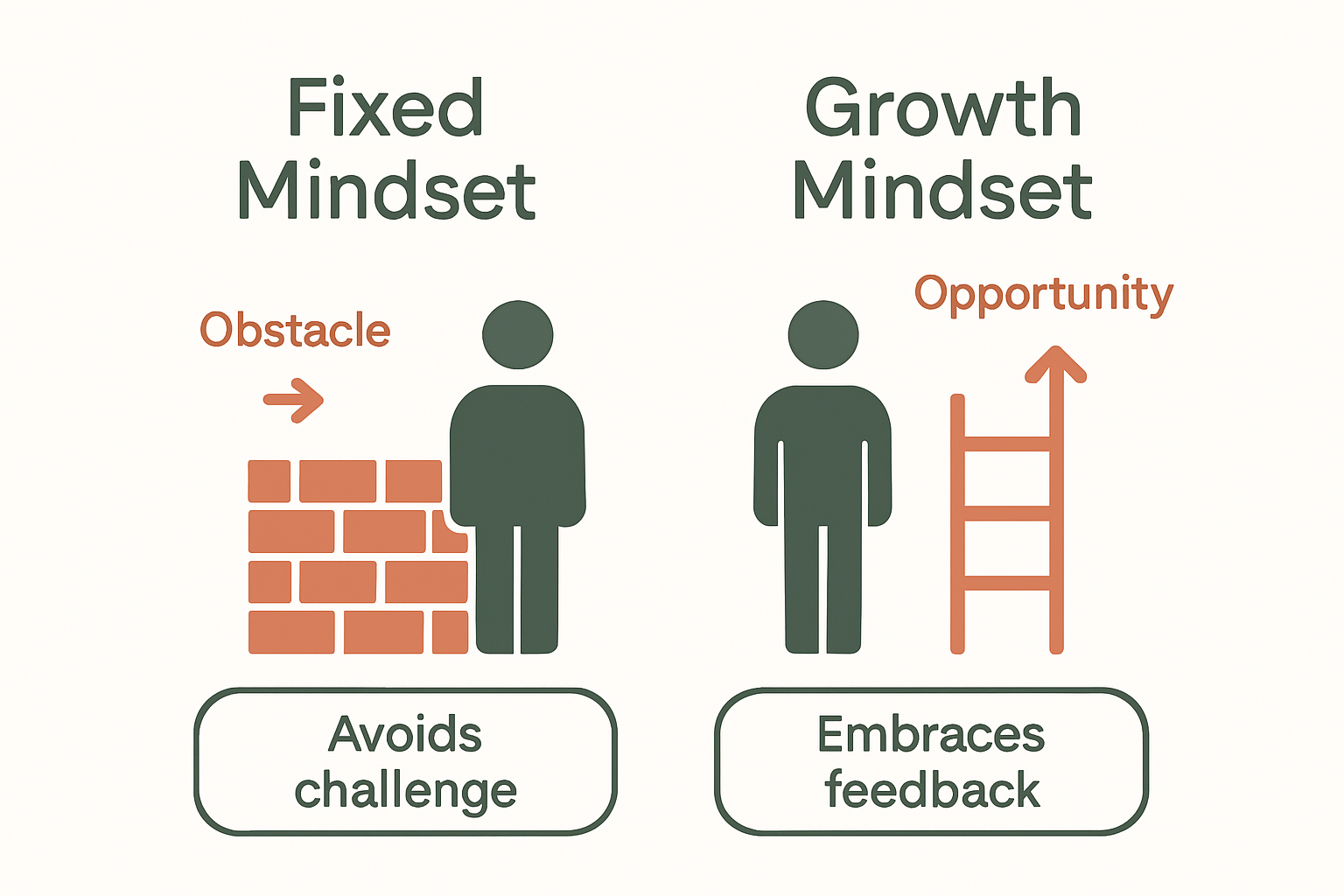
Understanding the nuanced differences between fixed and growth mindsets provides crucial insights into human potential and personal development. Psychological research reveals two distinct mental frameworks that fundamentally shape how individuals perceive their abilities, approach challenges, and navigate life’s complex experiences.
Individuals with a fixed mindset typically believe their core characteristics are unchangeable. They view intelligence, talents, and personality as static attributes that cannot be significantly modified. People with this perspective often avoid challenges to protect their self-image, fearing that failure might expose perceived limitations. These individuals tend to:
Interpret challenges as potential threats
Avoid situations where they might not excel
Become defensive when receiving constructive feedback
Believe talent is more important than effort
Feel threatened by others’ success
In contrast, those with a growth mindset approach life with remarkable psychological flexibility. They understand that abilities can be developed through dedicated effort, learning, and persistent practice. Growth mindset individuals view challenges as opportunities for expansion, embracing difficulties as essential pathways to personal transformation. Their core beliefs enable them to:
See challenges as chances to learn
Understand that effort drives improvement
Welcome constructive criticism
Believe in their capacity to develop new skills
Maintain optimism during setbacks
Recognising which mindset you predominantly operate from can be a powerful first step towards personal growth, enabling you to consciously cultivate more adaptive and resilient thinking patterns.
Core Principles Behind Successful Mindsets
Successful mindsets are built upon a foundation of fundamental psychological principles that empower individuals to navigate challenges, pursue personal growth, and unlock their potential. These principles transcend simple positive thinking, representing deep-rooted approaches to understanding oneself and engaging with life’s complexities.
Research exploring growth mindset interventions reveals critical insights into how psychological frameworks impact performance and personal development. The core principles underlying successful mindsets typically encompass several key elements:
Self-Belief: Cultivating strong internal confidence
Effort Regulation: Understanding that consistent effort drives improvement
Adaptability: Embracing change and learning from experiences
Resilience: Maintaining positive momentum through setbacks
Continuous Learning: Viewing challenges as opportunities for growth
Academic research demonstrates that mindset significantly influences achievement, particularly for individuals facing multiple risk factors. The most successful individuals understand that mindset is not a fixed trait but a dynamic skill that can be consciously developed and refined. This means recognising that your approach to challenges, learning, and personal growth can be strategically shaped through intentional practice and reflection.

Cultivating a successful mindset requires ongoing commitment to personal development. It involves challenging internal narratives, embracing discomfort, and maintaining a curious, open approach to life’s experiences. By consistently applying these principles, individuals can transform their potential, turning obstacles into stepping stones for meaningful personal and professional growth.
How Mindset Shapes Real-World Outcomes
Our mindset serves as a powerful internal compass that dramatically influences our experiences, achievements, and overall life trajectory. Research reveals that psychological frameworks fundamentally shape how individuals approach challenges, perceive opportunities, and ultimately perform in various life domains.
A comprehensive study examining 1,240 students demonstrated significant correlations between mindset and real-world performance. The research uncovered compelling evidence that individuals with a growth-oriented perspective consistently achieve superior outcomes across multiple dimensions:
Academic Achievement: Higher grades and learning engagement
Emotional Wellbeing: Increased resilience and reduced anxiety
Professional Development: Greater adaptability and career progression
Personal Relationships: More constructive communication and conflict resolution
Mental Health: Enhanced capacity to manage stress and setbacks
Individuals with a growth mindset fundamentally approach challenges differently. Instead of viewing difficulties as insurmountable obstacles, they perceive them as opportunities for learning and personal transformation. This subtle yet profound shift in perspective enables them to maintain motivation, persist through complex challenges, and continuously develop their skills and capabilities.
The real-world implications of mindset extend far beyond individual performance. By consciously cultivating a growth-oriented approach, people can reshape their internal narratives, challenge self-limiting beliefs, and unlock potential that might otherwise remain dormant. The power lies not in avoiding challenges, but in developing the psychological flexibility to navigate them with curiosity, resilience, and an unwavering commitment to personal growth.
Strategies for Building a Positive Mindset
Research demonstrates that developing a positive mindset is a learnable skill, requiring intentional practice and strategic self-reflection. Understanding that our mental approaches can be consciously cultivated empowers individuals to transform their psychological frameworks and approach life’s challenges with greater resilience and adaptability.
Building a positive mindset involves several key strategic approaches:
Self-Awareness: Recognising and challenging negative thought patterns
Reframing: Transforming obstacles into opportunities for growth
Continuous Learning: Embracing challenges as chances to develop skills
Positive Self-Talk: Cultivating supportive internal dialogue
Deliberate Practice: Consistently working to expand personal capabilities
Research indicates that individuals with a growth mindset fundamentally differ in their approach to learning and personal development. The core principle is understanding that intelligence and abilities are not fixed, but can be systematically developed through dedicated effort and strategic learning.
Successfully building a positive mindset requires consistent commitment and gentle self-compassion. By consciously choosing to view challenges as opportunities for growth, practicing resilient thinking, and maintaining an open and curious approach to personal development, individuals can progressively reshape their psychological landscape. The journey involves small, deliberate steps: celebrating incremental progress, learning from setbacks, and maintaining unwavering belief in one’s capacity for continuous improvement.
Unlock Your Potential by Shifting Your Mindset Today
The article highlights how your mindset influences success by shaping how you view challenges and setbacks. If you feel stuck with stress, self-doubt, or motivation struggles, it is time to turn those challenges into opportunities for growth. At Tom Ryder Wellbeing, we understand how difficult it can be to break limiting patterns and build resilience. Through our practical Mindset Coaching and the proven SCALES Model you will learn to reframe setbacks and develop lasting self-belief.
Don’t let a fixed mindset hold you back from the success and wellbeing you deserve. Take control by starting with a free consultation to explore how Tom Ryder Wellbeing can guide you toward clearer goals and meaningful change. The sooner you begin, the sooner you will build a mindset that supports learning, adaptability, and real progress.
Frequently Asked Questions
What is the difference between a fixed mindset and a growth mindset?
A fixed mindset views abilities as static and unchangeable, while a growth mindset believes that skills can be developed through effort and learning.
How can a growth mindset influence academic achievement?
Individuals with a growth mindset are more likely to embrace challenges and persist through setbacks, often leading to better academic performance and higher engagement in learning.
What are some strategies to cultivate a positive mindset?
Key strategies include practising self-awareness, reframing negative thoughts into opportunities, engaging in continuous learning, and maintaining positive self-talk.
How does mindset affect personal relationships?
A growth mindset fosters better communication and conflict resolution skills, enabling individuals to navigate personal relationships more effectively and constructively.
Comments