


How to Create Wellbeing Workshop for Real Life Change
- Tom Ryder Wellbeing

- Dec 12, 2025
- 9 min read
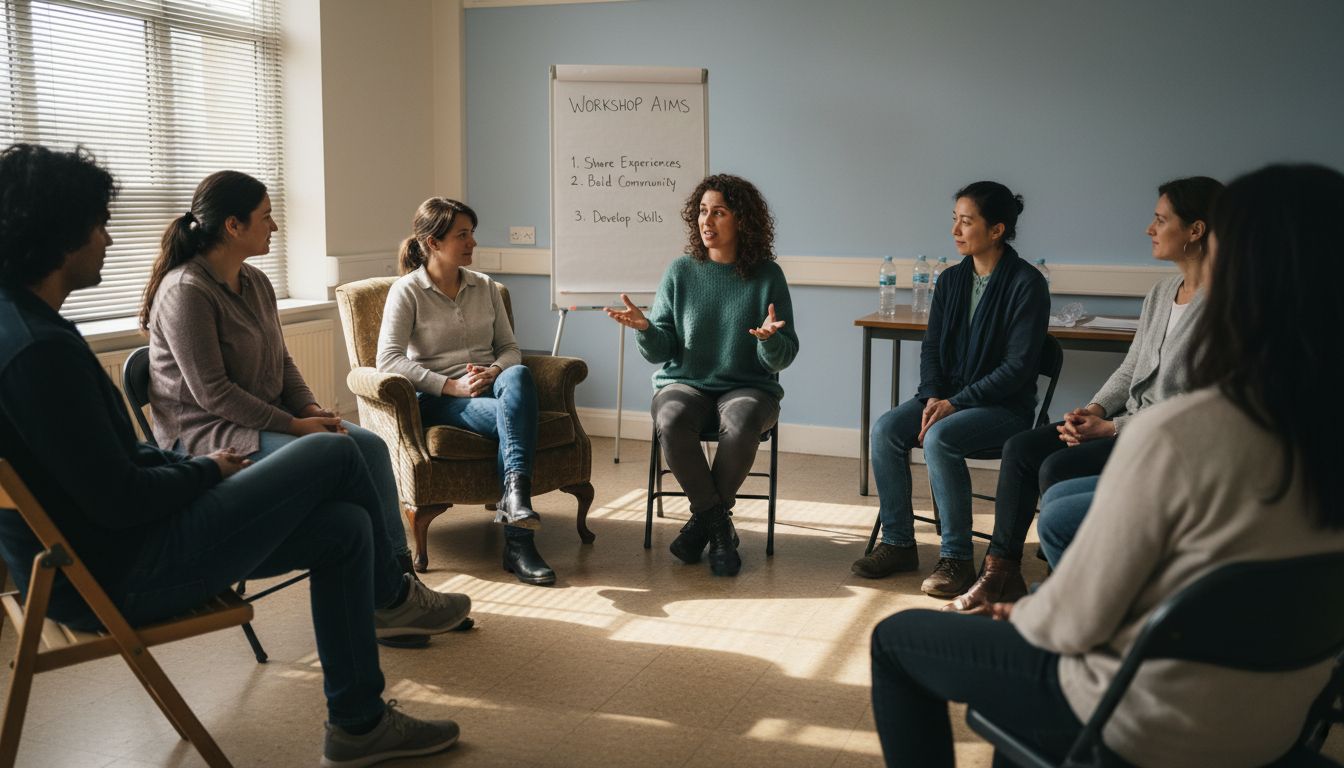
Over one third of british adults report feeling overwhelmed by stress at least once a week. In a world where personal wellbeing is a growing concern, designing workshops that truly address these needs has never mattered more. Whether you are supporting students, young professionals, or community members, a thoughtfully planned wellbeing workshop can offer participants practical strategies they will actually use.
Table of Contents
Quick Summary
Key Insight | Explanation |
1. Define clear workshop aims | Establish precise outcomes to ensure the session connects with participants meaningfully. |
2. Understand target audience | Analyse demographic and psychological traits to tailor content effectively to the participants’ needs. |
3. Use the SCALES model | Integrate Sleep, Creative, Active, Listen, Earth, and Social dimensions for a holistic approach. |
4. Design engaging activities | Create interactive exercises that promote self-discovery and personal growth tailored to each SCALES dimension. |
5. Evaluate with participant feedback | Collect comprehensive feedback to understand the workshop’s impact and identify improvement areas. |
Step 1: Define your workshop aims and target audience
Defining clear aims and understanding your target audience are foundational steps for creating an impactful wellbeing workshop. This initial planning ensures your session will genuinely connect with participants and deliver meaningful support.
Start by mapping out precise goals for your workshop. What specific outcomes do you want participants to achieve? Understanding your target audience is crucial for effective communication and will help you tailor content precisely. Consider breaking down your objectives into tangible results like improved stress management skills, better self awareness, or practical mental health strategies.
To identify your target audience, examine demographic details and psychological characteristics. Look beyond basic age ranges and explore deeper aspects like professional challenges, personal motivations, and specific wellbeing concerns. By exploring audience demographics and interests, you can design workshop content that resonates authentically. For instance, a workshop for young professionals might focus on workplace stress and career transition resilience, while a session for students could emphasise exam pressure and personal development techniques.
A helpful strategy is creating a detailed audience persona. Imagine a specific individual who represents your ideal workshop participant. What are their struggles? What motivates them to seek wellbeing support? This approach helps you craft a workshop experience that feels personally relevant and genuinely supportive.
Ready to design your workshop structure? Let’s explore how to transform these clear aims into a compelling session plan.
Step 2: Design the session using the SCALES model
The SCALES model provides a powerful framework for creating holistic wellbeing workshops that address multiple dimensions of personal wellness. By integrating each of the six core elements Sleep, Creative, Active, Listen, Earth, and Social you can develop a comprehensive and engaging session that supports participants meaningful transformation.
Workshop design strategies can help structure transformative wellbeing experiences that move beyond traditional lecture formats. Start by mapping out activities that touch each SCALES dimension intentionally. For Sleep consider relaxation techniques or sleep hygiene discussions. In the Creative segment, incorporate expressive activities like journaling or art. The Active component might include gentle movement or mindfulness practices.
When designing your Listen section, create space for self reflection and emotional processing. The Earth element could involve grounding exercises or discussions about environmental connection. Finally, the Social component should foster connection through group interactions or sharing circles. Each section should feel interconnected yet distinct, allowing participants to explore different aspects of their wellbeing dynamically.
A practical tip is to allocate roughly equal time to each SCALES dimension while maintaining flexibility. Some groups might need more depth in certain areas. Always leave room for organic discussion and participant led exploration. This approach ensures your workshop feels responsive and personalised rather than rigidly structured.

With your session design taking shape, youre ready to move into detailed activity planning and resource preparation.
Step 3: Develop practical activities and creative tools
Crafting engaging and meaningful activities is crucial for transforming your wellbeing workshop from a passive experience into an active journey of personal discovery. The goal is to design tools that not only educate but also inspire participants to take tangible steps towards improved mental and emotional health.

Practical workflow strategies can enhance personal development approaches when designing workshop activities. Begin by creating interactive exercises that align with each SCALES dimension. For Sleep, consider developing a sleep tracking worksheet or guided relaxation script. In the Creative segment, introduce journaling prompts or art therapy techniques that encourage emotional expression. The Active component might include simple movement sequences or mindfulness breathing exercises that participants can easily replicate at home.
Each activity should serve a specific purpose while remaining flexible enough to accommodate different participant needs. Design tools that prompt self reflection such as personal assessment questionnaires, emotion mapping charts, or goal setting templates. Incorporate elements of storytelling and metaphor to make complex psychological concepts more accessible and engaging. Remember that creativity is about exploration not perfection.
A key tip is to pilot test your activities with a small group before full implementation. This allows you to refine instructions, gauge participant response, and ensure the tools genuinely support personal growth. Build in moments of choice and individual interpretation so participants feel empowered rather than constrained by the workshop structure.
With your creative tools developed, youre now prepared to prepare your workshop resources and materials.
Step 4: Prepare materials and set up your environment
Preparing the right physical and psychological environment is crucial for creating a wellbeing workshop that feels safe, welcoming, and conducive to personal exploration. Your space and materials will significantly influence participants comfort and willingness to engage authentically.
Practical workflow strategies can enhance workshop preparation and create a supportive atmosphere. Select a room that feels spacious and calm with natural lighting if possible. Arrange seating in a circular or semi circular configuration to encourage open communication and remove hierarchical barriers. Prepare materials for each SCALES dimension ahead of time gathering art supplies, journaling notebooks, relaxation mats, and interactive worksheets.
Consider the sensory experience of your space. Soft background music, comfortable temperature, and minimal external noise can help participants feel relaxed and focused. Have water available and create designated areas for movement activities. Ensure your materials are clearly organised and easily accessible. Print handouts in clear readable fonts and consider having digital backups for worksheets or resources.
A critical tip is to arrive early and do a complete room walkthrough. Test any audio visual equipment test lighting and ensure all materials are laid out intuitively. Create a welcome area with name tags and an introductory information sheet to help participants feel oriented and comfortable from the moment they arrive.
With your environment thoughtfully prepared, youre now ready to welcome participants and begin your transformative wellbeing workshop.
Step 5: Deliver the workshop and guide participation
Delivering a wellbeing workshop requires a delicate balance of structure and spontaneity. Your role is to create a supportive environment where participants feel safe exploring personal growth while maintaining a clear and purposeful journey through each SCALES dimension.
Community engagement strategies can transform workshop participation by fostering authentic connections. Begin by setting clear ground rules that emphasise respect, confidentiality, and individual choice. Introduce each SCALES segment with a brief explanation of its purpose, then guide participants through activities with gentle prompts and open ended questions. Create moments of both individual reflection and group sharing, allowing participants to process insights at their own pace.
Pay close attention to group dynamics and energy levels. Some participants might feel more comfortable sharing than others, so design activities that offer multiple ways of engagement. Use inclusive language, validate diverse experiences, and be prepared to adapt your approach if certain exercises are not resonating. The key is maintaining a compassionate and non judgemental atmosphere that encourages genuine exploration.
A crucial tip is to model vulnerability and openness yourself. Share brief personal insights that demonstrate the workshop principles without dominating the conversation. This helps participants feel more comfortable and shows that personal growth is an ongoing journey. Monitor time carefully, ensure each SCALES dimension receives adequate attention, and leave space for unexpected but valuable group conversations.
With the workshop delivery complete, youre now ready to support participants in integrating their learnings and planning next steps.
Step 6: Evaluate impact and gather participant feedback
Evaluating your wellbeing workshop is essential for understanding its effectiveness and identifying opportunities for future improvement. By systematically collecting and analysing participant experiences, you can refine your approach and create increasingly meaningful interventions.
Evidence-based strategies for assessing wellbeing initiatives provide a structured approach to measuring workshop impact. Design a comprehensive feedback mechanism that captures both quantitative and qualitative insights. Prepare a post workshop survey that explores participants experiences across each SCALES dimension, asking them to rate their learning, emotional engagement, and perceived personal growth. Include open ended questions that invite deeper reflection on specific activities and overall workshop value.
Consider using multiple feedback collection methods. Immediate verbal feedback during the session can offer spontaneous insights, while written surveys allow for more considered responses. Create a safe, non judgmental space for participants to share honest feedback. Some might prefer anonymous submission options to encourage candid reflection. Look for patterns in responses that indicate which workshop elements were most powerful and which might need refinement.
A critical tip is to conduct a personal review immediately after the workshop. Reflect on your own observations, noting participant engagement levels, energy shifts, and moments of breakthrough. Compare these subjective insights with the formal feedback data. This holistic approach provides a nuanced understanding of the workshops true impact beyond mere numerical ratings.
With your evaluation complete, youre now ready to integrate learnings and plan future workshop iterations.
Transform Your Wellbeing Workshops into Real Life Change with Tom Ryder Wellbeing
Designing a wellbeing workshop that truly impacts lives requires more than just good ideas. It calls for clear aims, tailored activities, and a holistic approach like the SCALES Model. If you find yourself challenged by how to structure sessions that genuinely support mental and emotional health or need practical tools to engage participants deeply, Tom Ryder Wellbeing offers expert guidance rooted in years of professional and lived experience.
Our coaching and group workshops focus on the core elements of wellbeing: Sleep, Creative, Active, Listen, Earth, and Social. Whether you are an individual looking to build resilience, a professional seeking clarity under pressure, or an organisation aiming to deliver meaningful stress management, our tailored 1:1 Health and Wellbeing Coaching and Workshops and Group Sessions can equip you with the tools and confidence to create lasting change. Don’t wait to move from planning to action. Visit Tom Ryder Wellbeing today to start designing workshops that truly resonate and help people thrive.
Frequently Asked Questions
How do I define the aims of my wellbeing workshop?
To define the aims of your wellbeing workshop, start by mapping out specific outcomes you want participants to achieve, such as improved stress management or enhanced self-awareness. Write down these goals to guide your workshop design, ensuring each activity aligns with these objectives.
What should I consider when identifying my target audience for a wellbeing workshop?
When identifying your target audience, examine their demographic details as well as their psychological characteristics, such as their motivations and wellbeing concerns. Create a detailed audience persona that encapsulates their struggles and aspirations to tailor your workshop content effectively.
How can I design engaging activities for my wellbeing workshop?
Design engaging activities by using the SCALES model, which includes elements like Sleep, Creative expression, Active participation, Listening, Earth connection, and Social interaction. Create interactive exercises tailored to each dimension to ensure that participants actively engage, such as mindfulness exercises for the Active segment or journaling prompts for the Creative part.
What materials do I need to prepare for my wellbeing workshop?
Prepare materials that support each SCALES dimension, including art supplies, interactive worksheets, and relaxation mats. Organise these resources beforehand, ensuring they are easily accessible, and create a welcoming environment with comfortable seating and appropriate sensory elements to enhance participant engagement.
How should I evaluate the impact of my wellbeing workshop?
Evaluate the impact of your workshop by collecting both quantitative and qualitative feedback from participants through surveys and immediate verbal comments. Focus on their learning experiences and personal growth, and use this data to refine future workshops for even greater effectiveness.
What are effective ways to deliver my wellbeing workshop?
Deliver your wellbeing workshop by balancing structured guidance with opportunities for spontaneous sharing. Set clear ground rules, encourage open dialogue, and model vulnerability to foster a supportive atmosphere where participants can genuinely explore their personal growth.
Recommended
Comments