


Why Resilience Matters for Wellbeing and Success


More than one in three British adults report feeling overwhelmed by stress at least once a week. In a world where daily pressures rarely pause, understanding what resilience actually means becomes more important than ever. Whether it is bouncing back from setbacks or building emotional strategies to face uncertainty, learning the core elements of resilience can make a real difference in mental well-being and everyday life.
Table of Contents
Key Takeaways
Point | Details |
Understanding Resilience | Resilience is the ability to adapt and respond effectively to stress, involving skills like emotional regulation and problem-solving. |
Types of Resilience | Personal resilience focuses on individual psychological strength, while organisational resilience pertains to collective adaptability in the workplace. |
Mental Health Benefits | Developing resilience enhances mental health by promoting emotional stability and effective stress management. |
Building Techniques | Cultivating resilience involves systematic practices such as mindfulness, emotional intelligence, and support networks for personal growth. |
Defining Resilience and Its Core Elements
Resilience represents our capacity to navigate life’s challenges with psychological strength and adaptability. At its core, resilience is not about avoiding stress or difficult experiences, but developing the mental skills to respond effectively when setbacks occur. Contemporary psychological research highlights resilience as a dynamic process involving multiple cognitive and emotional strategies.
The fundamental elements of resilience encompass several key psychological capabilities. These include emotional regulation, positive reframing, problem-solving skills, and maintaining strong social connections. Individuals with high resilience can experience stress without becoming overwhelmed, quickly adapt to changing circumstances, and maintain a sense of purpose during challenging periods. Research from HR performance centres emphasises that resilience is not a fixed trait, but a skill set that can be systematically developed and strengthened.

Building resilience involves cultivating specific mental strategies and habits. This might include developing self-awareness, practicing mindfulness, maintaining healthy boundaries, and creating supportive social networks. The goal is not to eliminate stress entirely, but to build psychological flexibility that allows you to bounce back from adversity more quickly and effectively. Resilient individuals tend to view challenges as opportunities for growth rather than insurmountable obstacles, transforming potential setbacks into valuable learning experiences that contribute to personal development and emotional maturity.
Types of Resilience: Personal and Organisational
Personal resilience represents an individual’s psychological capacity to manage stress, adapt to challenges, and maintain emotional equilibrium. Sustainable leadership research suggests personal resilience operates across multiple dimensions, including physical, emotional, mental, and spiritual domains. This multifaceted approach involves developing internal resources that help individuals bounce back from setbacks, maintain perspective during difficult times, and continue progressing towards their goals.
Organisational resilience differs from personal resilience by focusing on collective capabilities within workplace environments. Research from professional institutions defines this as an organisation’s capacity to anticipate, respond to, and adapt effectively to internal and external pressures. Key characteristics include flexible management structures, robust communication systems, and a workforce trained to navigate uncertainty with creativity and strategic thinking.
While personal and organisational resilience might seem distinct, they are deeply interconnected. Strong personal resilience among employees contributes directly to organisational resilience, creating a symbiotic relationship where individual psychological strength supports broader institutional adaptability. Organisations that invest in developing both individual and collective resilience strategies are better positioned to withstand challenges, maintain productivity during disruptions, and foster a workplace culture of continuous learning and psychological safety.
How Resilience Supports Mental Health
Resilience plays a crucial role in protecting and enhancing mental health by providing individuals with robust psychological mechanisms to navigate challenging experiences. Academic research on student support demonstrates that resilience enables people to achieve success despite adversity, transforming potential psychological challenges into opportunities for personal growth and learning. By developing adaptive coping strategies, individuals can effectively manage stress, reduce the risk of mental health complications, and maintain emotional stability during turbulent periods.
The psychological benefits of resilience extend beyond immediate stress management. Mental health professionals recognise resilience as a protective factor that helps individuals develop emotional regulation skills, maintain a positive outlook, and maintain psychological equilibrium. Workplace resilience research highlights how individual attitudes towards challenging events can significantly impact mental well-being, suggesting that resilient individuals are better equipped to process negative experiences constructively.
Building resilience involves cultivating specific mental skills and perspectives that support psychological health. These include developing self-compassion, maintaining realistic optimism, creating strong social support networks, and learning to reframe challenges as opportunities for personal development. By intentionally strengthening these psychological resources, individuals can create a more robust mental health foundation that helps them withstand and grow from life’s inevitable difficulties, ultimately promoting long-term emotional well-being and psychological flexibility.
Resilience in Managing Stress and Setbacks
Stress management is a critical aspect of personal resilience, requiring strategic approaches to navigate challenging circumstances effectively. Academic research on student resilience demonstrates that individuals who develop robust coping mechanisms can transform potential setbacks into meaningful opportunities for growth and learning. This approach involves recognising stress triggers, understanding personal emotional responses, and implementing proactive strategies to maintain psychological equilibrium.
The process of managing stress through resilience involves developing a nuanced understanding of one’s emotional landscape. Workplace resilience studies highlight the importance of individual attitudes in processing challenging events, suggesting that resilient people approach difficulties with a constructive mindset. Key strategies include reframing negative experiences, maintaining perspective during high-pressure situations, and developing emotional regulation techniques that prevent stress from overwhelming personal and professional functioning.
Practical resilience techniques for managing stress include creating structured self-care routines, establishing clear personal boundaries, practising mindfulness, and cultivating a supportive social network. By intentionally developing these skills, individuals can build psychological flexibility that allows them to absorb and adapt to unexpected challenges without experiencing complete emotional depletion. The goal is not to eliminate stress entirely, but to develop a more robust internal framework that enables quicker recovery and continued personal growth in the face of adversity.
Building Resilience: Proven Techniques and Tools
Building resilience requires a systematic approach that combines self-awareness, practical skills, and consistent practice. Personal resilience research emphasises the critical role of individual attitudes in developing psychological strength, suggesting that resilience is not an innate trait but a skill that can be deliberately cultivated. Key techniques include developing emotional intelligence, creating structured reflection practices, and learning to reframe challenging experiences as opportunities for personal growth.
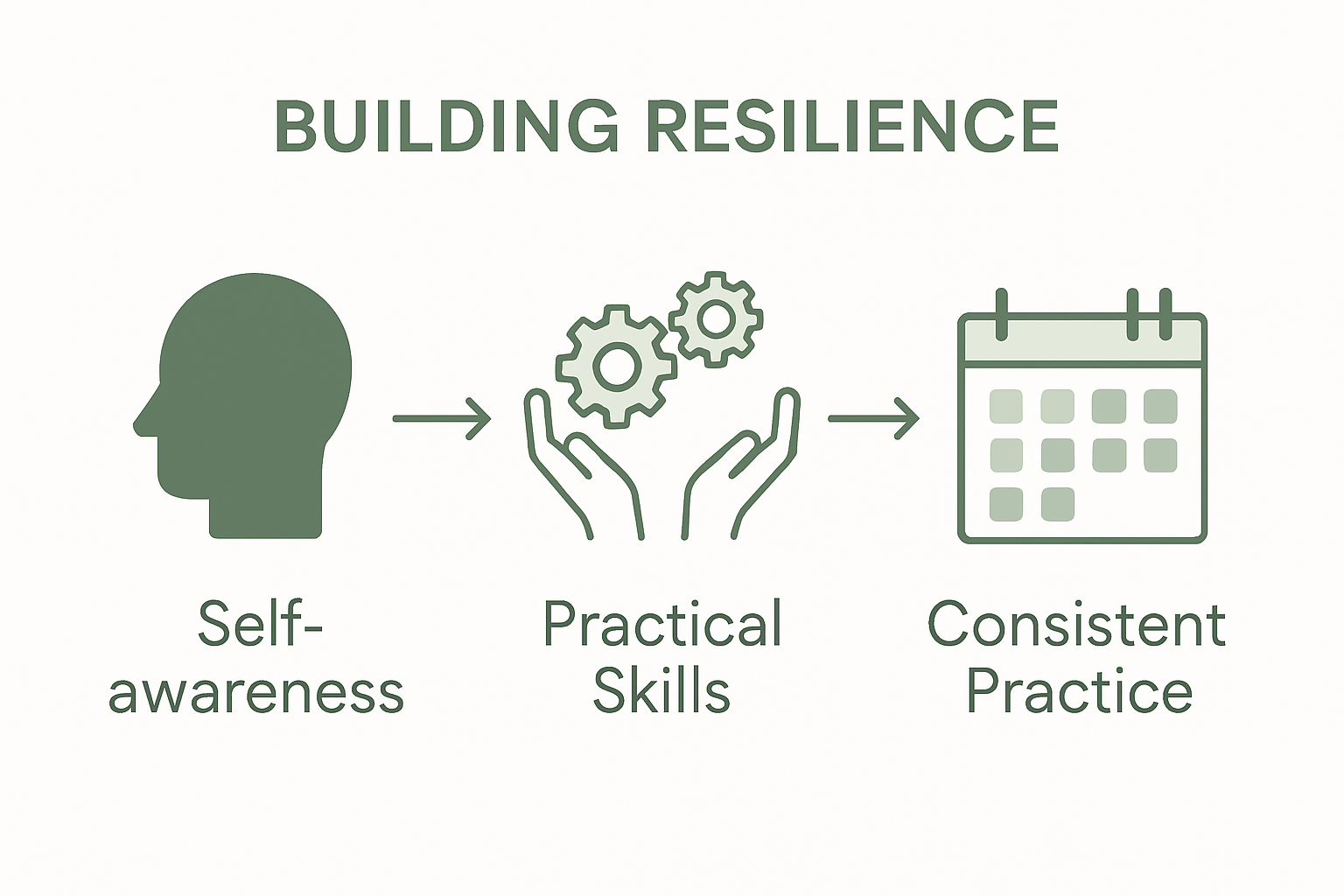
Effective resilience-building strategies involve multiple interconnected approaches. Cognitive techniques such as mindfulness meditation, positive self-talk, and cognitive reframing help individuals develop mental flexibility and emotional regulation. Physiological practices like regular exercise, balanced nutrition, and adequate sleep contribute to building physical and psychological endurance. Social strategies, including maintaining supportive relationships, seeking mentorship, and participating in community networks, provide external sources of emotional support and perspective during difficult times.
Practical tools for developing resilience include journaling to track emotional patterns, developing personalised stress management plans, and setting incremental personal development goals. Individuals can also benefit from professional support such as counselling, coaching, or resilience workshops that provide structured guidance in building psychological skills. The ultimate aim is to create a comprehensive personal resilience toolkit that allows for adaptive responses to life’s challenges, transforming potential setbacks into opportunities for learning, growth, and personal transformation.
Build Your Resilience for Lasting Wellbeing and Success
The article highlights resilience as a vital skill for managing stress, setbacks and maintaining mental health. If you often feel overwhelmed by constant stress, struggle to keep emotional balance or simply want to build practical tools that help you bounce back from life’s challenges, Tom Ryder Wellbeing can support your journey. Our coaching focuses on real-life challenges such as low energy, disrupted routines and self-doubt, helping you develop emotional regulation, positive mindset shifts and sustainable daily habits.
Discover how the SCALES Model—covering Sleep, Creative outlets, Activity, Listening to your body, Earth grounding and Social connections—can bring harmony back to your wellbeing. Explore 1:1 Health and Wellbeing Coaching to break goals into manageable steps and create routines supporting resilience at every level. Whether you prefer personalised coaching or engaging group workshops, you can begin transforming setbacks into opportunities to learn and grow today. Take the first step by visiting Tom Ryder Wellbeing and booking your free 15-minute consultation.
Frequently Asked Questions
What is resilience and why is it important?
Resilience is the capacity to navigate life’s challenges with psychological strength and adaptability. It plays a crucial role in wellbeing and success by enabling individuals to manage stress effectively and recover from setbacks.
How can I build personal resilience?
Building personal resilience involves developing emotional regulation, positive reframing, problem-solving skills, and maintaining strong social connections. Engaging in self-awareness practices, mindfulness, and creating supportive networks can significantly enhance resilience.
What are some techniques for managing stress and setbacks through resilience?
Effective techniques include reframing negative experiences, implementing structured self-care routines, establishing clear personal boundaries, and seeking support from social networks. Mindfulness practices can also help in maintaining emotional equilibrium.
How does organisational resilience differ from personal resilience?
Organisational resilience focuses on collective capabilities within workplaces, enabling organisations to anticipate and adapt to internal and external pressures. It encompasses flexible management structures and robust communication systems, while personal resilience pertains to individual psychological strength.
Recommended
Overcoming Weight Loss Setbacks Naturally: Step-by-Step Guide - LeanAndFit
Comments