


7 Types of Wellbeing Workshops to Improve Your Life

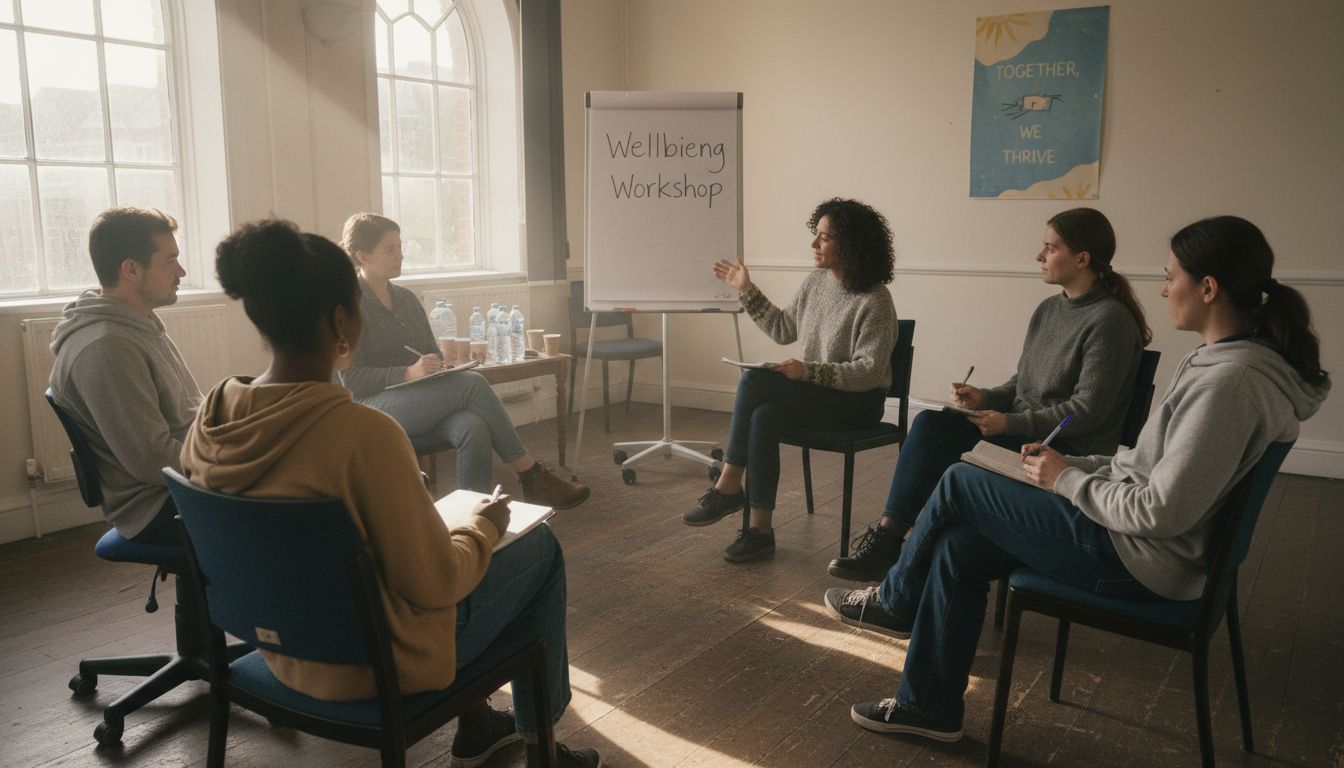
More than half of British adults report feeling significant stress every day, impacting not just their mood but their long-term health. The demands of work, family, and constant connectivity can leave anyone searching for lasting solutions. This guide highlights standout workshops and proven strategies designed for British individuals who want to regain balance, boost resilience, and reconnect with their wellbeing in practical ways.
Table of Contents
Quick Summary
Takeaway | Explanation |
1. Build Emotional Resilience | Attend workshops to transform stress into manageable experiences through personalised techniques. |
2. Challenge Negative Thinking | Mindset coaching helps redirect unproductive thoughts and develop a growth mindset for personal success. |
3. Engage in Creative Expression | Creative workshops provide therapeutic avenues for emotional release and self-discovery through arts and music. |
4. Achieve Work-Life Balance | Learn to set boundaries and manage energy effectively for sustainable performance in both personal and professional life. |
5. Enhance Social Connections | Participate in group workshops to foster mutual growth and emotional resilience through shared experiences. |
1. Stress Management Workshops for Everyday Resilience
Stress has become an unwelcome companion in modern life, silently eroding our mental and physical wellbeing. Stress management workshops offer a powerful antidote, providing practical strategies to build emotional resilience and navigate life’s challenges with greater ease.
These workshops go beyond generic advice, focusing on personalised techniques that help individuals understand their unique stress triggers and develop targeted coping mechanisms. By improving your wellbeing workflow, participants learn how to transform stress from an overwhelming force into a manageable experience.
Key Components of Effective Stress Management Workshops:
Self Awareness Training: Learning to recognise early stress signals in your body and mind
Emotional Regulation Techniques: Practical methods to calm your nervous system
Cognitive Restructuring: Understanding how thoughts influence stress levels
Breathing and Relaxation Strategies: Simple yet powerful tools for immediate stress reduction
Participants typically discover that stress management is not about eliminating stress entirely but developing resilience. These workshops teach you to respond to challenging situations with clarity and composure, rather than reacting from a place of overwhelm.
Practical skills learned often include mindfulness meditation, progressive muscle relaxation, and cognitive reframing techniques. The goal is to equip you with a personalised toolkit that you can apply in real world scenarios workplace pressures, personal challenges, or unexpected life transitions.
By investing in a stress management workshop, you are not just learning techniques you are fundamentally rewiring your approach to life’s inevitable pressures. The skills acquired become lifelong resources for maintaining emotional balance and personal wellbeing.
2. Mindset Coaching Workshops to Shift Negative Thinking
Negative thinking patterns can silently sabotage your potential, creating invisible barriers to personal and professional success. Mindset coaching workshops offer a transformative approach to rewiring these self defeating mental narratives.
Mindset strategies from professional development courses reveal that our thoughts are not fixed realities but malleable constructs we can consciously reshape. These workshops provide structured techniques to interrupt and redirect unproductive thought cycles.
Core Focus Areas of Mindset Coaching:
Cognitive Reframing: Transforming negative interpretations into constructive perspectives
Self Limiting Belief Identification: Recognising unconscious mental barriers
Emotional Intelligence Development: Understanding the connection between thoughts and emotional responses
Resilience Building: Creating mental frameworks that support growth and adaptability
Practical Transformation Techniques
Participants learn to challenge automatic negative thoughts through systematic approaches. Growth mindset workshops demonstrate that individuals can develop more flexible thinking patterns by understanding that abilities and intelligence are not static.
The workshop methodology typically involves interactive exercises, reflective practices, and personalised feedback. Participants are guided to develop metacognitive skills the ability to observe and modify their own thinking processes.
By investing in mindset coaching, you are essentially reprogramming your internal narrative. The skills acquired become powerful tools for navigating life challenges with greater emotional intelligence and resilience.
3. Creative Wellbeing Workshops Using Arts and Music
Arts and music are powerful therapeutic tools that offer more than just aesthetic pleasure. Creative wellbeing workshops provide a unique pathway to emotional expression and mental health restoration through structured artistic experiences.
Why Creative Expression Matters
Traditional talk therapies often struggle to reach deep emotional landscapes. Creative workshops break through these barriers by engaging participants in nonverbal communication and sensory experiences. Music, painting, dance and other art forms become languages of healing.
Key Benefits of Creative Wellbeing Workshops:
Emotional Release: Providing safe channels for unexpressed feelings
Stress Reduction: Engaging creative activities that calm the nervous system
Self Discovery: Understanding personal emotions through artistic exploration
Neurological Stimulation: Activating different brain regions through creative practice
These workshops are not about creating masterpieces but about the therapeutic process. Participants learn that artistic expression is a journey of self understanding not a performance to be judged.
Practical approaches might include structured music improvisation, guided painting sessions, movement therapy, or collaborative art projects. The goal is to help individuals reconnect with their inner emotional world through creative exploration.
By embracing arts as a wellbeing tool, you open yourself to profound personal insights and emotional healing. Each brushstroke, musical note, or dance movement becomes a step towards greater self awareness and emotional resilience.
4. Work–Life Balance Workshops for Busy Professionals
In the relentless pursuit of professional success, many individuals find themselves trapped in a cycle of constant work and diminishing personal time. Work–life balance workshops offer a strategic approach to reclaiming control and creating meaningful boundaries between professional responsibilities and personal wellbeing.
These workshops recognise that balance is not about equal time allocation but about quality of experience and intentional energy management. Improving your wellbeing workflow becomes a critical skill for professionals navigating complex modern work environments.
Key Focus Areas of Work–Life Balance Workshops:
Boundary Setting: Establishing clear professional and personal limits
Energy Management: Understanding personal productivity rhythms
Stress Mitigation: Developing resilience against workplace pressures
Prioritisation Techniques: Creating meaningful hierarchies of professional and personal commitments
Practical Implementation Strategies
Participants learn to deconstruct traditional productivity myths and develop personalised frameworks for sustainable performance. The goal is not working harder but working smarter creating systems that support both professional achievement and personal fulfilment.
Workshop methodologies often include diagnostic tools to assess current work–life patterns, interactive exercises for developing new habits, and personalised action planning. Professionals discover that true productivity emerges from intentional rest, meaningful connections, and strategic focus.
By investing in work–life balance skills, you transform from being a passive recipient of workplace demands to an active architect of your professional and personal experience. The workshops provide a roadmap for creating a more integrated, fulfilling life journey.
5. Emotional Resilience Workshops to Build Strength
Emotional resilience is not about avoiding challenges but developing the inner strength to navigate life’s turbulent waters with grace and composure. These workshops offer a transformative journey into understanding and fortifying your emotional core.
Improving your wellbeing workflow becomes fundamentally linked to your capacity to respond rather than react to emotional triggers. Emotional resilience workshops provide a structured approach to building psychological flexibility.
Core Components of Emotional Resilience Training:
Emotional Intelligence: Understanding and managing personal emotional landscapes
Stress Response Mapping: Identifying individual stress triggers and patterns
Adaptive Coping Mechanisms: Developing healthy strategies for emotional regulation
Self Compassion Practices: Learning to treat oneself with kindness during challenging moments
Participants learn that resilience is not an innate trait but a skill that can be systematically developed. The workshops deconstruct common misconceptions about emotional strength revealing that vulnerability is not weakness but a profound form of courage.
Practical training often involves experiential learning techniques such as guided reflection, scenario based exercises, and personalised emotional mapping. Participants gain tools to transform challenging emotional experiences from potential sources of overwhelm into opportunities for growth.
By investing in emotional resilience workshops, you are essentially rewiring your psychological response systems. You learn to move through difficult emotions with greater ease, turning potential emotional obstacles into pathways of personal transformation.
6. Nature and Grounding Workshops for a Calm Mind
In our increasingly digital and disconnected world, nature offers a profound antidote to chronic stress and mental overwhelm. Nature prescription programmes reveal the transformative power of intentional environmental connection for mental wellbeing.
Understanding Nature’s Therapeutic Impact
Grounding workshops explore how deliberate interaction with natural environments can reset our nervous systems, reduce anxiety, and restore psychological equilibrium. These experiences go beyond casual outdoor activities they are structured interventions designed to reconnect individuals with fundamental healing rhythms.
Key Elements of Nature and Grounding Workshops:
Sensory Awareness: Developing mindful engagement with natural environments
Stress Reduction Techniques: Using landscape and natural elements as calming anchors
Meditative Walking: Practicing movement that synchronises body and environment
Ecological Connection: Understanding human interdependence with natural systems
Participants learn practical techniques for transforming outdoor experiences into therapeutic interventions. This might include guided forest bathing, mindful landscape observation, or structured breathing exercises in natural settings.
Improving your wellbeing workflow becomes intimately linked with understanding how environmental interaction can profoundly influence mental states.
By investing in nature and grounding workshops, you are not just learning stress management techniques. You are rediscovering an ancient human capacity to find calm, clarity, and restoration through direct connection with the natural world.
7. Group Wellbeing Workshops for Social Connection
Human beings are inherently social creatures, and meaningful connections form the bedrock of psychological resilience. Group wellbeing workshops offer a powerful antidote to modern isolation, creating spaces where individuals can share experiences, learn collectively, and build supportive networks.
Local health and wellbeing groups demonstrate how structured social interactions can transform individual mental health journeys. These workshops go beyond casual socialising they are intentional environments designed for mutual growth and understanding.
Key Components of Group Wellbeing Workshops:
Shared Learning: Discovering insights through collective experience
Vulnerability Practice: Creating safe spaces for authentic emotional expression
Peer Support Mechanisms: Building reciprocal networks of emotional understanding
Collective Healing: Recognising individual challenges within broader human experiences
Improving your wellbeing workflow becomes deeply enriched through group interactions that provide multiple perspectives and collaborative problem solving.
Workshop methodologies often incorporate structured activities that encourage genuine connection. These might include guided group reflections, collaborative problem solving exercises, or shared mindfulness practices that create a sense of collective presence.
By participating in group wellbeing workshops, you are not just attending a session. You are joining a community of individuals committed to mutual growth, understanding, and psychological resilience.
This table summarises key aspects of various wellbeing workshops designed to enhance personal and professional resilience as discussed in the article.
Workshop Type | Focus Areas | Outcomes & Benefits |
Stress Management | Self awareness, emotional regulation, cognitive restructuring | Better stress handling, resilience development |
Mindset Coaching | Cognitive reframing, belief identification, resilience building | Transformed thinking, higher emotional intelligence |
Creative Wellbeing | Emotional release, neurological stimulation, self discovery | Emotional healing, enhanced self-awareness |
Work–Life Balance | Boundary setting, energy management, stress mitigation | Improved productivity, personal fulfilment |
Emotional Resilience | Emotional intelligence, stress response mapping, self compassion | Greater emotional flexibility, personal growth |
Nature and Grounding | Sensory awareness, stress reduction techniques, meditative walking | Reduced anxiety, psychological equilibrium |
Group Wellbeing | Shared learning, vulnerability practice, peer support | Strong social connections, collective healing |
Discover Practical Wellbeing Solutions Tailored to Your Needs
If the “7 Types of Wellbeing Workshops to Improve Your Life” resonated with the challenges you face—from managing stress and building emotional resilience to shifting mindset patterns or achieving better work life balance—Tom Ryder Wellbeing offers personalised coaching designed to help you take meaningful steps forward. Using the proven SCALES Model, which addresses key areas such as Sleep, Creative expression, Active movement, Listening to your needs, Earth grounding, and Social connection, our approach translates these workshop concepts into clear, practical actions that fit your unique life circumstances.
Whether you want to break free from overwhelm, develop stronger emotional regulation, or create sustainable routines that promote mental health, our range of services spans Stress Management Coaching, Mindset Coaching UK, and Work Life Balance Coach. You can benefit from supportive 1:1 coaching or group sessions connected to the creative and grounded methods highlighted in the article.
Take the first step today to improve your daily wellbeing and regain control. Visit Tom Ryder Wellbeing to explore how our tailored coaching can help turn those workshop insights into long-lasting personal transformation.
Frequently Asked Questions
What are wellbeing workshops?
Wellbeing workshops are structured programs designed to help individuals improve their mental, emotional, and physical health through various techniques and practices. Attend a workshop to learn skills like stress management, emotional resilience, or creative expression, which can enhance your overall quality of life.
How can I choose the right type of wellbeing workshop for me?
Determine your specific needs or challenges, such as managing stress or enhancing emotional resilience. Research different workshop types, such as stress management, mindset coaching, or creative wellbeing, and select one that aligns with your personal goals.
What can I expect to learn in a stress management workshop?
In a stress management workshop, you will learn practical strategies to recognise stress signals, develop coping mechanisms, and calm your nervous system. Engage in exercises like mindfulness meditation or relaxation techniques to better manage stress in everyday situations.
How long do wellbeing workshops typically last?
Wellbeing workshops usually last between a few hours to several days, depending on the format and depth of the content. Check the workshop details to find one that fits your schedule and offers the comprehensive learning experience you seek.
Can group wellbeing workshops help with building social connections?
Yes, group wellbeing workshops are specifically designed to create supportive environments that foster meaningful connections among participants. Join a group workshop to share experiences, practice vulnerability, and engage in collective learning that enhances your social connections and mental health.
How can wellbeing workshops contribute to my work-life balance?
Wellbeing workshops focused on work-life balance teach techniques for setting boundaries, managing energy, and prioritising commitments effectively. Attend a workshop to develop personalised frameworks that enable you to achieve a more fulfilling integration of your professional and personal life.
Recommended
Comments