


What Is Life Coaching? Impact on Mental Wellbeing


Most british adults still believe life coaching is only for executives or high-achievers, yet studies reveal that up to 85 percent of coaching clients come from all walks of life. Life coaching is growing rapidly in the United Kingdom as more people seek personalised support beyond traditional therapy or mentorship. This article cuts through the confusion about what life coaching truly is, tackles widespread myths, and shares how coaching can help anyone unlock real, lasting change.
Table of Contents
Key Takeaways
Point | Details |
Understanding Life Coaching | Life coaching is a partnership aimed at unlocking potential, differing from therapy as it focuses on client-led exploration and self-discovery. |
Types of Specialisations | Various coaching specialisations in the UK cater to specific client needs, including career, relationship, health, and mindset coaching. |
Session Structure | Coaching sessions involve structured dialogues that empower clients to identify goals and develop actionable strategies through reflective questioning. |
Choosing a Coach | Selecting a qualified life coach requires verifying professional credentials, ensuring compatibility in coaching style, and checking for specialisations that align with your needs. |
Defining Life Coaching and Common Misconceptions
Life coaching represents a professional partnership focused on helping individuals unlock their potential and achieve meaningful personal and professional goals. Unlike traditional therapy, coaching operates from a fundamental belief that clients are fundamentally capable and resourceful. Research from Oxford Brookes University suggests that life coaching is a “long-term efficient relationship” designed to support clients in maximising their inherent capabilities.
Many people misunderstand life coaching as a form of counselling or mentorship, but it differs significantly. Coaches do not provide direct advice or solve problems for clients. Instead, they create a supportive environment where individuals can explore their own solutions, develop self-awareness, and build strategies for personal growth. The primary role of a life coach is to ask powerful questions, offer objective perspectives, and help clients identify barriers preventing them from achieving their goals.
Common misconceptions about life coaching include believing it is only for executives or high-achievers, that it requires a specific personality type, or that coaching is a quick fix for deep-seated personal challenges. In reality, coaching is adaptable and can benefit individuals from all backgrounds who are committed to personal development. Coaches work with clients on diverse objectives, ranging from career transitions and stress management to relationship improvements and personal confidence building.
To clarify the differences between life coaching, counselling, and mentorship, see the table below:
Aspect | Life Coaching | Counselling | Mentorship |
Primary Focus | Unlocking potential and goal setting | Healing emotional issues | Sharing experience and advice |
Approach | Client-driven inquiry and reflection | Problem exploration and resolution | Guidance based on expertise |
Role of Practitioner | Facilitator and thought partner | Therapeutic support provider | Advisor or experienced guide |
Typical Outcomes | Personal growth and self-efficacy | Improved mental health and wellbeing | Career or skill development |
Pro Coaching Insight: Begin by scheduling an initial consultation with a potential coach to understand their approach and determine whether their style matches your personal development needs. Trust and rapport are fundamental to a successful coaching relationship.
Types of Life Coaching in the UK
Life coaching in the United Kingdom encompasses several specialised approaches designed to support individuals across diverse personal and professional contexts. Professional coaching has evolved to address specific life domains, recognising that people require tailored guidance for unique challenges. Improving personal wellbeing workflows requires understanding these nuanced coaching specialisations.
The primary types of life coaching in the UK include career coaching, which helps professionals navigate workplace transitions and career development; relationship coaching, supporting individuals in understanding and enhancing personal and professional relationships; health and wellness coaching, focusing on holistic lifestyle improvements; and executive coaching, targeting leadership development and performance optimisation for business professionals. Each specialisation employs distinct strategies tailored to specific client needs, ensuring a personalised approach to personal growth and transformation.
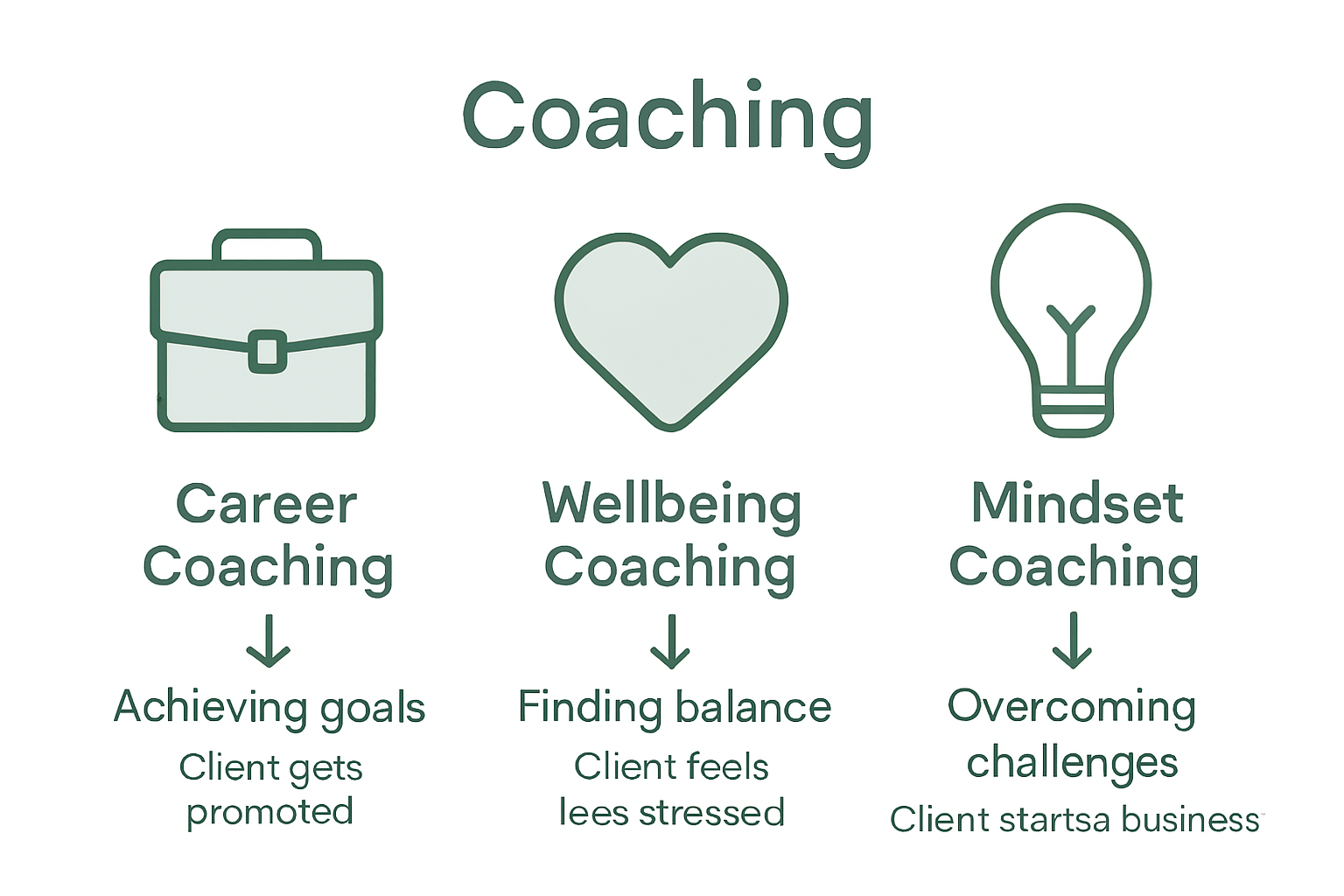
Beyond these core categories, emerging coaching specialisations address increasingly specific challenges. Mindset coaching helps individuals reframe negative thought patterns, while stress management coaching provides targeted strategies for navigating high-pressure environments. Confidence coaching supports people in building self-esteem and overcoming personal barriers, and transitions coaching assists individuals managing significant life changes such as career shifts, relocation, or personal transformation.
Pro Coaching Selection Tip: Research potential coaches’ specific qualifications, accreditations, and specialisation areas to ensure their expertise aligns precisely with your personal development goals and challenges.
Here is an overview of leading life coaching specialisations found in the UK:
Coaching Type | Main Objective | Typical Client Needs |
Career Coaching | Career progress and transitions | Workplace changes, advancement goals |
Relationship Coaching | Improve relationships | Communication, conflict resolution |
Health & Wellness | Lifestyle and health improvements | Fitness, nutrition, work-life balance |
Executive Coaching | Leadership and performance | Business strategy, executive presence |
Mindset Coaching | Reframing negative thinking | Confidence, resilience, self-perception |
Stress Management | Coping strategies for stress | High-pressure situations, anxiety relief |
Confidence Coaching | Build self-esteem | Overcome self-doubt, assertiveness |
Transitions Coaching | Navigating major life changes | Relocation, career shifts, new beginnings |
How Life Coaching Supports Wellbeing
Life coaching represents a powerful approach to enhancing personal wellbeing by creating a supportive environment that enables individuals to unlock their potential and address specific life challenges. Research exploring the psychological impact of coaching highlights how coaches foster a safe, client-centred space that promotes personal growth and self-discovery.
The wellbeing support provided through life coaching operates across multiple dimensions. Psychologically, coaching helps individuals reframe negative thought patterns, build resilience, and develop more constructive coping strategies. Insights from psychological research suggest that coaching is particularly effective for mentally well individuals experiencing diffuse dissatisfaction or struggling with specific life areas such as career progression, relationship dynamics, or personal development.

Practically, life coaching supports wellbeing by breaking down complex personal challenges into manageable strategies. Coaches work collaboratively with clients to identify underlying barriers, set realistic goals, and develop actionable plans. This process helps individuals gain clarity, build confidence, and create sustainable changes across various life domains including emotional regulation, professional performance, personal relationships, and self-care practices.
Pro Coaching Wellness Tip: Approach life coaching as a collaborative journey of self-discovery, remaining open to exploring your inner resources and potential for personal transformation.
What Happens During a Coaching Session
A typical life coaching session is a structured yet dynamic conversation designed to help clients gain profound insights and develop actionable strategies for personal growth. Coaching interactions involve sophisticated questioning techniques that enable individuals to step back, examine their current circumstances, and explore alternative perspectives with greater clarity.
The session typically begins with establishing the client’s current situation and desired outcomes. Coaches employ deep listening and reflective questioning to help clients unpack complex challenges. Accredited coaches use specific linguistic techniques such as mirroring language patterns and asking open-ended questions that encourage self-reflection. This approach allows clients to unlock their own potential rather than receiving direct advice, empowering them to develop independent problem-solving skills.
During the session, coaches help clients break down larger goals into manageable steps, identify potential obstacles, and develop strategies for overcoming them. The process involves creating a safe, non-judgmental environment where clients can explore their thoughts, emotions, and aspirations openly. Coaches may use various tools such as visualisation exercises, goal-mapping techniques, and reflective questioning to help clients gain deeper understanding of their motivations, barriers, and potential pathways to personal and professional development.
Pro Session Preparation Tip: Before your coaching session, spend time reflecting on your key goals and challenges, bringing specific examples and areas you genuinely want to explore and transform.
Choosing a Qualified Life Coach Safely
Selecting a life coach is a crucial decision that requires careful consideration and thorough research. Professional accreditation serves as a critical indicator of coaching competence, ensuring that potential coaches meet established ethical and professional standards. Prospective clients should prioritise coaches who are fully certified by recognised external coaching bodies, which validate a coach’s training, experience, and commitment to professional practice.
When evaluating potential coaches, several key factors demand attention. Professional credentials are paramount, including recognised qualifications from reputable coaching institutions. Clients should request evidence of formal training, verify professional memberships, and check for specialised certifications relevant to their specific needs. Additionally, experienced coaches should be willing to provide references, demonstrate a clear coaching methodology, and offer an initial consultation to assess compatibility and approach.
Beyond formal qualifications, personal rapport and coaching style are equally important. A good coach should demonstrate active listening skills, empathy, and the ability to ask profound, transformative questions. Potential clients should pay attention to the coach’s communication style, their approach to goal-setting, and their ability to create a safe, non-judgmental environment. Some coaches specialise in specific areas such as career development, personal relationships, or mental wellbeing, so aligning a coach’s expertise with your specific objectives is crucial for a successful coaching relationship.
Pro Coach Selection Tip: Request a preliminary consultation with potential coaches, prepare specific questions about their approach, and trust your instincts about their ability to support your personal development journey.
Discover Practical Life Coaching to Improve Your Mental Wellbeing
Understanding what life coaching truly is helps you realise it offers more than just advice. If you feel stuck, overwhelmed, or uncertain about your next steps, coaching provides a supportive partnership focused on unlocking your potential and breaking down goals into manageable actions. At Tom Ryder Wellbeing, we specialise in Mental Health & Wellbeing Coaching that addresses real challenges like stress, low mood, and self-doubt by using our proven SCALES Model. This creates balanced routines around sleep, creativity, activity, listening, grounding in nature, and social connection.
You do not have to face these struggles alone. Whether you are in Essex or anywhere in the UK, our Life Coach Essex and Mindset Coaching UK services offer personalised support to build resilience and clarity. Take the first step towards feeling more centred and confident today by visiting Tom Ryder Wellbeing and booking a discovery consultation. Start transforming stress and uncertainty into practical change with coaching designed for sustainable wellbeing.
Frequently Asked Questions
What is life coaching?
Life coaching is a professional partnership that helps individuals unlock their potential and achieve meaningful personal and professional goals. It is distinct from therapy, as coaches focus on empowering clients to find their solutions and enhance self-awareness rather than provide direct advice.
How does life coaching impact mental wellbeing?
Life coaching can enhance mental wellbeing by promoting self-discovery, resilience, and constructive coping strategies. Coaches create a supportive environment that enables individuals to address specific life challenges, build confidence, and achieve personal growth.
What are the common misconceptions about life coaching?
Common misconceptions include the belief that coaching is only for high-achievers, that it requires a specific personality type, or that it serves as a quick fix for deep-seated issues. In reality, coaching benefits individuals from diverse backgrounds dedicated to personal improvement.
What typically happens during a life coaching session?
A typical life coaching session involves structured conversations where clients establish their current situation and desired outcomes. Coaches use reflective questioning and active listening to help clients break down large goals into manageable steps, facilitating personal growth and transformation.
Recommended
Comments