


Emotional Resilience Guide: Building Balance and Strength


Nearly 80 percent of British adults report experiencing significant stress at least once a month, making emotional resilience more important than ever. Managing personal stress is not only about relaxation techniques but also about understanding your own triggers, routines, and support systems. By mapping your stress patterns and using practical strategies, you can build everyday resilience that genuinely fits the realities faced in British life.
Table of Contents
Quick Summary
Key Insight | Explanation |
1. Identify Your Stress Triggers | Keep a personal stress journal to recognise situations and patterns that cause anxiety. |
2. Use the SCALES Model for Wellbeing | Evaluate your wellbeing across six dimensions: Sleep, Creativity, Active Lifestyle, etc. |
3. Build Daily Resilience Routines | Establish structured morning and evening practices to support emotional balance and wellbeing. |
4. Engage in Creative and Social Activities | Participate in creative or social outlets to enhance emotional resilience and connection. |
5. Regularly Review Progress | Conduct monthly self-assessments to monitor your resilience growth and refine your strategies. |
Stage 1: Identify personal stress triggers and patterns
Understanding your unique stress landscape requires careful self observation and strategic reflection. The key is developing awareness about what specific circumstances, thoughts, and environments tend to push your emotional equilibrium off balance.
Starting this process involves creating a detailed personal stress journal where you meticulously track situations that generate heightened anxiety or tension. Exploring circumstances that trigger stress involves monitoring both external events and internal responses. Begin by noting precise moments when you feel overwhelmed: perhaps during work presentations, financial discussions, relationship conflicts, or significant life transitions.
Practical tracking means recording not just events, but your physiological and emotional reactions. Watch for patterns like increased heart rate, muscle tension, disrupted sleep, sudden mood shifts, or changes in appetite. Pay attention to recurring themes such as workplace pressure, social interactions, financial uncertainties, or personal expectations. By mapping these experiences consistently, you will gradually uncover your unique stress blueprint, enabling more targeted and effective stress management strategies.
Tip: Review your stress journal every fortnight. Look for consistent triggers and your typical responses. This helps transform unconscious stress patterns into conscious, manageable insights.
Stage 2: Assess wellbeing using the SCALES Model
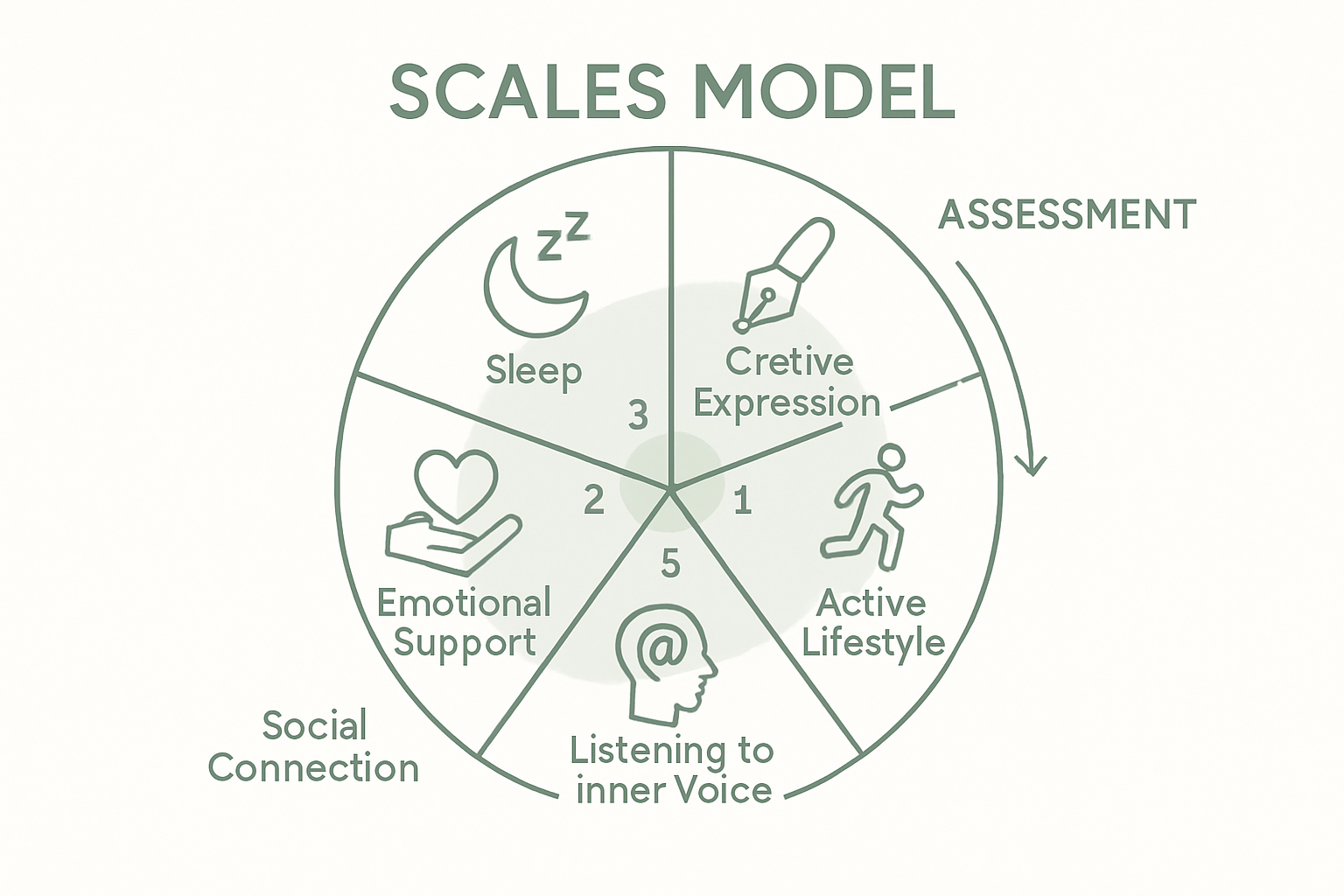
Using the SCALES Model provides a comprehensive framework for understanding and evaluating your overall personal wellbeing. This approach allows you to systematically examine six critical life dimensions that collectively contribute to your mental and emotional health.

Begin by carefully assessing each of the six interconnected elements: Sleep, Creative expression, Active lifestyle, Listening to your inner signals, Earth connection, and Social interactions. Validated mental wellbeing assessment techniques suggest tracking your experiences and emotional states across these dimensions. For each area, reflect honestly on your current status and potential areas for improvement.
Specifically, examine how each SCALES dimension manifests in your daily life. For Sleep, consider your rest quality and duration. In Creative expression, assess opportunities for personal creativity and emotional outlet. Active lifestyle involves evaluating physical movement and exercise patterns. Listening requires tuning into your emotional and physical signals. Earth connection explores your relationship with natural environments. Social interactions examine the quality and depth of your interpersonal relationships.
Tip: Create a simple scoring system where you rate each SCALES dimension from 1 to 10. This provides a tangible method for tracking your wellbeing progression and identifying specific areas requiring targeted attention.
Stage 3: Establish practical daily routines for resilience
Building emotional resilience requires creating structured yet flexible daily routines that support your mental and physical wellbeing. The goal is developing consistent habits that enhance your ability to manage stress and maintain emotional balance.
Improving wellbeing workflows starts with designing intentional morning and evening practices that ground you. Begin by establishing a consistent sleep schedule, aiming to wake and rest at similar times daily. Create a morning ritual that includes gentle movement, brief meditation, or journaling to set a positive emotional tone. Your evening routine should involve wind down activities like reading, light stretching, or reflection that help transition from daytime stress.
Focus on integrating small resilience building actions throughout your day. This might include short breathing exercises during work breaks, maintaining hydration, taking brief walks, or practising mindful pauses between tasks. Structure your environment to support these habits by keeping a water bottle nearby, setting phone reminders for movement, or creating a dedicated calm space for quick recentring moments.
Tip: Start with three manageable routine modifications. Implement them consistently for one month before adding more. Small sustainable changes build lasting resilience more effectively than overwhelming transformations.
Stage 4: Implement creative and social outlets for support
Creative and social connections are powerful strategies for building emotional resilience, offering meaningful pathways to process experiences and connect with others who understand your journey.
Wellbeing interventions through community activities demonstrate that engaging in structured creative and social experiences can significantly enhance mental health. Begin by exploring activities that genuinely spark your interest: join local art workshops, music groups, writing circles, or collaborative community projects. Consider options that align with your personal preferences whether that involves group interactions or more introspective creative pursuits like painting, photography, or crafting.
Prioritise consistent participation and genuine connection in these outlets. This might mean attending a weekly art class, joining an online creative forum, participating in community theatre, or engaging in group sports that combine physical activity with social interaction. The key is finding environments that feel supportive, inspire personal expression, and provide opportunities for meaningful human connection without overwhelming your emotional bandwidth.
Tip: Start small by committing to one creative or social activity per week. Choose something that feels slightly challenging but not intimidating, allowing yourself grace to explore and potentially change direction as you discover what truly resonates with your emotional needs.
Stage 5: Review progress and refine your resilience plan
Regular reflection and intentional adjustment are essential for maintaining an effective emotional resilience strategy. This stage is about creating a compassionate yet honest dialogue with yourself about your progress and potential growth opportunities.
Mental wellbeing monitoring techniques recommend establishing a consistent review process to track your emotional and psychological development. Schedule a monthly self assessment where you critically examine your resilience journey. Reflect on which strategies have been most effective, which areas feel challenging, and how your emotional landscape has shifted since implementing your initial plan.
During your review, create a structured assessment that covers each SCALES dimension. Rate your current experience in Sleep, Creative expression, Active lifestyle, Listening skills, Earth connection, and Social interactions. Look for patterns of improvement, persistent challenges, and emerging insights. Be kind to yourself during this process recognising that resilience is not about perfection but consistent, compassionate effort towards personal growth.
Tip: Use a journal or digital tracking method to document your monthly reviews. This allows you to visualise your progress over time and provides valuable insights into your emotional resilience development.
Build Your Emotional Resilience with Practical Support from Tom Ryder Wellbeing
If you find yourself overwhelmed by constant stress, struggling to establish routines, or unsure how to balance the key areas of your wellbeing such as Sleep, Creative expression, and Social connections as outlined in the Emotional Resilience Guide, Tom Ryder Wellbeing is here to help. Using the proven SCALES Model featured in the article, Tom offers personalised coaching that breaks down overwhelming goals into manageable steps to rebuild your strength and balance.
Take practical action today to transform your daily routines and mental health. Whether you want bespoke 1:1 coaching focused on stress management, mindset, or wellbeing, or group sessions that guide you through the full SCALES Programme, you can start making meaningful changes now. Discover how Tom’s grounded coaching approach combines lived experience with professional training for honest, effective support. Explore more and book a free consultation to begin your journey at Tom Ryder Wellbeing. Learn about the SCALES Programme, or find the right coaching service to suit your needs today.
Frequently Asked Questions
How can I identify my personal stress triggers?
Understanding your personal stress triggers involves maintaining a detailed stress journal. Track specific situations, your emotional responses, and physiological reactions to identify patterns that cause heightened anxiety.
What does the SCALES Model evaluate in terms of wellbeing?
The SCALES Model assesses six key life dimensions: Sleep, Creative expression, Active lifestyle, Listening to your inner signals, Earth connection, and Social interactions. Carefully reflect on and rate each area to identify strengths and areas for improvement in your overall mental and emotional health.
How can I create daily routines to build emotional resilience?
To build emotional resilience, establish structured daily routines that include consistent sleep schedules, morning rituals of movement or meditation, and evening wind-down activities. Start by introducing three manageable changes to your routine and maintain them for one month to observe their impact.
What types of creative and social outlets can I explore for support?
Explore activities like joining art workshops, music groups, or community theatre to establish creative and social connections. Commit to participating in one new creative or social activity per week to enhance your emotional resilience and foster meaningful connections.
How do I review my progress in building emotional resilience?
Regularly schedule a monthly self-assessment to review your emotional resilience progress. Reflect on effective strategies and challenges, rating your experiences in each SCALES dimension to visualise growth and adjust your approach as necessary.
What is the importance of maintaining a stress journal?
Maintaining a stress journal is crucial as it helps illuminate your stress triggers and responses over time. Regularly reviewing this journal can lead to greater self-awareness and more effective stress management strategies.
Recommended
Comments