


Mental Health Coaching: A Practical Path to Balance


Nearly one third of British professionals report that burnout is undermining both their careers and personal lives. The pressure to excel in Essex workplaces often leaves young adults feeling overwhelmed yet unsure how to find lasting relief. This guide reveals how practical mental health coaching, shaped by leading United Kingdom frameworks, empowers individuals to overcome anxiety, build emotional resilience, and restore clarity to everyday routines.
Table of Contents
Key Takeaways
Point | Details |
Definition of Mental Health Coaching | Mental health coaching in the UK focuses on empowerment and practical lifestyle modifications to support self-management of mental health conditions. |
Differences from Therapy | Coaching emphasises goal-setting and personal development, whereas therapy addresses deep-rooted psychological issues and involves clinical interventions. |
SCALES Model | The SCALES Model underscores the interconnection of sleep, creativity, activity, listening, earth, and social elements in promoting mental wellbeing. |
Choosing a Coach | Verify a coach’s professional qualifications and training to ensure safe, effective support; consider a preliminary consultation to assess compatibility. |
Defining Mental Health Coaching in the UK
Mental health coaching represents a progressive approach to supporting individuals experiencing psychological challenges through collaborative, goal-oriented strategies. Emerging professional frameworks define this discipline as a structured method helping people develop practical skills for managing mental wellbeing, distinct from traditional therapeutic interventions.
At its core, mental health coaching focuses on empowerment and practical lifestyle modifications. The 2020 Bournemouth University scoping review highlights that these coaching approaches aim to support self-management of mental health conditions through collaborative processes. Unlike clinical psychology, mental health coaches do not diagnose or treat specific disorders but instead work alongside individuals to create sustainable strategies for emotional resilience.
Professional mental health coaches in the United Kingdom operate within clear ethical boundaries, emphasising client-centred support. They typically possess specialised training that enables them to guide clients through understanding personal triggers, developing coping mechanisms, and establishing healthier lifestyle patterns. These professionals focus on building practical skills such as stress management, emotional regulation, and personal goal setting.
Pro tip: When selecting a mental health coach, always verify their professional qualifications and ensure they have demonstrable experience in supporting individuals with similar challenges to your own.
How Mental Health Coaching Differs from Therapy
Mental health coaching and therapy represent distinct yet complementary approaches to supporting psychological wellbeing. Psychological helping relationships fundamentally differ in their core objectives, methodologies, and professional boundaries, offering individuals tailored pathways for personal growth and mental health support.
While therapy typically addresses deep-rooted psychological conditions, diagnoses, and historical trauma, mental health coaching concentrates on forward-looking strategies and personal development. Coaching psychology research emphasises a collaborative approach focused on motivation, behaviour change, and building practical skills. Coaches work proactively with clients to identify strengths, establish actionable goals, and develop resilience, without delving into complex psychological assessments or treatment protocols.
The professional boundaries between coaching and therapy are critical. Mental health coaches are not licensed therapists and do not provide clinical interventions. Instead, they serve as supportive partners who help clients navigate challenges, enhance personal performance, and create sustainable lifestyle strategies. Their approach is solution-oriented, concentrating on the present and future rather than extensively exploring past psychological experiences.
Pro tip: When considering mental health support, assess your primary needs: seek therapy for in-depth psychological healing, and choose coaching for practical goal-setting and personal development.
Here is a comparison of mental health coaching and therapy approaches in the UK:
Aspect | Mental Health Coaching | Therapy (e.g., Counselling) |
Main Focus | Practical skills and empowerment | Deep-rooted issues and healing |
Typical Methods | Goal-setting, behaviour change | Exploration, diagnosis, treatment |
Time Orientation | Present and future planning | Past experiences and trauma |
Professional Boundary | No clinical diagnosis or treatment | Licensed healthcare intervention |
Ideal For | Growth, self-management, resilience | Complex mental health conditions |
The SCALES Model and Its Six Pillars
The SCALES Model represents a comprehensive framework designed to support holistic mental health and personal wellbeing. Health coaching principles emphasise a multidimensional approach that recognises the interconnectedness of different lifestyle elements in maintaining psychological balance.
Each pillar of the SCALES Model plays a crucial role in supporting overall mental wellness. Sleep focuses on rest and recovery, ensuring individuals have sufficient quality downtime to recharge. The Creative pillar encourages expressive outlets that support mood and emotional processing. Active components address physical movement and its direct impact on mental health. The Listen aspect promotes self-awareness and emotional intelligence by paying attention to internal signals. Earth emphasises grounding techniques and environmental connections, while Social pillars highlight the importance of relationships and community support.
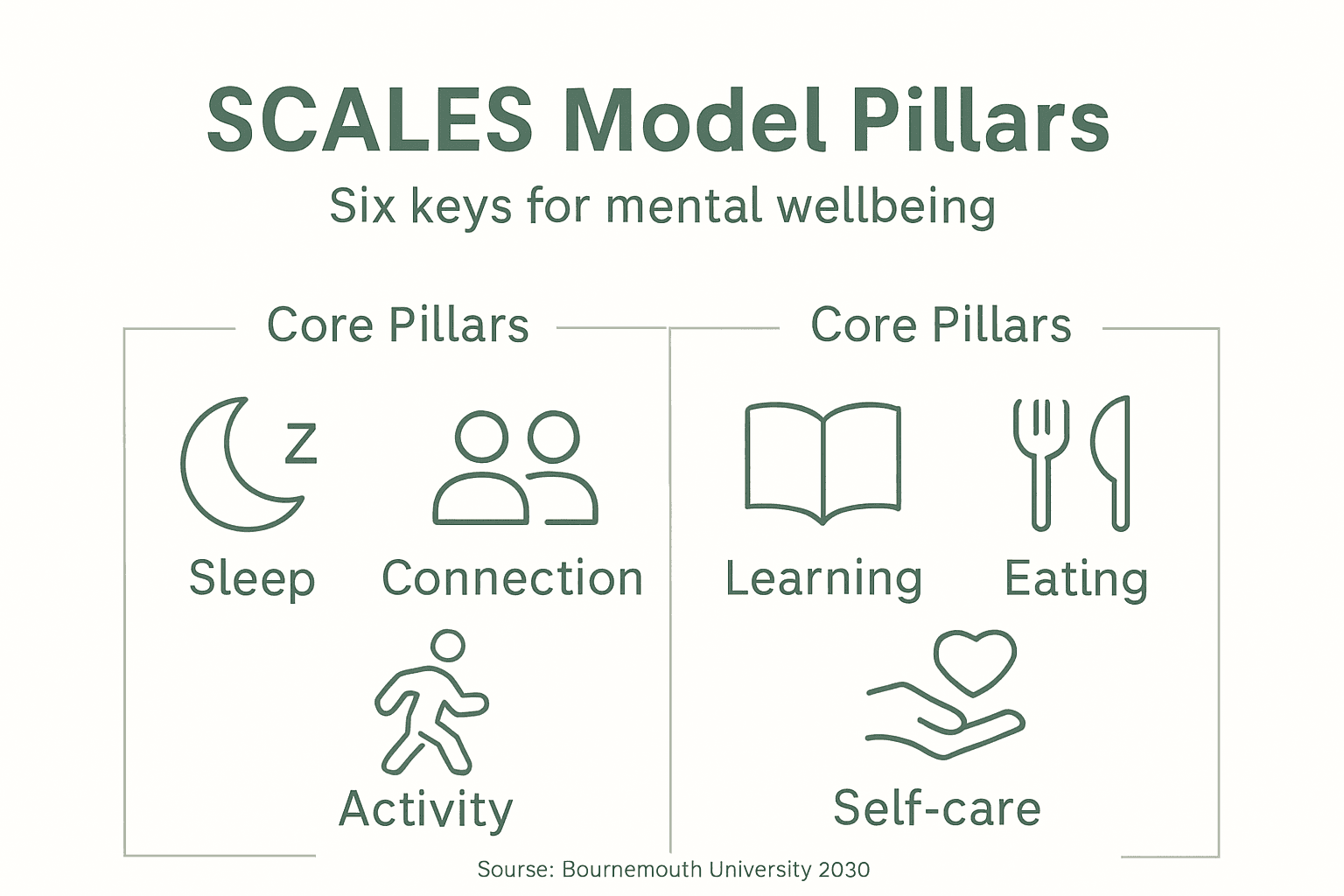
The model’s strength lies in its integrated approach, recognising that wellness requires balanced interventions across multiple life domains. When one area becomes unbalanced, it can significantly impact overall mental wellbeing. Mental health coaches use this framework to help clients identify which areas need attention and develop targeted strategies for improvement, creating a personalised pathway to psychological resilience.
Pro tip: Conduct a monthly self-assessment of your SCALES dimensions, rating each pillar from 1-10 to identify which areas might require more focused attention and care.
The SCALES Model pillars and their wellbeing benefits are summarised below:
Pillar | Core Emphasis | Benefit for Mental Wellbeing |
Sleep | Rest and recovery | Reduces stress, aids resilience |
Creative | Expressive activities | Enhances mood, emotional processing |
Active | Physical movement | Boosts energy, lowers anxiety |
Listen | Emotional self-awareness | Supports self-regulation |
Earth | Environmental connection | Provides grounding, calmness |
Social | Relationships and support | Increases belonging, reduces isolation |
Real Benefits for Burnout and Work-Life Balance
Mental health coaching offers a transformative approach to addressing professional burnout and restoring work-life equilibrium. Healthcare workforce interventions demonstrate significant potential in helping individuals recalibrate their professional and personal energy, providing practical strategies for sustainable performance and emotional resilience.

The coaching process specifically targets the root causes of workplace exhaustion by developing personalised strategies for stress management and boundary setting. Professionals experiencing chronic overwhelm can learn to identify early warning signs of burnout, reconstruct ineffective work patterns, and create more intentional approaches to managing professional demands. This approach goes beyond traditional stress management by helping individuals understand their unique triggers, build adaptive coping mechanisms, and redesign their work and personal routines to support long-term wellbeing.
Professional coaching frameworks emphasise holistic interventions that address psychological, emotional, and practical dimensions of workplace stress. By focusing on incremental changes and developing robust self-management skills, individuals can gradually rebuild their professional confidence, reduce emotional exhaustion, and create more meaningful and sustainable work experiences. The goal is not just managing stress, but fundamentally reimagining one’s relationship with work and personal commitments.
Pro tip: Create a weekly ‘energy audit’ tracking your stress levels, professional satisfaction, and personal wellbeing to identify patterns and proactively manage potential burnout.
Qualifications, Safety, and Finding a Coach
Selecting a qualified mental health coach requires careful consideration and understanding of professional standards. Professional coaching credentials are essential for ensuring safe, effective, and ethical support, with recognised bodies establishing clear guidelines for practitioner qualifications and conduct.
Key considerations when choosing a mental health coach include verifying their professional accreditation, understanding their specific training background, and checking their adherence to established ethical frameworks. Reputable coaches typically possess recognised qualifications from professional coaching organisations, have undergone extensive training in mental health support techniques, and maintain ongoing professional development. They should be transparent about their credentials, offer clear information about their approach, and demonstrate a commitment to client confidentiality and wellbeing.
NHS coaching standards provide a robust framework for identifying competent practitioners. Potential clients should look for coaches registered with recognised professional bodies, who have completed accredited training programmes, and who can provide evidence of continuous professional learning. Important indicators of a quality coach include their ability to explain their methodology, demonstrate empathy, and maintain clear professional boundaries between coaching and clinical therapy.
Pro tip: Request a preliminary consultation with potential coaches to assess their approach, qualifications, and personal compatibility before committing to a full coaching relationship.
Common Pitfalls and How to Avoid Them
Mental health coaching involves nuanced professional boundaries that require careful navigation to ensure client safety and effective support. Professional practice guidelines highlight several critical pitfalls that can undermine the coaching relationship and potentially harm client wellbeing.
One significant risk is coaches operating beyond their professional competencies. Inexperienced practitioners might attempt to provide therapeutic interventions without appropriate clinical training, which can lead to inappropriate or potentially harmful advice. Clients must be vigilant about understanding their coach’s specific qualifications and ensuring they are seeking support within the coach’s established expertise. This means carefully reviewing credentials, understanding the coach’s approach, and being clear about the limitations of coaching compared to clinical therapy.
Mental health coaching standards emphasise the importance of clear role definition and maintaining professional boundaries. Coaches should consistently communicate their scope of practice, recognise when a client might require more specialised mental health support, and be prepared to make appropriate referrals. This includes understanding personal limitations, maintaining ongoing professional supervision, and continuously updating their professional knowledge to provide the most effective and responsible support possible.
Pro tip: Always request a clear, written overview of your coach’s professional boundaries and approach before beginning your coaching relationship.
Discover Practical Mental Health Coaching for Real-Life Balance
If you feel overwhelmed by stress, low energy, or the challenge of maintaining work-life balance then the insights from “Mental Health Coaching: A Practical Path to Balance” may resonate deeply with you. This article highlights the importance of building practical skills and sustainable routines to manage mental wellbeing rather than focusing solely on therapy. Using frameworks like the SCALES Model encourages a holistic approach addressing Sleep, Creativity, Activity, Listening, Earth connection, and Social support — essential pillars for restoring emotional resilience and overcoming burnout.
At Tom Ryder Wellbeing we specialise in delivering tailored Mental Health & Wellbeing Coaching designed to help you regain control and clarity with actionable steps. Whether you need focused support for stress, motivation, or work-life balance our Stress Management Coaching and Work Life Balance Coach programmes offer practical guidance rooted in both professional training and lived experience. Take the first step towards feeling more balanced and confident in your daily life by exploring how coaching can work for you. Visit us today at Tom Ryder Wellbeing and book your free consultation to start making meaningful change now.
Frequently Asked Questions
What is mental health coaching?
Mental health coaching is a supportive approach that helps individuals experiencing psychological challenges through goal-oriented strategies. It aims to empower people by developing practical skills for managing their mental wellbeing, without diagnosing or treating specific disorders.
How does mental health coaching differ from therapy?
Mental health coaching focuses on personal development and forward-looking strategies, while therapy typically addresses deep-rooted psychological issues and healing. Coaches work on goal-setting and coping mechanisms, whereas therapists delve into past experiences and trauma.
What is the SCALES Model in mental health coaching?
The SCALES Model is a framework that supports holistic mental health and personal wellbeing. It includes six pillars: Sleep, Creative, Active, Listen, Earth, and Social, each contributing to mental wellness by addressing various lifestyle elements.
How can I find a qualified mental health coach?
To find a qualified mental health coach, verify their professional accreditation, understand their training background, and check their adherence to ethical standards. It’s advisable to look for coaches with recognised qualifications who are registered with professional bodies.
Recommended
Comments