


Staff Wellbeing – Why It Drives Creative Success


Over half of British creative professionals report experiencing work-related stress every year, a figure that continues to rise across the sector. For HR managers in the fast-paced creative industries, managing the wellbeing of staff is no longer a simple add-on but a strategic priority. With burnout threatening innovation and retention, practical solutions that tackle stress and nurture resilience are now vital for every British creative workplace seeking lasting success.
Table of Contents
Key Takeaways
Point | Details |
Holistic Wellbeing Approach | Creative industries require comprehensive strategies that support mental, emotional, and physical health, fostering environments where professionals can thrive. |
Tailored Wellbeing Initiatives | Effective programmes must recognise unique challenges of creative work, offering flexible structures, peer support, and mental health resources. |
Impact on Retention and Productivity | There is a quantifiable connection between staff wellbeing and organisational performance, with improved job satisfaction boosting creativity and loyalty. |
Legal Responsibilities | Employers have a duty to safeguard mental health, requiring proactive and individualised wellbeing strategies beyond basic compliance. |
Defining Staff Wellbeing in Creative Industries
Staff wellbeing in creative industries represents a holistic approach to supporting professionals’ mental, emotional, and physical health within dynamic work environments. Unlike traditional workplace models, creative sectors require nuanced understanding of how individual creativity intersects with personal wellness. Comprehensive research highlights that wellbeing is not merely about preventing burnout, but actively nurturing environments where professionals can thrive.
In creative industries, wellbeing encompasses more than standard workplace health programmes. It involves recognising the unique psychological demands faced by professionals whose work requires constant innovation, emotional vulnerability, and sustained creative output. Academic studies exploring staff experiences reveal that wellbeing is dynamically shaped by multiple interconnected factors including organisational culture, peer support, professional development opportunities, and individual resilience.
Effective staff wellbeing strategies in creative sectors must address several key dimensions. These include managing high-pressure project environments, providing mental health support, creating flexible working arrangements, and developing robust professional support networks. Creative professionals often experience intense emotional labour, where personal identity is deeply intertwined with professional output, making holistic wellness approaches critical.
Here’s a summary of key dimensions of staff wellbeing specific to creative industries:
Wellbeing Dimension | Description | Unique Benefit in Creative Sector |
Emotional Resilience | Building capacity to cope with workplace stress | Enables sustained innovation |
Flexible Work Structures | Options for hours and locations of work | Supports creative energy cycles |
Peer Support Networks | Collaborative and supportive professional groups | Strengthens community and morale |
Professional Development | Opportunities for skill advancement | Fuels personal and artistic growth |
Professional Insight: Design workplace cultures that treat emotional resilience as a professional skill to be developed, not a personal weakness to be hidden.
Types of Wellbeing Initiatives and Key Benefits
Creative industries are increasingly recognising the importance of tailored wellbeing initiatives that address the unique challenges faced by professionals. Comprehensive research on job quality reveals that effective wellbeing programmes go far beyond traditional workplace health approaches, focusing instead on holistic support that nurtures creativity and individual potential.
These initiatives typically encompass multiple dimensions, including mental health support, professional development, and flexible working arrangements. Key strategies often include providing dedicated mental health resources, offering skills training, implementing flexible work schedules, and creating supportive peer networks. Creative professionals particularly benefit from programmes that acknowledge the emotional intensity of their work and provide targeted support for managing professional stress and maintaining creative energy.
The benefits of well-designed wellbeing initiatives are significant and multifaceted. Evidence-based workplace strategies demonstrate that comprehensive wellbeing programmes can lead to improved job satisfaction, reduced burnout, enhanced creativity, and increased organisational loyalty. By investing in staff wellbeing, creative organisations can create environments that not only support individual health but also drive innovation and professional excellence.
Professional Insight: Develop wellbeing initiatives that treat emotional resilience as a professional skill, integrating support seamlessly into workplace culture.
How Wellbeing Impacts Retention and Productivity
Comprehensive workplace research reveals a profound connection between staff wellbeing and organisational performance. The relationship between employee wellness and productivity is not merely theoretical but a quantifiable business imperative, especially within creative industries where emotional and psychological resources directly influence output and innovation.

Creative professionals experience unique workplace challenges that make wellbeing particularly critical. Burnout, emotional exhaustion, and constant pressure can significantly diminish creative potential, leading to reduced productivity and increased staff turnover. Sector-specific studies demonstrate that organisations investing in comprehensive wellbeing strategies see measurable improvements in staff retention, with employees feeling more valued, supported, and motivated to contribute their best work.
The impact of wellbeing on productivity extends beyond simple metrics. It encompasses job satisfaction, emotional resilience, and a sense of meaningful contribution. When creative professionals feel psychologically safe and supported, they are more likely to take creative risks, collaborate effectively, and maintain sustained high performance. This holistic approach to wellbeing transforms workplace culture from transactional to genuinely supportive, creating an environment where creativity can flourish.
Professional Insight: Treat wellbeing as a strategic investment, not a cost, by measuring both human and business outcomes through regular, compassionate feedback mechanisms.
Employer Duties and Legal Responsibilities in the UK
Comprehensive legal guidance underscores the significant legal obligations employers have in safeguarding staff wellbeing within the United Kingdom. These responsibilities extend far beyond traditional workplace safety, encompassing mental health protection, discrimination prevention, and proactive welfare support across all professional environments, particularly in high-pressure creative sectors.
The primary legislative frameworks governing employer responsibilities include the Health and Safety at Work Act and the Equality Act. These regulations mandate that organisations must conduct comprehensive risk assessments addressing both physical and psychological workplace hazards. For creative professionals, this means implementing strategies that recognise the unique stressors inherent in project-based work, unpredictable schedules, and the emotional labour associated with creative production.
Legal compliance requires employers to take tangible, documented steps towards protecting staff wellbeing. This includes establishing clear mental health policies, providing reasonable workplace adjustments, offering confidential support mechanisms, and creating an organisational culture that destigmatises discussions about psychological health. Employers must also ensure that any interventions are proportionate, supportive, and aligned with individual employee needs, avoiding blanket approaches that fail to recognise personal differences.
Professional Insight: Transform legal compliance from a bureaucratic requirement into a genuine opportunity for creating a supportive, psychologically healthy workplace environment.
Common Pitfalls and Effective Practical Solutions
Research on creative workplace dynamics reveals several critical pitfalls that undermine staff wellbeing initiatives. Many organisations approach wellbeing as a checkbox exercise, implementing superficial programmes that fail to address underlying structural and cultural challenges specific to creative industries. This approach often results in disengaged staff, increased burnout, and ultimately, reduced organisational effectiveness.
Common mistakes include treating wellbeing as a standalone programme rather than an integrated strategy. Creative professionals require nuanced, tailored approaches that recognise the unique psychological demands of their work. Evidence-based workplace strategies consistently demonstrate that effective wellbeing interventions must be co-designed with staff, responsive to individual needs, and embedded within organisational culture.
Successful solutions demand a holistic approach. This involves creating transparent communication channels, developing flexible support mechanisms, and training leadership to understand and prioritise psychological safety. Organisations must move beyond generic wellness programmes to create environments that genuinely value individual experiences, provide meaningful professional development, and acknowledge the emotional complexity of creative work.
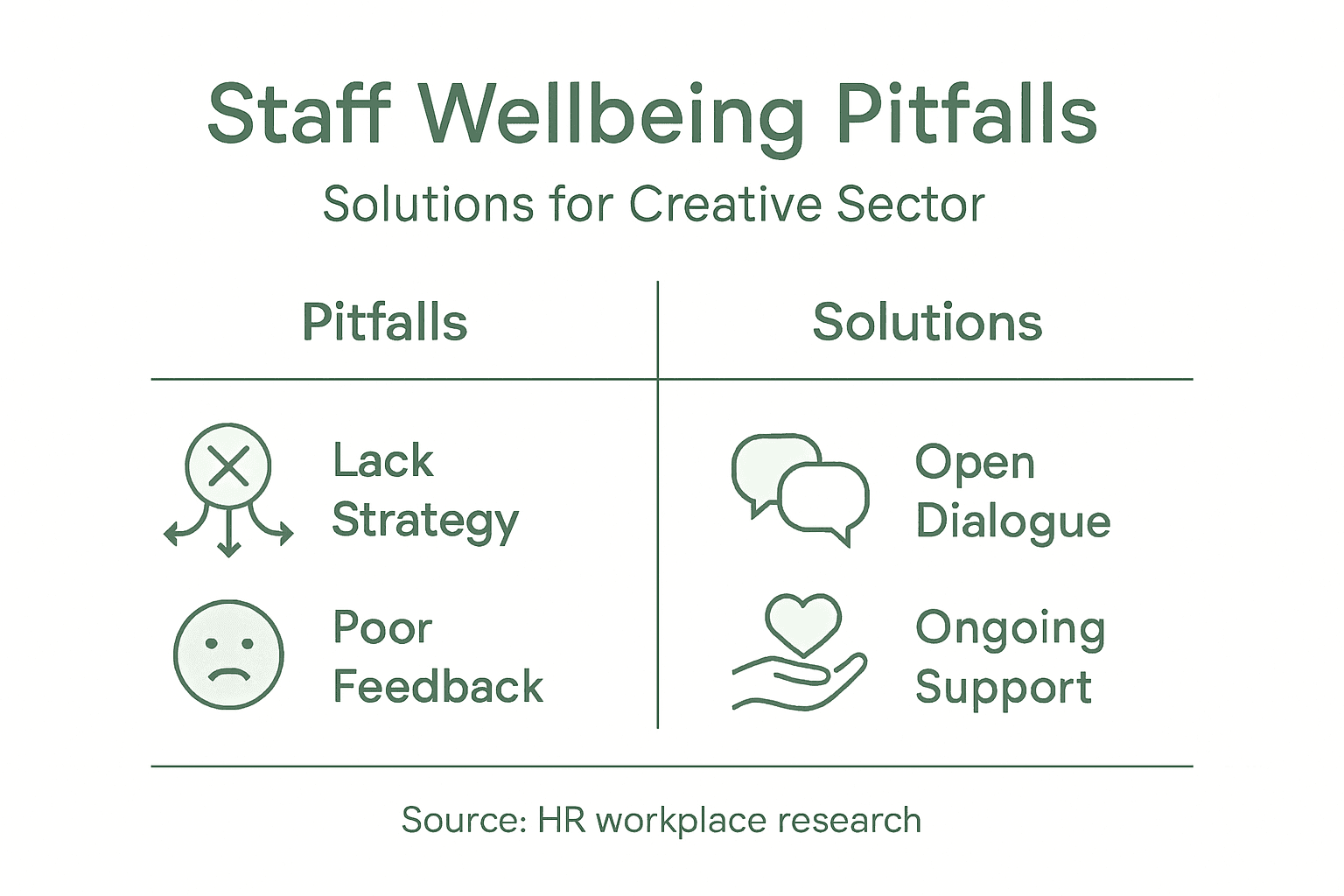
The table below compares common pitfalls with practical solutions for staff wellbeing in creative industries:
Pitfall | Underlying Cause | Practical Solution | Expected Outcome |
Superficial programmes | Focus on box-ticking | Embed wellbeing in culture | Increased engagement |
Generic interventions | Failure to address individual needs | Co-design strategies with staff | Reduced burnout |
Lack of leadership training | Limited awareness of psychology | Educate managers on wellbeing | Improved staff retention |
Professional Insight: Design wellbeing strategies as collaborative, evolving processes that actively listen to and incorporate staff perspectives, not as top-down, static interventions.
Empower Creative Wellbeing with Practical Coaching That Works
The article highlights how critical staff wellbeing is for sustained creativity and organisational success. It uncovers challenges like burnout, emotional exhaustion, and the need for emotional resilience tailored specifically for creative industries. If you or your organisation recognise these pressures and want to transform wellbeing from a tick-box exercise into a genuine, supportive culture, targeted coaching can make all the difference.
At Tom Ryder Wellbeing, we specialise in Health and Wellbeing Coaching that builds emotional resilience and practical strategies to manage stress and burnout effectively. Our approach uses the SCALES Model to help you balance key life areas such as sleep, creativity, and social connection which are vital for thriving in high-pressure creative careers. Whether you seek Emotional Resilience Coaching to handle workplace challenges or Stress Management Coaching to regain control over overwhelming demands, we support your journey with grounded and honest guidance.
Don’t let stress or burnout hold your creativity back. Discover how practical wellbeing coaching can empower you or your team to flourish. Visit Tom Ryder Wellbeing today and start building a work and life balance that truly supports your creative success.
Frequently Asked Questions
What is staff wellbeing in creative industries?
Staff wellbeing in creative industries refers to a holistic approach aimed at supporting the mental, emotional, and physical health of professionals, acknowledging the unique demands of creativity and the intense emotional labour involved.
Why is wellbeing important for creativity?
Wellbeing is crucial for creativity as it fosters emotional resilience and a supportive environment, allowing creative professionals to thrive, take risks, and collaborate effectively without the fear of burnout or emotional exhaustion.
What types of wellbeing initiatives are effective in creative sectors?
Effective wellbeing initiatives include dedicated mental health resources, flexible working arrangements, professional development opportunities, and supportive peer networks, all designed to nurture individual creativity and reduce occupational stress.
How can employers enhance staff wellbeing in creative industries?
Employers can enhance staff wellbeing by implementing co-designed wellbeing strategies, prioritising psychological safety, offering personalised support, and cultivating a workplace culture that values emotional resilience as a professional skill.
Recommended
Comments