


Step-by-Step Guide to Balancing Mindset for Busy Creatives


Over half of British creatives report feeling continually overwhelmed by the pressures of work and life balance. If you are a passionate artist, designer, or young professional, your daily grind can blur the line between inspiration and exhaustion. Recognising this challenge is the starting point for real change. This guide brings together practical mindset tools grounded in psychological research to help you manage stress, reset your mental state, and build long-term resilience.
Table of Contents
Quick Summary
Key Insight | Explanation |
1. Assess Your Mindset Balance | Evaluate your mindset to identify limiting beliefs and mental blocks. Reflect on your typical responses to challenges. |
2. Identify Stress Triggers | Recognise specific stressors in your life, such as deadlines or criticism, to better manage emotional responses. |
3. Implement the SCALES Model | Create daily routines based on the SCALES model to support mental wellbeing and enhance creativity. |
4. Establish Daily Reset Techniques | Develop brief daily practices to reset your mindset and alleviate stress effectively. |
5. Monitor and Adjust Strategies | Regularly review your progress and adapt strategies to ensure ongoing personal development and emotional health. |
Step 1: Assess Your Current Mindset Balance
Assessing your current mindset balance is a crucial first step in understanding how your mental framework supports or hinders your creative potential. This process helps you identify where you might be experiencing mental blocks or unhelpful thinking patterns.
Begin by conducting a personal mindset evaluation using established psychological frameworks. Consider your typical responses to challenges: do you view them as opportunities for growth or insurmountable obstacles? Understanding whether you predominantly operate from a fixed or growth mindset will provide significant insights into your current mental state. The Warwick-Edinburgh Mental Well-being Scale suggests examining 14 key dimensions including your levels of optimism, confidence, and social connection.
Reflect honestly on areas where your thinking might be limiting your creative performance. This might involve recognising patterns of self-doubt, understanding your stress responses, or identifying recurring negative thought cycles that prevent you from taking creative risks. By mapping these elements, you create a baseline for personal development and mindset transformation.
Expert Recommendation: Keep a reflective journal during this assessment process to track your insights and emerging self-awareness.
Step 2: Identify Your Key Stress Triggers
Pinpointing the specific circumstances that generate stress is essential for creatives seeking to build a balanced mindset. This step will help you recognise patterns and develop targeted strategies for managing your emotional wellbeing.
Identifying stress triggers requires a systematic approach to understanding your personal and professional landscape. Begin by tracking your emotional responses across different contexts: workplace interactions, creative projects, financial pressures, and personal relationships. Pay close attention to physical and psychological signals such as increased heart rate, muscle tension, disrupted sleep patterns, or sudden mood shifts that indicate emerging stress.
Consider creating a stress journal where you document triggering events, your immediate reactions, and the underlying emotions. Look for recurring themes such as tight deadlines, criticism of your work, financial uncertainty, or interpersonal conflicts. Understanding these triggers allows you to develop proactive coping mechanisms and create personalised strategies for maintaining emotional equilibrium.
Expert Recommendation: Schedule a weekly review of your stress journal to identify emerging patterns and develop targeted resilience strategies.
To better understand how creative stress triggers compare across different contexts, see the table below:
Context | Common Stress Trigger | Typical Response | Suggested Coping Strategy |
Workplace | Tight deadlines | Anxiety, irritability | Prioritise tasks, delegate if able |
Creative Projects | Criticism of work | Self-doubt, frustration | Seek constructive feedback |
Financial Situation | Uncertainty over income | Worry, sleep issues | Create budget, seek advice |
Personal Relationships | Interpersonal conflict | Mood shifts, tension | Open communication, active listening |
Step 3: Apply the SCALES Model to Create Routine
Transforming your mindset requires a structured approach to daily living that supports your overall wellbeing and creative potential. The SCALES model provides a comprehensive framework for building sustainable routines that nurture your mental and emotional health.
Creating healthy routines offers a powerful mechanism for reducing anxiety and preserving mental energy. Begin by mapping out each element of the SCALES model into your daily practice. For Sleep, establish consistent bedtime and waking hours. In the Creative domain, allocate specific time for artistic expression or skill development. Active elements should include regular physical movement that energises your body and mind. Learn to Listen by setting aside moments for self reflection and emotional check ins. Earth involves connecting with nature or grounding practices. Social components require intentional interaction and relationship maintenance.

Remember that routine building is an iterative process. The British Red Cross suggests personalising your approach and maintaining flexibility. Start with small achievable goals and gradually integrate more comprehensive practices across each SCALES dimension. Track your progress and be willing to adjust your routine as your creative and personal needs evolve.
Expert Recommendation: Create a visual SCALES tracker to monitor your progress and maintain accountability in your routine development.
Here is an overview of the SCALES model elements and examples of daily routine integrations:
SCALES Dimension | Routine Integration Example | Wellbeing Benefit |
Sleep | Fixed bedtime and wake time | Improves rest and recovery |
Creative | Set aside time for artistic exploration | Boosts self-expression |
Active | Daily walk or brief exercise | Increases energy, reduces stress |
Listen | Five-minute reflection break | Enhances self-awareness |
Earth | Spend time outdoors or gardening | Encourages grounding |
Social | Connect with friends or team members | Strengthens social support |
Step 4: Embed Daily Mindset Reset Techniques
Designing effective daily mindset reset techniques helps creatives maintain emotional balance and sustain their mental wellbeing through structured intentional practices. These techniques provide a reliable mechanism for managing stress and redirecting mental energy.
Creating systematic approaches to emotional regulation supports resilience and promotes stable mental health. Begin by establishing brief morning and evening rituals that ground your emotional state. These might include five minutes of breathwork, journaling three gratitude statements, or conducting a quick body scan meditation. The key is consistency and choosing practices that feel authentic to your personal style and creative rhythm.
Consider developing a personalised reset toolkit with multiple techniques you can deploy depending on your current mental state. Some options might include a short walk in nature, listening to a specific playlist, sketching without judgment, or performing a quick physical stretch routine. The goal is to create flexible yet structured methods that help you recalibrate your mindset swiftly and effectively whenever you feel overwhelmed or disconnected.
Expert Recommendation: Experiment with different reset techniques and track which ones provide the most immediate and sustainable mental clarity.
Step 5: Monitor Progress and Adjust Actions
Tracking your mindset transformation requires systematic reflection and a willingness to adapt your strategies as you grow. This step is crucial for ensuring your mental wellbeing approach remains dynamic and responsive to your changing creative needs.
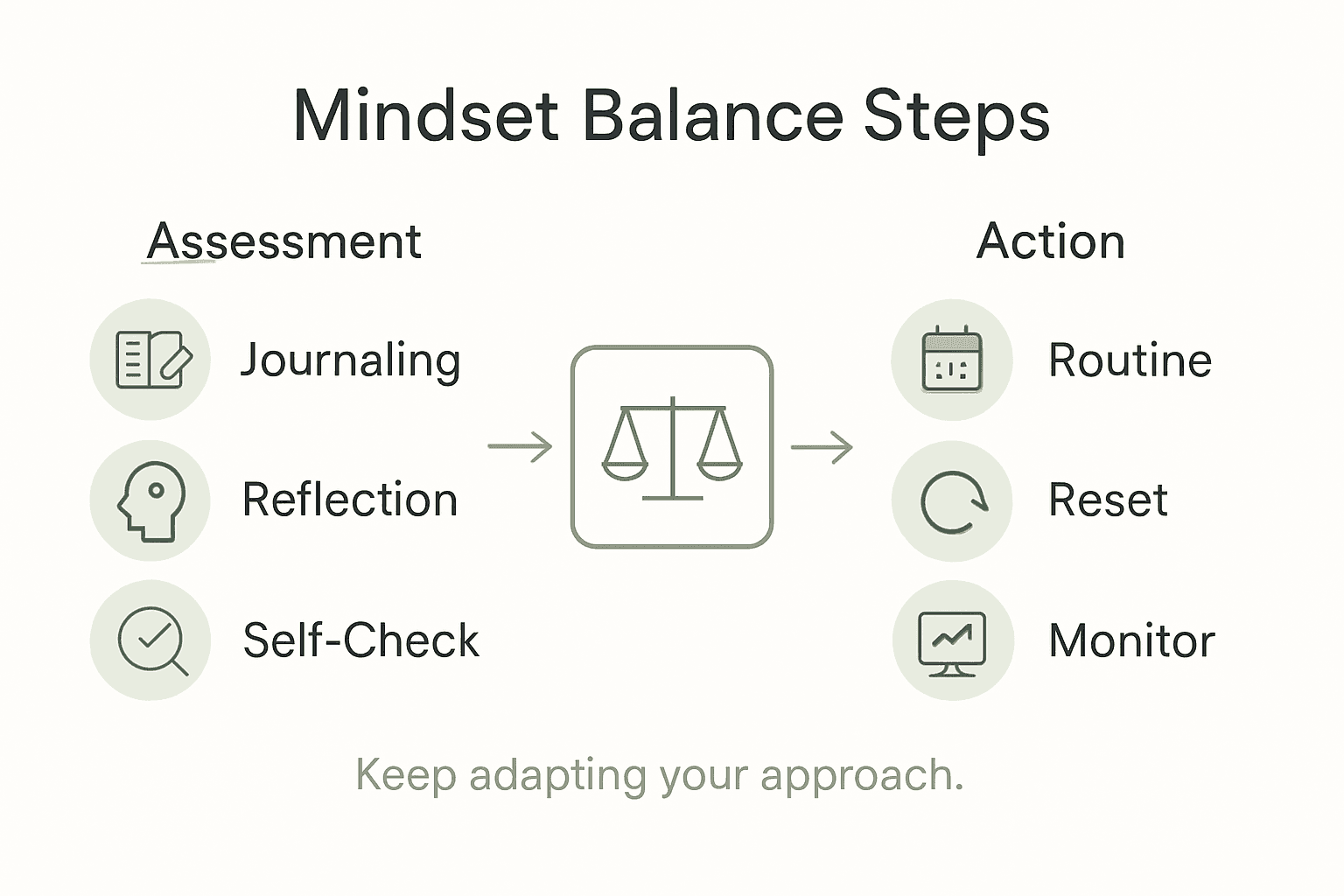
Developing a structured approach to monitoring your progress supports continuous personal development and emotional insight. Implement a weekly or fortnightly review process where you systematically examine your mindset techniques. Consider keeping a dedicated journal that tracks your emotional states, the effectiveness of your reset techniques, and any patterns you notice in your stress responses. Assess which strategies genuinely improved your mental clarity and which felt less impactful.
Remember that progress is not linear. Some weeks you might feel more balanced than others, and that is completely normal. The goal is not perfection but consistent self awareness and incremental improvement. Be compassionate with yourself as you learn and adjust. Oxford Brookes University suggests treating reflection as a skill that improves with practice, allowing you to develop deeper insights into your mental and emotional landscape over time.
Expert Recommendation: Schedule a monthly comprehensive review where you assess your overall mindset progress and consciously redesign your strategies.
Find Balance and Boost Your Creative Wellbeing Today
Balancing your mindset as a busy creative is essential yet challenging when stress, self-doubt, and disrupted routines hold you back. This guide highlights key struggles such as managing stress triggers and building sustainable routines with the SCALES Model—concepts that are core to successful mindset transformation. If you find yourself overwhelmed by constant stress or stuck cycling through anxiety and low energy, practical support can make all the difference.
Tom Ryder Wellbeing specialises in health, wellbeing, and Mindset Coaching UK tailored for professionals, creatives, and individuals aiming to create real, lasting change. Through a collaborative and grounded approach, Tom helps you break down goals into simple steps, develop healthy routines across Sleep, Creative outlets, Activity, Listening, Earth connection, and Social support, and build resilience to setbacks. Start your journey with a free consultation and experience practical tools to reset your mindset daily and regain control over your wellbeing.
Explore how Stress Management Coaching and the signature Wellbeing Coaching UK programmes can support your creative life. Take the first step now by visiting Tom Ryder Wellbeing and book your session to start feeling balanced, focused, and empowered.
Frequently Asked Questions
How can I assess my current mindset balance as a busy creative?
To assess your current mindset balance, conduct a personal mindset evaluation focusing on your typical responses to challenges. Reflect on whether you view obstacles as growth opportunities or as insurmountable barriers and document your insights in a reflective journal for clarity and self-awareness.
What are effective ways to identify my key stress triggers?
You can identify your key stress triggers by tracking your emotional responses in various situations, such as during creative projects or in personal relationships. Keep a stress journal to note triggering events and your immediate reactions, reviewing it weekly to spot patterns and develop coping strategies.
How do I apply the SCALES model to create a sustainable routine?
To apply the SCALES model, start by integrating each element into your daily life, such as setting consistent sleep times or scheduling creative sessions. Focus on small, achievable goals for each dimension, gradually expanding your routine to support your mental and emotional well-being.
What are some daily mindset reset techniques I can implement?
You can implement daily mindset reset techniques such as morning breathwork, journaling three things you’re grateful for, or engaging in quick physical stretches. Experiment with different techniques to find what resonates best with you, aiming to establish a consistent practice for emotional balance.
How can I effectively monitor my progress in balancing my mindset?
To monitor your progress, implement a regular review process, such as a bi-weekly journal check to assess the effectiveness of your mindset strategies. Reflect on your emotional states and the impact of your reset techniques to continuously adapt your approach for optimal results.
Recommended
Comments