


Why Practical Coaching Works for Stress and Burnout
- Tom Ryder Wellbeing

- Dec 31, 2025
- 7 min read

Nearly half of British professionals report feeling overwhelmed by stress before age forty five. For those in Essex, the pressure to balance career ambitions with personal wellbeing is causing a silent burnout epidemic. Practical coaching offers a direct and realistic path for restoring control, with structured strategies that address daily challenges and support sustainable work-life balance.
Table of Contents
Key Takeaways
Point | Details |
Practical Coaching Focus | Practical coaching emphasises actionable strategies to aid individuals in managing stress and promoting personal transformation. |
Types of Coaching | Different coaching types such as Wellbeing, Mindset, and Life coaching cater to specific psychological and personal developmental needs. |
Transformative Power | Practical coaching fosters deep self-reflection and builds resilience, encouraging sustainable behavioural changes in daily life. |
Addressing Pitfalls | Awareness of coaching challenges, such as boundary issues and communication breakdowns, is essential for maintaining effective coaching relationships. |
Defining Practical Coaching and Its Foundations
Practical coaching represents a strategic, solution-focused approach designed to support individuals in managing stress, overcoming burnout, and creating meaningful personal transformation. Unlike traditional therapeutic models, practical coaching focuses on actionable strategies and present-moment interventions that empower clients to develop tangible skills for navigating life’s challenges.
The foundations of practical coaching are rooted in comprehensive learning frameworks that emphasise person-centred development and holistic growth. These frameworks highlight critical coach attributes such as active listening, adaptability, and creating supportive environments where individuals can explore their potential. The methodology prioritises collaborative goal-setting, helping clients identify specific obstacles and design pragmatic solutions tailored to their unique circumstances.
Key characteristics of practical coaching include a forward-looking perspective, emphasis on personal agency, and structured yet flexible approaches to problem-solving. Coaches utilise evidence-based techniques to help clients develop resilience, enhance self-awareness, and implement sustainable lifestyle changes. By focusing on actionable steps and measurable outcomes, practical coaching provides a structured pathway for individuals struggling with stress and burnout to regain control and rebuild their wellbeing.
Practical Tip: Begin your coaching journey by clearly defining three specific, achievable goals that address your most pressing stress-related challenges.
Types of Coaching: Wellbeing, Mindset, and Life
Coaching encompasses several specialised approaches, each addressing unique psychological and personal development needs. These distinct types share a fundamental goal of supporting individuals in creating meaningful life transformations, yet they differ significantly in their focus, methodology, and desired outcomes. Empirical research highlights how these coaching modalities support psychological needs and optimal functioning, providing targeted interventions for professionals experiencing complex life challenges.
Wellbeing coaching concentrates on holistic health, addressing physical, emotional, and mental dimensions. It helps individuals develop sustainable lifestyle strategies, manage stress, and create balanced routines that support overall quality of life. Mindset coaching, in contrast, delves deeper into psychological patterns, challenging limiting beliefs and helping clients reframe negative thought processes. The approach focuses on developing cognitive flexibility, emotional resilience, and transformative self-understanding.
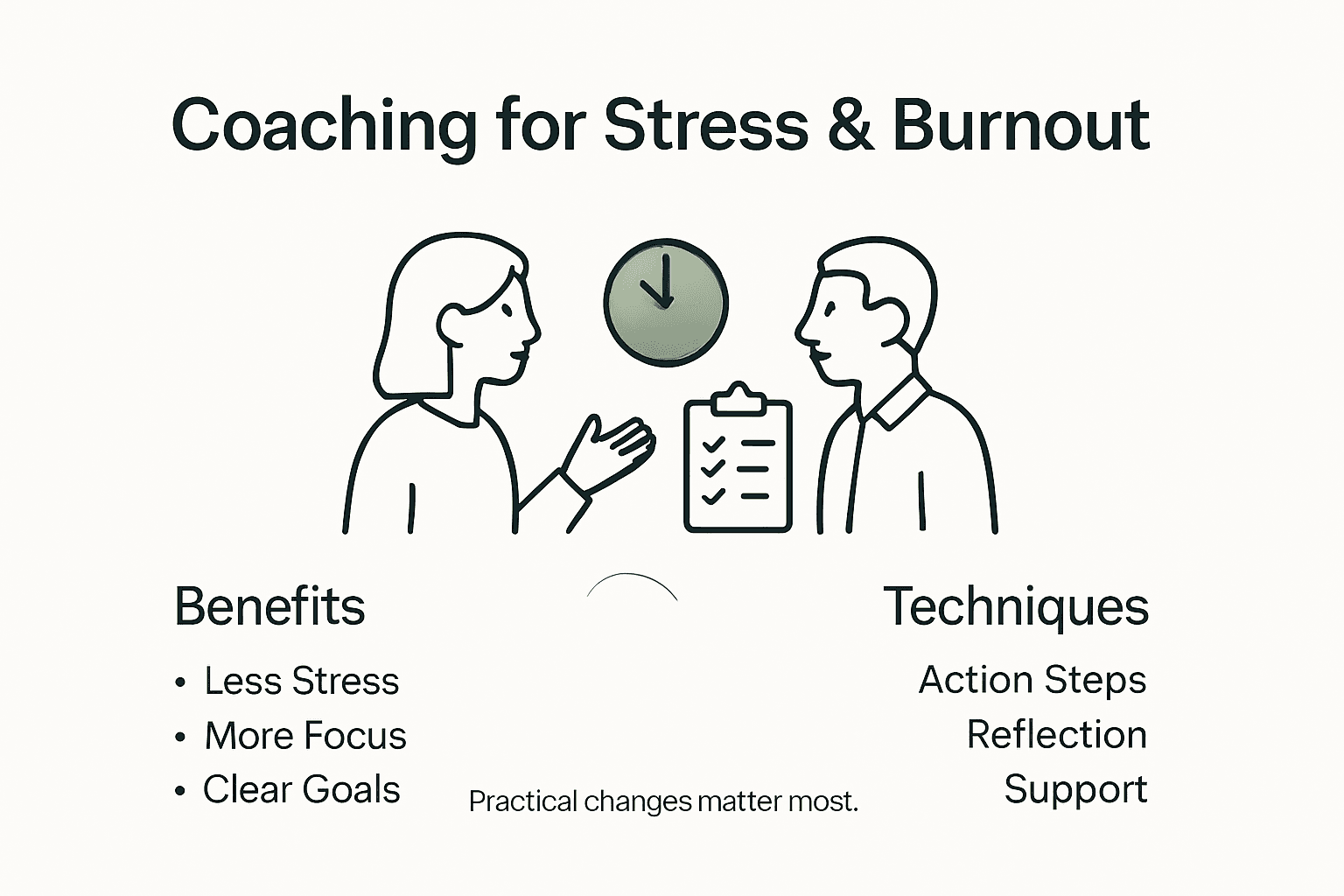
Life coaching takes a broader perspective, supporting clients in defining and achieving significant personal and professional goals. This approach is particularly effective for individuals navigating career transitions, relationship dynamics, or personal growth stages. By combining goal-setting techniques with strategic planning, life coaches help clients create actionable roadmaps for meaningful change, bridging the gap between current circumstances and desired future outcomes.
Practical Tip: Reflect on which coaching type resonates most with your current life challenges and personal development objectives.
The following table highlights the distinctions between common coaching types discussed in this section:
Coaching Type | Primary Focus | Typical Techniques | Common Applications |
Wellbeing Coaching | Holistic health | Lifestyle planning, stress management | Enhancing wellness and work-life balance |
Mindset Coaching | Mental patterns | Cognitive reframing, belief challenging | Overcoming limiting beliefs |
Life Coaching | Personal/professional goals | Action plans, strategic goal-setting | Navigating transitions and growth |
How Practical Coaching Transforms Daily Life
Practical coaching offers a profound approach to personal transformation by creating an interactive, reciprocal relationship that harnesses an individual’s intrinsic motivation for change. This methodology goes beyond traditional advice-giving, instead focusing on cultivating deep self-reflection, building confidence, and enabling sustained personal development that permeates everyday behaviours and decision-making processes.
Through the lens of self-determination theory, coaching fundamentally transforms daily life by addressing core psychological needs of autonomy, competence, and relatedness. Individuals learn to develop more resilient mindsets, breaking free from restrictive patterns and creating meaningful strategies for navigating complex personal and professional challenges. The coaching process helps clients reframe obstacles, develop nuanced problem-solving skills, and build emotional intelligence that translates directly into more effective daily functioning.
Practical coaching’s transformative power lies in its ability to create sustainable behavioural change. By working collaboratively, coaches help clients design personalised strategies that align with their unique goals and values. This approach ensures that insights gained during coaching sessions translate into tangible, real-world actions, enabling individuals to build healthier routines, improve relationships, and develop more adaptive responses to stress and uncertainty.
Practical Tip: Commit to one small, actionable change each week that emerges from your personal reflection and coaching insights.
Evidence-Based Benefits and Psychological Impact
Empirical research demonstrates that coaching provides substantial psychological and functional benefits across multiple domains of human experience. By systematically addressing intrinsic psychological needs, coaching interventions support individuals in developing resilience, enhancing motivation, and creating meaningful pathways for personal transformation that extend far beyond traditional therapeutic approaches.
The scientific evidence highlights coaching’s profound impact on psychological functioning, particularly through the lens of self-determination theory. Coaching interventions have been shown to positively influence autonomy, competence, and relatedness, which are fundamental psychological requirements for optimal human performance. These evidence-based approaches help individuals reframe challenges, develop robust coping mechanisms, and cultivate a more adaptive mindset that enables more effective navigation of complex personal and professional landscapes.
Systematic reviews of academic coaching interventions reveal consistent improvements in psychological resilience, goal attainment, and personal development. Critically, these studies emphasise the importance of professionally trained coaches and structured intervention approaches, demonstrating that well-designed coaching programmes can produce measurable, sustainable improvements in individual well-being and performance. The research underscores coaching as a scientifically validated method for supporting psychological growth and managing stress in contemporary professional environments.

Practical Tip: Select a coaching intervention with clear, research-backed methodologies and professionally qualified practitioners to maximise potential psychological benefits.
Here is a summary of major psychological benefits supported by evidence-based coaching interventions:
Psychological Aspect | Benefit Provided | Example Outcome |
Autonomy | Increased self-direction | More proactive decision-making |
Competence | Enhanced capability | Improved problem-solving skills |
Relatedness | Greater social connection | Stronger workplace relationships |
Resilience | Better stress management | Reduced burnout and fatigue |
Common Pitfalls and How to Avoid Them
Coaching practices often encounter significant challenges that can undermine their effectiveness and potentially harm client progress. Understanding these potential pitfalls is crucial for both coaches and clients to ensure a productive, ethical, and transformative coaching relationship. These challenges range from professional boundary issues to communication breakdowns that can diminish the potential benefits of coaching interventions.
One of the most critical risks involves maintaining appropriate professional boundaries and avoiding unintentional psychological manipulation. Coaches must be vigilant about not gaslighting clients or providing unsolicited advice that undermines their autonomy. This requires developing deep listening skills, demonstrating genuine empathy, and focusing on helping clients discover their own solutions rather than imposing external perspectives. Cultural competence becomes essential in navigating these complex interpersonal dynamics, ensuring that coaching approaches respect individual differences and unique personal contexts.
Organisations implementing coaching programmes must address structural challenges to prevent systemic failures. These include establishing clear coaching objectives, implementing robust quality control mechanisms, and ensuring continuous professional development for coaches. Effective programmes require transparent communication, well-defined role expectations, and ongoing supervision to maintain integrity and effectiveness. By proactively addressing potential weaknesses in coaching structures, organisations can create sustainable interventions that genuinely support individual and collective growth.
Practical Tip: Always request clear documentation of a coach’s professional qualifications, supervision process, and ethical guidelines before beginning your coaching journey.
Discover Practical Coaching to Overcome Stress and Burnout Today
If you are feeling overwhelmed by constant stress, low energy, or struggling to find balance in your daily life this article highlights why practical coaching is an effective solution. At Tom Ryder Wellbeing, we specialise in helping people who want to make real, sustainable changes using a practical coaching approach rooted in clear goal-setting and manageable steps. Our work focuses on restoring balance across key areas such as sleep, mindset, activity, and social connection, ensuring you build resilience that truly lasts.
Whether you are dealing with burnout or stuck in cycles of anxiety and self-doubt our tailored Stress Management Coaching and Mindset Coaching UK programmes provide tools to reframe challenges and manage pressure effectively. Begin your journey today by connecting with us for a free consultation and take the practical first step towards regained wellbeing and clarity. Visit Tom Ryder Wellbeing now to explore how our coaching can help you create the meaningful change you need.
Frequently Asked Questions
What is practical coaching?
Practical coaching is a solution-focused approach that supports individuals in managing stress, overcoming burnout, and creating meaningful personal transformation. It focuses on actionable strategies and present-moment interventions, empowering clients to develop skills for navigating life’s challenges.
How does practical coaching help with stress and burnout?
Practical coaching helps individuals by emphasising personal agency and providing structured problem-solving techniques. It focuses on collaborative goal-setting, building resilience, and enhancing self-awareness, which facilitates sustainable lifestyle changes and improved well-being.
What are the different types of coaching and how do they differ?
The main types of coaching are wellbeing coaching, mindset coaching, and life coaching. Wellbeing coaching focuses on holistic health and stress management, mindset coaching addresses psychological patterns and limiting beliefs, while life coaching supports individuals in defining and achieving personal and professional goals through strategic planning.
What are the key benefits of evidence-based coaching?
Evidence-based coaching offers substantial benefits, including increased autonomy, enhanced competence, greater social connections, and improved resilience. These psychological aspects contribute to better stress management, reduced burnout, and overall personal development.
Recommended
Comments