


Why Routine Supports Wellbeing for UK Professionals


Workdays in the United Kingdom often leave professionals drained and searching for relief from constant stress. The challenge goes deeper when everyday pressures threaten mental wellbeing and disrupt life’s balance. Building a healthy routine is more than just scheduling tasks—it creates predictability and psychological stability that help reduce overwhelm. This guide explores actionable strategies to structure your day, support emotional resilience, and foster habits that protect your wellbeing in fast-paced British work environments.
Table of Contents
Key Takeaways
Point | Details |
Importance of Routines | Establishing routines supports mental and emotional stability, enhancing overall wellbeing for professionals. |
Routine for Stress Management | Effective routines reduce cognitive load and emotional reactivity, allowing for better coping with workplace stress. |
Personalised Approaches | Tailoring routines to individual needs fosters adaptability and ensures sustainable habit formation. |
Overcoming Barriers | Addressing time constraints and organisational culture is crucial for implementing effective wellbeing routines. |
Routine and Wellbeing: The Essential Link
For UK professionals navigating increasingly complex work environments, routines are more than just structured sequences of activities. They represent a fundamental psychological mechanism for maintaining mental equilibrium and emotional stability. Research indicates routines contribute significantly to meaning in life, serving as critical support structures for psychological health.
Routines work by providing predictability and reducing uncertainty. When professionals establish consistent patterns, they create a sense of control that directly counteracts workplace stress. This psychological mechanism helps individuals manage daily challenges more effectively by:
Creating a sense of personal agency
Reducing decision fatigue
Establishing reliable environmental structures
Minimising unexpected emotional disruptions
Psychological Stability emerges from these consistent behavioural sequences. By transforming complex daily responsibilities into automatic, manageable patterns, professionals can conserve mental energy and maintain emotional resilience.
Changes in daily routine significantly impact mental wellbeing, particularly during periods of heightened workplace stress. A structured approach allows individuals to navigate professional challenges with greater psychological flexibility and reduced anxiety.
Pro-Tip: Develop a personalised routine that includes small, consistent actions which create a sense of predictability and control in your professional life.
Here is a summary of how routine contributes to different aspects of wellbeing for UK professionals:
Wellbeing Aspect | Role of Routine | Example Positive Outcome |
Mental Health | Enhances predictability, reduces stress | Improved emotional balance |
Physical Health | Supports regular healthy behaviours | Better sleep and energy |
Professional Performance | Builds clarity and work-life structure | Increased productivity |
Emotional Resilience | Provides stability during workplace strain | Quicker stress recovery |
Types of Healthy Routine for Daily Life
Healthy routines are multifaceted approaches that encompass various aspects of professional and personal wellbeing. Comprehensive lifestyle guidance emphasises balanced daily practices that support both mental and physical health for UK professionals.
Effective daily routines typically integrate multiple dimensions of wellness:
Physical Health Routines
Regular exercise
Consistent sleep schedule
Balanced nutrition
Regular health check-ups
Mental Wellness Routines
Mindfulness practices
Stress management techniques
Dedicated relaxation time
Cognitive stimulation activities
Professional Development Routines
Structured work planning
Continuous learning activities
Skill enhancement practices
Goal-setting and reflection
Work-Life Balance requires intentional structuring of daily activities. Wellbeing support frameworks highlight the importance of flexible scheduling tailored to individual professional and personal needs.

Successful routines are not about rigid adherence but adaptive, personalised approaches that provide structure while allowing flexibility. By integrating multiple wellness dimensions, professionals can create sustainable daily practices that support overall health and productivity.
Pro-Tip: Design your daily routine with intentional 15-minute blocks dedicated to self-care, ensuring you consistently prioritise your physical and mental wellbeing.
How Routine Reduces Stress and Overwhelm
Routine plays a critical role in managing cognitive stress by providing predictability and reducing mental decision-making load. The human brain inherently seeks structured patterns that minimise uncertainty and emotional turbulence.
Stress reduction through routine occurs through multiple psychological mechanisms:
Cognitive Load Reduction
Eliminates repetitive decision-making
Creates mental autopilot for standard tasks
Reduces daily cognitive fatigue
Emotional Regulation
Provides sense of control
Decreases anxiety about unpredictability
Stabilises mood through consistent actions
Physiological Benefits
Lowers stress hormone production
Improves sleep quality
Supports balanced nervous system response
Psychological Safety emerges when professionals develop reliable frameworks that transform chaotic experiences into manageable sequences. Routine acts as a buffer against overwhelming external pressures, creating internal stability and resilience.
By strategically designing personalised routines, UK professionals can systematically dismantle stress triggers and build more sustainable work-life integration. The key lies in creating flexible structures that adapt to changing circumstances while maintaining core supportive elements.
Pro-Tip: Identify three consistent daily actions that require minimal effort but provide maximum psychological comfort, and integrate them into your routine.
Routine and Emotional Resilience in Work
Emotional resilience at work enables employees to cope with stress by creating predictable psychological frameworks that support mental adaptability and professional performance.
Emotional resilience through routine manifests across several key dimensions:
Psychological Protection
Buffers against unexpected workplace challenges
Reduces emotional reactivity
Maintains consistent performance under pressure
Stress Management Mechanisms
Creates internal stability
Minimises cognitive overwhelm
Supports rational decision-making
Professional Adaptation Skills
Develops flexible thinking patterns
Enables quicker recovery from setbacks
Maintains professional composure
Workplace Resilience emerges when professionals integrate structured routines that transform potential stressors into manageable experiences. These predictable frameworks help UK professionals navigate complex work environments with greater emotional intelligence and stability.
Employers can support emotional resilience through healthy workplace environments that prioritise consistent support, clear communication, and opportunities for personal development. The goal is creating systemic approaches that empower professionals to maintain psychological wellbeing.
Pro-Tip: Develop a personal emotional reset routine consisting of three specific actions you can consistently perform when workplace stress increases.
Building Sustainable Habits for Lasting Change
Sustainable habit formation requires strategic psychological approaches that transform complex behaviour patterns into consistent, automatic actions for UK professionals.
Successful habit development involves multiple interconnected strategies:
Contextual Design
Create stable environmental triggers
Reduce friction for desired behaviours
Simplify initial action steps
Psychological Mechanisms
Establish clear implementation intentions
Use ‘habit stacking’ techniques
Link new habits to existing routines
Progress Tracking
Monitor incremental changes
Celebrate small victories
Maintain motivational momentum
Behaviour Transformation occurs when professionals understand that lasting change emerges from consistent, small actions rather than dramatic overhauls. Psychological science reveals key methods for sustainable habit change, emphasising strategic goal setting and environmental restructuring.
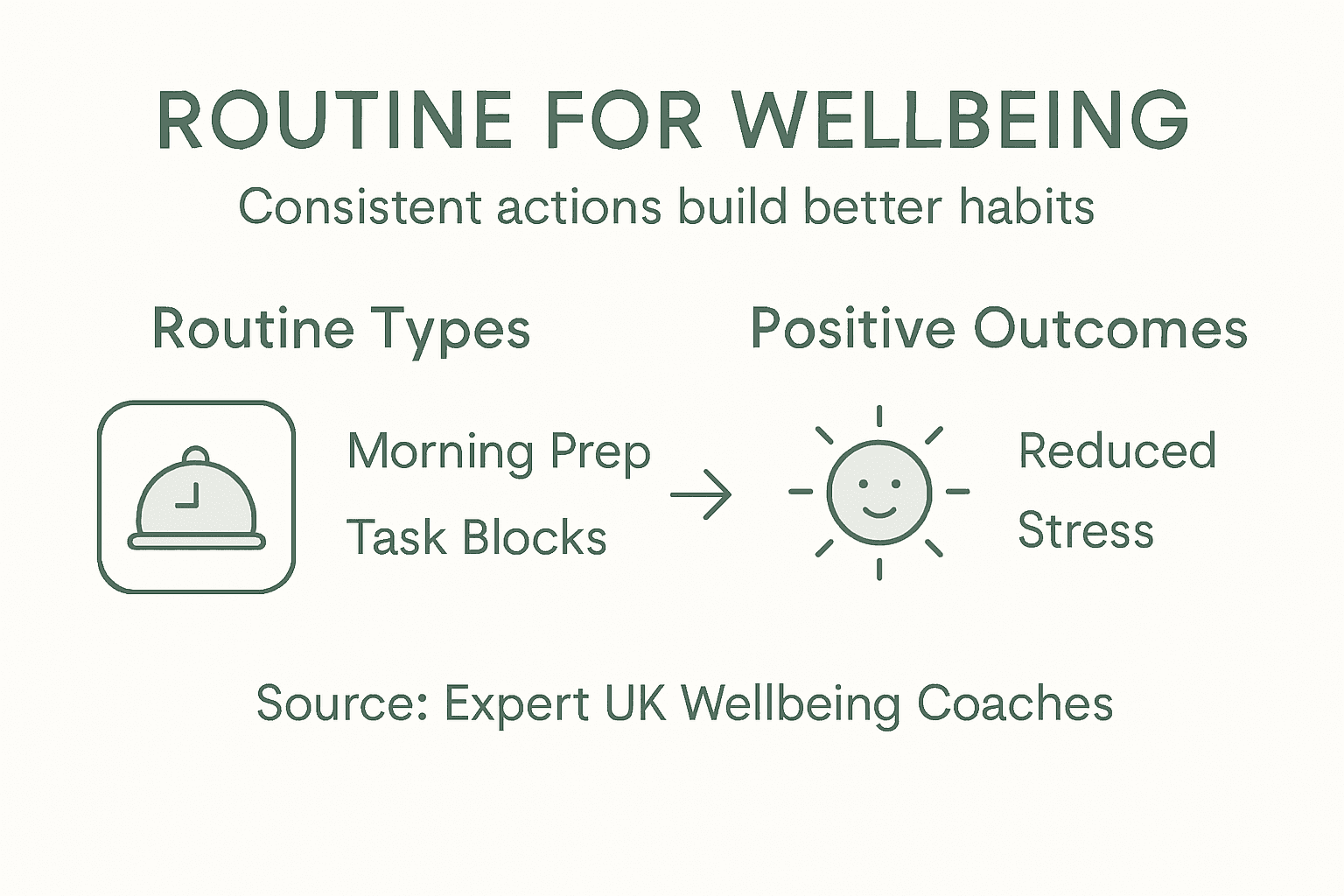
The most effective habit-building approaches focus on creating automatic behaviours that require minimal cognitive effort, enabling professionals to maintain positive changes without constant willpower.
Pro-Tip: Select one tiny habit to modify each month, focusing on making it so small and manageable that it feels impossible to fail.
Common Barriers and Strategies for Success
Workplace wellbeing services face significant implementation challenges that require strategic and nuanced approaches for UK professionals seeking sustainable personal development.
Key barriers to effective wellbeing routines include:
Time Constraints
Overwhelming workloads
Limited personal bandwidth
Competing professional priorities
Psychological Resistance
Fear of vulnerability
Perceived weakness in seeking support
Deeply ingrained work culture expectations
Practical Obstacles
Complex service access
Unclear communication channels
Limited organisational resources
Strategic Intervention becomes crucial in overcoming these systemic challenges. Professionals require clear, consistent information about wellbeing resources to effectively engage with support mechanisms.
Successful strategies focus on creating supportive, accessible environments that normalise wellbeing conversations and reduce perceived barriers to personal development. This involves comprehensive organisational commitment and individual empowerment.
The following table compares strategies for overcoming common barriers to effective routines:
Barrier Type | Typical Challenge | Effective Strategy |
Time Management | Overloaded schedule | Schedule micro-breaks for self-care |
Organisational Culture | Stigma around vulnerability | Leadership model openness and support |
Access to Support | Unclear health service routes | Centralise information and improve signposting |
Personal Motivation | Difficulty in sustaining change | Track progress and celebrate small wins |
Pro-Tip: Break down wellbeing goals into micro-actions that feel manageable and non-intimidating, reducing psychological resistance to change.
Build Resilience and Balance Through Effective Routines
The article highlights the vital role routine plays in supporting wellbeing and emotional resilience for UK professionals who feel overwhelmed or stressed by unpredictable work demands. If you recognise the struggle to maintain consistent self-care habits or to break down large goals into manageable steps, practical coaching can make all the difference. Tom Ryder Wellbeing specialises in helping individuals like you create personalised routines that improve mental health, reduce stress, and boost productivity using the evidence-backed SCALES Model.
Discover tailored support through Mental Health & Wellbeing Coaching or find clarity with a Stress Management Coaching programme designed to bring calm and control back into your day. Start today with a free consultation at Tom Ryder Wellbeing and take the essential first step towards sustainable wellbeing and lasting change.
Frequently Asked Questions
How do routines contribute to mental health?
Routines enhance predictability and reduce stress by providing a sense of control and structure, which can improve emotional balance and resilience.
What are some examples of healthy routines for professionals?
Healthy routines may include regular exercise, a consistent sleep schedule, mindfulness practices, and structured work planning, all aiming to support both mental and physical wellbeing.
How can I reduce stress through a daily routine?
You can reduce stress by creating predictable patterns in your daily life, which minimize cognitive load and emotional turbulence. Simple, consistent actions incorporated into your routine can enhance your sense of stability.
What are effective strategies for building sustainable habits?
Effective strategies involve creating stable triggers, linking new habits to existing routines, and monitoring your progress to celebrate small victories. Focus on making changes so small they feel manageable and achievable.
Recommended
Comments