


Workplace Wellbeing: Boosting Balance and Resilience


Feeling drained by long workdays in Essex and constant pressure to perform? Stress and burnout can make balancing your career and personal life seem impossible. Workplace wellbeing is far more than a buzzword—it is about your mental and physical health, professional relationships, and overall satisfaction at work. Discover practical strategies and expert coaching designed to help you reclaim control, foster resilience, and achieve a healthier work-life balance.
Table of Contents
Key Takeaways
Point | Details |
Holistic Approach to Wellbeing | Workplace wellbeing includes mental and physical health, professional relationships, and job satisfaction, necessitating a comprehensive strategy. |
Collaborative Initiatives | Effective programmes involve employers and employees working together to foster a positive work environment. |
Legal Responsibilities | UK employers must comply with health and safety regulations and adopt proactive measures for employee wellbeing. |
Risk Mitigation | Understanding and addressing workplace risks is essential for protecting employee mental and physical health effectively. |
What Workplace Wellbeing Really Means
Workplace wellbeing represents a holistic approach to understanding and supporting employee health beyond traditional job performance metrics. It encompasses mental and physical health, professional relationships, environmental factors, and overall job satisfaction. Comprehensive workplace research indicates that wellbeing varies significantly across different industries, organisations, and individual roles.
At its core, workplace wellbeing involves creating an environment where employees can thrive professionally and personally. This means developing supportive policies, managing work-related stress, and maintaining healthy workplace conditions. Collaborative workplace strategies emphasise the importance of employers and employees working together to create sustainable, positive work environments that promote mental and physical wellness.
Effective workplace wellbeing programmes consider multiple dimensions, including:
Psychological safety and mental health support
Physical health initiatives
Work-life balance strategies
Professional development opportunities
Inclusive and respectful workplace culture
Pro tip: Start your workplace wellbeing journey by conducting an anonymous employee survey to understand specific challenges and needs within your organisation.
Types of Workplace Wellbeing Initiatives
Workplace wellbeing initiatives encompass a diverse range of strategies designed to support employee health and organisational performance. Comprehensive wellbeing frameworks demonstrate that effective programmes typically operate across three critical levels: organisational, group, and individual interventions.

At the organisational level, initiatives focus on systemic changes that create a supportive work environment. These might include developing mental health policies, implementing flexible working arrangements, and embedding wellbeing considerations into core business strategy. Mental health guidelines recommend creating structural approaches that proactively address workplace stress and support employee psychological safety.
Workplace wellbeing programmes typically include the following key initiatives:
Mental health awareness training
Stress management workshops
Physical health screenings
Employee assistance programmes
Resilience and mindset coaching
Workplace ergonomics assessments
Meditation and mindfulness sessions
Financial wellness resources
Group-level interventions involve creating supportive team dynamics, encouraging open communication, and developing collective strategies for managing workplace challenges. Individual-level approaches provide personalised support, helping employees develop coping mechanisms, improve work-life balance, and enhance personal resilience.
Pro tip: Design your workplace wellbeing initiatives through collaborative consultation, ensuring they reflect genuine employee needs and organisational context.
The following table compares the three levels of workplace wellbeing interventions and their primary focus:
Level | Main Focus | Example Outcome |
Organisational | Company-wide policies and environment | Better staff retention |
Group | Team relationships and communication | Improved team cohesion |
Individual | Personal support and skill development | Enhanced personal resilience |
Key Benefits for Employees and Employers
Comprehensive workplace research reveals that effective wellbeing strategies create mutual advantages for both employees and organisations. When implemented thoughtfully, these initiatives transform workplace dynamics, generating positive outcomes that extend far beyond traditional performance metrics. Employees experience enhanced personal resilience, while employers benefit from increased organisational effectiveness.
For employees, workplace wellbeing initiatives deliver profound personal and professional advantages. These include improved mental health, reduced stress levels, greater job satisfaction, and enhanced personal development opportunities. Individuals gain tools to manage workplace challenges more effectively, develop stronger coping mechanisms, and create more balanced professional lives.
Employers also experience significant organisational benefits from robust wellbeing programmes. Workplace health strategies demonstrate measurable improvements in key performance indicators, such as:
Increased staff productivity
Reduced absenteeism
Enhanced talent attraction and retention
Improved organisational reputation
Lower healthcare and insurance costs
Higher employee engagement levels
Decreased workplace conflict
Stronger team collaboration
The symbiotic relationship between employee wellbeing and organisational success becomes evident through these comprehensive programmes. By investing in holistic support mechanisms, organisations create environments where individual potential and collective performance can flourish simultaneously.
Pro tip: Conduct regular, anonymous employee surveys to continuously refine and personalise your workplace wellbeing approach.
Legal and Employer Responsibilities in the UK
Workplace health legislation establishes comprehensive legal frameworks that define employers’ obligations towards employee wellbeing. These regulations go beyond simple compliance, creating a fundamental duty of care that encompasses physical and psychological workplace conditions. Employers must proactively manage workplace environments to protect staff health and safety.
The Health and Safety at Work etc Act 1974 forms the cornerstone of UK workplace regulations. Employer welfare guidelines specify that organisations must implement systematic approaches to managing workplace risks. This includes conducting thorough risk assessments, developing clear mental health policies, and creating supportive mechanisms that prevent work-related stress and psychological harm.
Key legal responsibilities for UK employers include:
Providing safe working environments
Conducting comprehensive risk assessments
Managing work-related stress effectively
Supporting employees with health conditions
Maintaining confidential support mechanisms
Offering reasonable workplace adjustments
Preventing discrimination
Ensuring clear communication about workplace health
Beyond legal compliance, these responsibilities represent a moral obligation to support employee wellbeing. Organisations that view these requirements as opportunities for positive cultural transformation can create more resilient, engaged, and productive workplaces.
Pro tip: Develop a written workplace wellbeing policy that clearly outlines your organisation’s commitment to employee health and safety.
Here is a summary of typical UK employer responsibilities regarding employee wellbeing:
Responsibility | Legal Basis | Practical Example |
Safe work environment | Health and Safety Act 1974 | Regular workplace safety checks |
Manage work-related stress | ACAS and NICE guidelines | Stress management workshops |
Prevent discrimination | Equality Act 2010 | Diversity and equality training |
Confidential support | Data protection principles | Access to counselling services |
Common Risks and How to Avoid Them
Workplace health research highlights several critical risks that can significantly undermine employee wellbeing and organisational performance. Understanding these risks represents the first crucial step in developing comprehensive strategies to protect staff mental and physical health. Modern workplaces face complex challenges that require proactive, nuanced approaches to risk management.
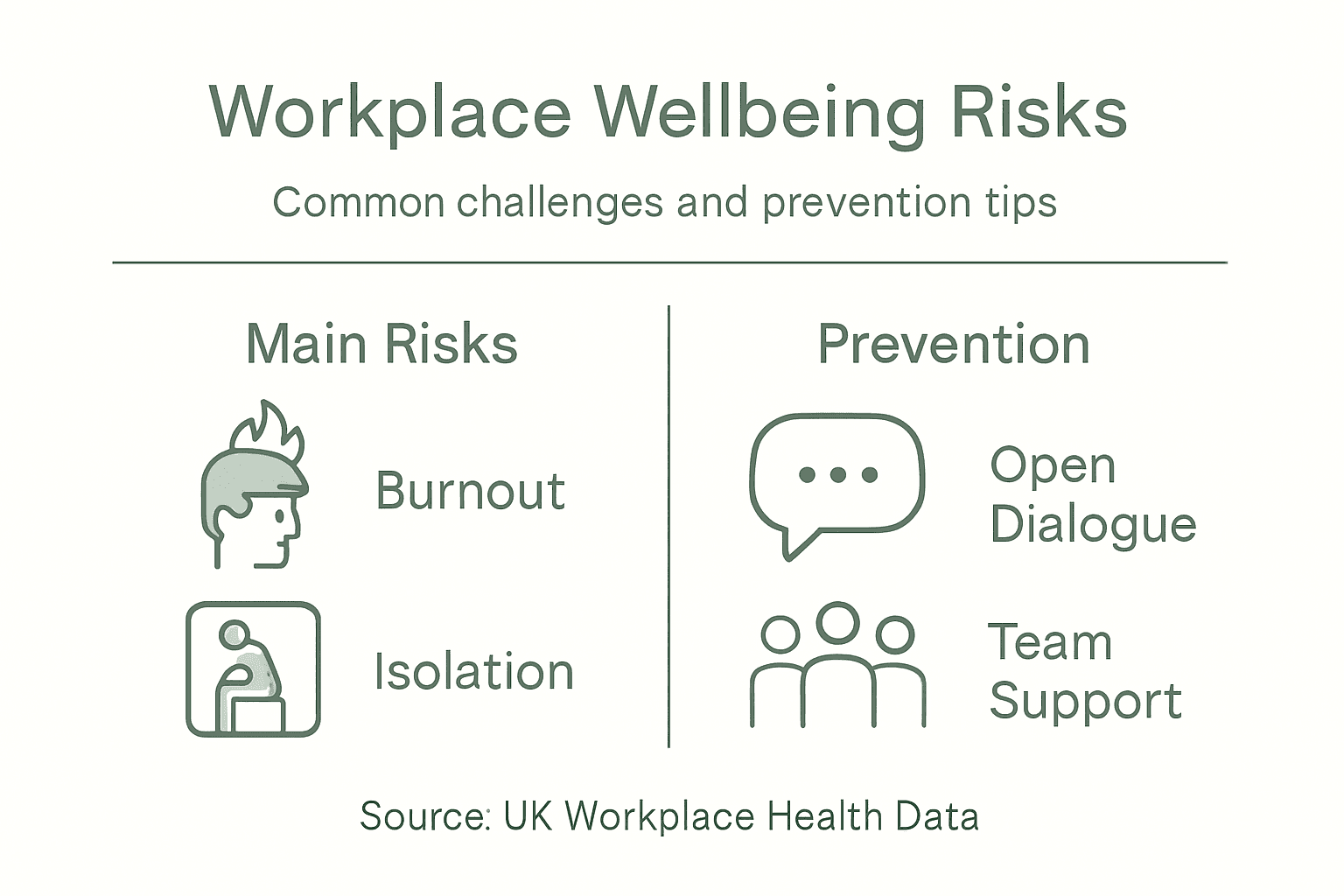
The most prevalent workplace risks emerge from psychological and environmental factors. Mental health guidelines reveal that issues such as workplace bullying, job insecurity, poor communication, excessive workload pressures, and professional isolation can dramatically impact employee resilience. These risks manifest through increased stress levels, reduced productivity, higher staff turnover, and potential long-term mental health complications.
Key workplace risks and strategic mitigation approaches include:
Work-related stress management
Professional burnout prevention
Mental health support systems
Fair communication practices
Workload balance strategies
Conflict resolution mechanisms
Professional development opportunities
Inclusive workplace culture initiatives
Effective risk management requires a holistic, integrated approach that combines systematic assessment, continuous communication, and genuine organisational commitment to employee welfare. Organisations must view these strategies not as compliance requirements, but as fundamental investments in their most valuable resource: their people.
Pro tip: Conduct regular anonymous staff surveys to identify emerging workplace risks before they escalate into significant challenges.
Achieve Balanced Workplace Wellbeing with Tom Ryder Wellbeing
The article highlights how the key challenge in workplace wellbeing lies in managing stress, improving resilience, and creating sustainable balance in daily work and life. If you feel overwhelmed by constant pressure or struggle with mental and physical strain disrupting your professional and personal life, Tom Ryder Wellbeing offers practical coaching solutions tailored to real needs. Drawing on the proven SCALES Model, our approach helps you restore harmony across sleep, creativity, activity, listening, grounding, and social connection — the exact pillars that underpin lasting wellbeing.
Whether you are an individual wanting to break free from burnout or an organisation seeking to support your team, our expert services cover Stress Management Coaching and Emotional Resilience Coaching designed to build strength and clarity. Start today to transform stress into sustainable balance with a health coach who combines professional expertise with understanding lived experience. Discover practical tools and achievable steps that get results at Tom Ryder Wellbeing. Take the first step to better mental health and workplace harmony now.
Frequently Asked Questions
What is workplace wellbeing?
Workplace wellbeing refers to a holistic approach that supports employee health, including mental and physical health, professional relationships, and job satisfaction, aiming to create an environment where employees can thrive.
What are some common workplace wellbeing initiatives?
Typical wellbeing initiatives include mental health awareness training, stress management workshops, physical health screenings, employee assistance programmes, and mindfulness sessions, among others.
How can employers support employee wellbeing effectively?
Employers can support wellbeing by implementing systemic changes, such as flexible working arrangements, mental health policies, anonymous surveys to assess employee needs, and creating an inclusive workplace culture.
What legal responsibilities do employers have regarding employee wellbeing?
Employers must provide safe working environments, conduct risk assessments, effectively manage work-related stress, support employees with health conditions, and maintain confidential support mechanisms according to relevant workplace health legislation.
Recommended
Comments