


Build an Effective Mental Wellbeing Workflow for Work


Most British professionals in Essex experience workplace stress that bleeds into their personal lives, with over half reporting symptoms of burnout before age 40. In fast-paced office environments, constant pressure and work-life imbalance can leave you drained both mentally and physically. This guide offers straightforward coaching strategies to help you identify stress triggers, map practical wellbeing habits, and build a routine that restores balance and supports long-term mental health.
Table of Contents
Quick Summary
Key Point | Explanation |
1. Identify personal stress triggers | Recognise workplace factors causing stress to understand your emotional landscape better. This includes external and internal triggers impacting your wellbeing. |
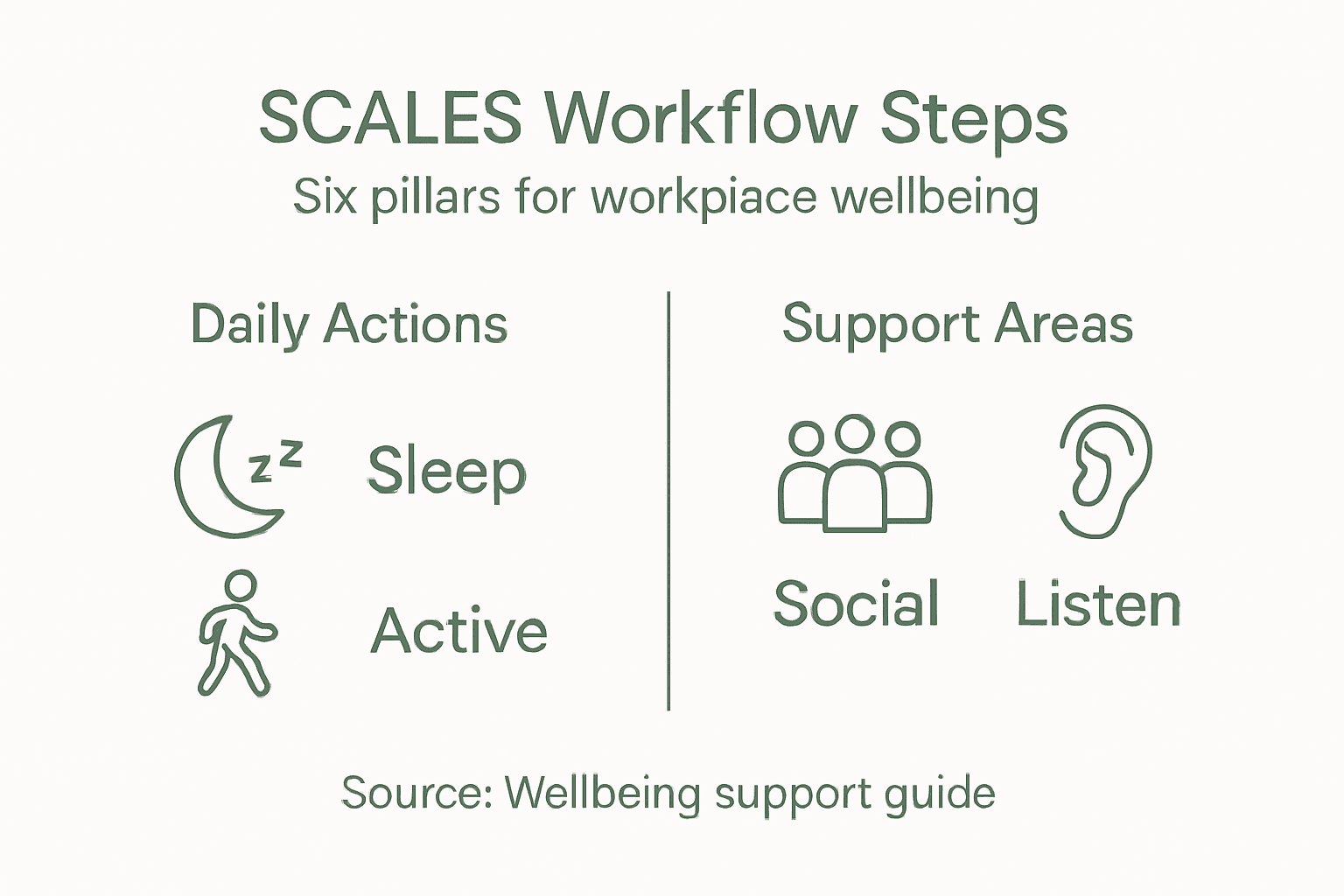
2. Integrate SCALES pillars | Deliberately incorporate Sleep, Creative, Active, Listen, Earth, and Social pillars into your daily workflow to promote emotional resilience. |
3. Develop tailored strategies | Create specific, actionable strategies for each SCALES pillar, adapting them to fit your unique professional environment and needs. |
4. Establish support systems | Build a network of trusted colleagues and mentors for regular check-ins, enabling accountability and nurturing your mental wellbeing. |
5. Review and adjust regularly | Implement quarterly evaluations of your progress across SCALES pillars, remaining flexible and adjusting your strategies based on insights. |
Step 1: Identify stress triggers and assess current routines
Understanding your personal stress landscape is crucial for building an effective mental wellbeing workflow. In this step, we’ll dive into recognising the specific circumstances and factors that tend to generate stress in your professional environment.
Start by mapping out your typical work week through detailed observation. Pay attention to moments where your stress levels spike by tracking emotional and physical responses. Key workplace stress factors include workload pressure, job security concerns, communication challenges, and work life balance difficulties. Some professionals find it helpful to keep a daily journal noting specific situations that create tension or anxiety.
Consider both external triggers like deadlines and environmental factors, and internal triggers such as personal expectations and self criticism. Look for patterns in your responses identifying recurring situations that consistently drain your emotional energy. Analyse how different tasks or interactions impact your stress levels tracking physiological signals like increased heart rate, muscle tension, or changes in breathing.
Expert Advice: Keep your stress trigger assessment objective and compassionate, treating it as valuable information rather than personal criticism.
Step 2: Map the SCALES pillars to your daily workflow
Transforming your mental wellbeing requires a strategic approach to integrating the SCALES framework into your professional routine. This step focuses on deliberately weaving each pillar into your daily workflow to create sustainable emotional resilience.
Begin by examining each SCALES pillar and identifying specific opportunities for integration within your work environment. Workplace wellbeing strategies demonstrate that intentional incorporation of wellness activities can significantly enhance mental health. For the Sleep pillar, consider establishing consistent sleep schedules and creating wind down routines that prepare you for quality rest. The Creative pillar might involve scheduling short artistic breaks or journaling sessions during your workday. For the Active component, integrate short movement breaks or walking meetings to maintain physical engagement.
The Listen pillar requires developing self awareness through regular emotional check ins, perhaps using brief meditation moments or mindfulness techniques. Earth pillar implementation could involve bringing natural elements into your workspace or scheduling brief outdoor interactions. Finally, the Social pillar demands purposeful connection time with colleagues, scheduling informal catch ups or collaborative moments that build genuine workplace relationships.
Expert Advice: Approach SCALES integration as a flexible personal experiment, allowing yourself grace to adapt and modify your approach as you learn what works best for you.
The following table offers a concise overview of the SCALES wellbeing pillars and their impact within a professional setting:
Pillar | Focus Area | Workplace Benefit |
Sleep | Rest and recovery | Improved mood and alertness |
Creative | Personal expression | Enhanced problem solving |
Active | Physical activity | Increased energy and stamina |
Listen | Emotional awareness | Better stress management |
Earth | Nature integration | Calmer, grounded mindset |
Social | Work relationships | Greater team collaboration |
Step 3: Design practical strategies for each wellbeing area
Creating a comprehensive mental wellbeing workflow requires thoughtful and intentional strategies across multiple dimensions of your professional life. Mental health improvement techniques offer evidence based approaches to building emotional resilience and maintaining workplace performance.

Start by developing specific actionable strategies for each SCALES pillar. For Sleep, establish a consistent evening routine that includes digital device boundaries and relaxation techniques. In the Creative domain, allocate dedicated time for personal expression through journaling, sketching, or pursuing a hobby that allows mental exploration. The Active pillar demands intentional movement integration such as desk stretches, walking meetings, or scheduling short exercise breaks between tasks.
For the Listen pillar, practise regular self reflection through mindfulness meditation or structured emotional check ins. Earth strategies might involve creating a workspace with natural elements like plants, using natural light, or scheduling brief outdoor breaks. The Social pillar requires deliberate relationship building through meaningful conversations, team collaboration opportunities, and maintaining supportive professional connections.
Expert Advice: Approach these strategies as flexible experiments, recognising that your wellbeing needs will continuously evolve and require ongoing personalisation.
Step 4: Implement support systems and accountability measures
Building robust support systems is fundamental to maintaining long term mental wellbeing in professional environments. Workplace mental health frameworks demonstrate the critical importance of creating structured accountability mechanisms that protect and nurture employee emotional health.
Begin by establishing clear communication channels with trusted colleagues or a professional mentor who can provide regular check ins and objective perspectives. Create a personal accountability system by setting specific wellbeing goals with measurable milestones. This might involve scheduling monthly self review sessions where you honestly assess your progress across the SCALES pillars, tracking your emotional resilience, and identifying areas requiring additional support or intervention.
Consider developing a personal support network that includes both professional and personal contacts who understand your mental wellbeing journey. This network should include individuals who can offer different types of support ranging from practical problem solving to emotional validation. Document your support strategies in a dedicated wellbeing journal, recording insights, challenges, and progress to maintain transparency with yourself and create a tangible record of your emotional growth.
Expert Advice: Treat your support system as a dynamic ecosystem that requires regular nurturing, adaptation, and compassionate maintenance.
Step 5: Review progress and fine-tune the workflow
Successfully managing mental wellbeing requires consistent reflection and adaptive strategies. Wellbeing evaluation techniques demonstrate the importance of systematic progress tracking and responsive adjustments.
Implement a quarterly review process that involves comprehensive self assessment across all SCALES pillars. Create a structured evaluation framework using quantitative and qualitative metrics including mood tracking, energy levels, sleep quality, and personal satisfaction scores. Document your observations in a dedicated wellbeing journal, noting patterns, challenges, and incremental improvements. Consider using standardised assessment tools or working with a professional coach to provide objective insights into your progress.
Remain flexible and compassionate during your review process. Recognise that progress is rarely linear and small adjustments can yield significant long term benefits. Celebrate incremental improvements while maintaining realistic expectations about your mental health journey. Be prepared to modify your strategies based on emerging insights, personal growth, and changing life circumstances.
To help you evaluate progress, here is a table comparing common wellbeing assessment tools and their advantages:
Tool Type | Example Use | Key Advantage |
Mood Tracking App | Daily mood scoring | Instant progress feedback |
Wellbeing Journal | Noting reflections | Personalised insight |
Coach Review | Guided evaluation | Professional objectivity |
Survey Metrics | Structured self-assessment | Quantitative measurements |
Expert Advice: Treat your mental wellbeing workflow as a living document that evolves with you, requiring gentle curiosity and continuous refinement.
Create Your Personal Mental Wellbeing Workflow with Expert Support
Feeling overwhelmed by workplace stress or struggling to build consistent habits around the SCALES pillars discussed in the article? You are not alone. Many people find it hard to translate well-being concepts like Sleep, Creative, Active, Listen, Earth, and Social into actionable routines that fit their busy lives. Key challenges include managing stress spikes, finding practical strategies to balance work and wellbeing, and maintaining motivation through changing circumstances.
At Tom Ryder Wellbeing, we specialise in mental health and wellbeing coaching tailored to individuals who want real change without feeling stuck or uncertain. Using the proven SCALES Model, our coaching helps you:
Gain clarity about the stress triggers and lifestyle patterns that impact your mental health
Build simple, sustainable routines addressing each wellbeing pillar
Develop emotional resilience and practical tools for ongoing balance
Whether you are seeking stress management coaching or work life balance coaching, now is the time to take action. Visit Tom Ryder Wellbeing to explore how structured coaching can transform your mental wellbeing workflow and help you feel more grounded today.
Frequently Asked Questions
How do I identify my stress triggers at work?
Identifying your stress triggers involves observing your emotional and physical responses to various work situations. Track your daily experiences in a journal to pinpoint patterns, such as deadlines or communication challenges, and note how these situations affect your stress levels.
What is the SCALES framework for mental wellbeing?
The SCALES framework consists of six pillars: Sleep, Creative, Active, Listen, Earth, and Social. Each pillar focuses on a different aspect of wellbeing, and integrating them into your daily workflow can enhance your emotional resilience and overall mental health.
How can I implement practical strategies for each area of the SCALES framework?
To implement strategies for each SCALES pillar, develop actionable plans tailored to your needs. For example, create a consistent sleep routine or schedule regular breaks for physical activity, aiming to incorporate these practices daily to improve your wellbeing.
What support systems should I establish for my mental wellbeing?
Establish clear communication channels with trusted colleagues and set up a personal accountability system to track your wellbeing goals. Consider developing a support network that includes professional and personal contacts to offer various types of support during your mental wellbeing journey.
How often should I review my mental wellbeing progress?
You should review your mental wellbeing progress at least quarterly to evaluate your strategies’ effectiveness across the SCALES pillars. Use structured evaluations and document your findings in a wellbeing journal to identify areas needing adjustment as your needs evolve.
What tools can help me assess my mental wellbeing?
Various tools can assist in assessing mental wellbeing, such as mood tracking apps and personal wellbeing journals. Use these tools to document reflections and track your emotional state regularly, enhancing your self-awareness and guiding your personal development.
Recommended
Comments