


Group Wellbeing Session Process for Stress Relief Success


Long hours and constant pressure can leave even the most dedicated professionals in Essex feeling drained. When burnout threatens your work-life balance, finding the right support becomes more than a luxury, it is a necessity. Group-based wellbeing sessions offer a structured way to address stress and build genuine emotional resilience. Empowering every participant to shape their own wellbeing journey makes these sessions meaningful and helps turn hope for change into practical daily results.
Table of Contents
Quick Summary
Key Insight | Explanation |
1. Establish clear session goals | Define objectives through participant feedback to ensure meaningful experiences in wellbeing sessions. |
2. Use the SCALES Model for activities | Implement structured activities across six wellbeing dimensions to promote engagement and personal resilience. |
3. Create an inclusive environment | Foster openness and comfort among participants to facilitate genuine sharing and connection during sessions. |
4. Prepare physical and digital spaces | Design welcoming environments that consider both physical layout and digital inclusivity for optimal participant engagement. |
5. Gather feedback for continuous improvement | Use structured mechanisms to collect participant insights, helping to evaluate the session’s impact and enhance future wellbeing initiatives. |
Step 1: Establish session goals and participant needs
When designing a group wellbeing session, understanding and defining clear objectives is fundamental to creating meaningful participant experiences. Effective wellbeing workshops require a thoughtful approach to identifying individual and collective needs.
Begin by creating an inclusive environment where participants feel comfortable sharing their current challenges and expectations. The NHS England facilitator’s guide recommends engaging all team members through open conversations that recognise diverse health and wellbeing requirements. This means designing a pre session survey or initial dialogue that explores participants stress levels, specific concerns and desired outcomes.
Typically this process involves several key steps: collecting anonymous feedback through questionnaires, conducting brief one-to-one consultations, and using group discussions to validate and refine session goals. The aim is to co-create a session framework that feels personally relevant and collectively meaningful. This collaborative approach ensures participants are not passive recipients but active contributors to their wellbeing journey.
Here is a summary of methods for gathering participant needs and their effectiveness:
Method | Description | Strengths | Limitations |
Anonymous surveys | Collect responses without revealing identity | Encourages honesty, broad reach | May lack context, limited follow-up |
One-to-one consultations | Private conversations with each participant | Personalised insights, deeper understanding | Time-consuming, may make some uneasy |
Group discussions | Collective dialogue among participants | Builds consensus, shared goals | Risk of dominant voices, shy members may not speak |
Practical Tip: Create a simple anonymous survey with open ended questions that invite participants to share their genuine wellbeing challenges without feeling exposed or judged.
Step 2: Design session activities using the SCALES Model
Designing effective group wellbeing session activities requires a structured yet flexible approach that addresses multiple dimensions of participant experience. Therapeutic group session strategies emphasise creating a comprehensive framework that balances learning, emotional engagement, and practical skill development.
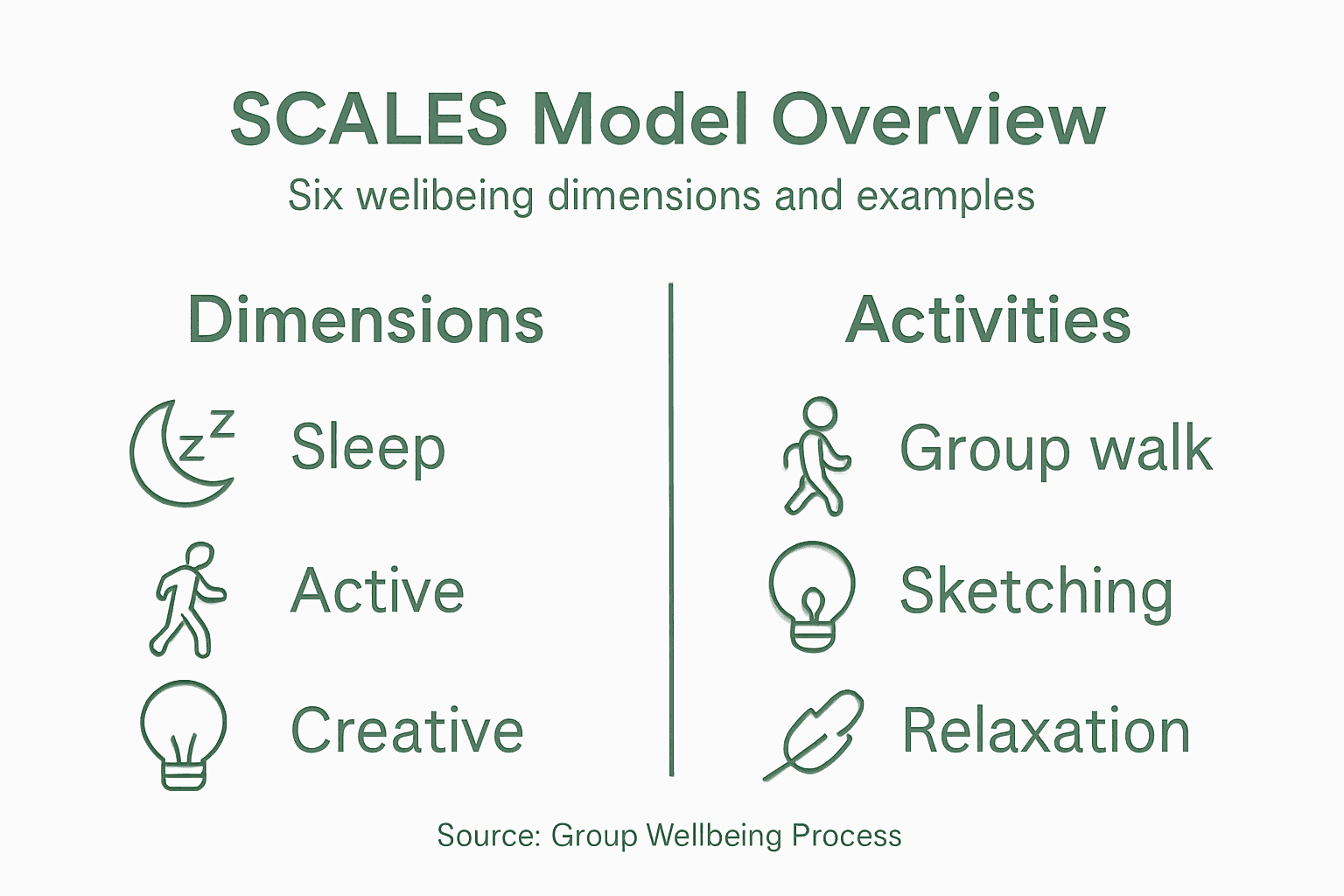
The SCALES Model provides an elegant blueprint for crafting holistic activities across six interconnected wellbeing dimensions. For each dimension Sleep, Creative, Active, Listen, Earth, and Social you will design targeted exercises that encourage participants to explore and enhance their personal resilience. This might involve creating sleep hygiene workshops, introducing creative expression activities, planning movement sessions, developing mindfulness practices, exploring nature connection exercises, and facilitating group communication techniques.
When constructing these activities, draw inspiration from structured session planning approaches that promote active participant engagement. Wellbeing session design principles suggest incorporating a mix of educational content, interactive discussions, experiential learning, and reflective practices. This ensures that participants not only receive information but also actively apply and internalise new wellbeing strategies.
Below is a concise overview of the SCALES Model dimensions and sample activity types:
Wellbeing Dimension | Example Activity | Desired Outcome |
Sleep | Sleep hygiene exploration | Improved rest habits |
Creative | Art or writing exercise | Enhanced self-expression |
Active | Group movement session | Increased energy, resilience |
Listen | Guided mindfulness practice | Greater emotional awareness |
Earth | Nature connection activity | Stress reduction, grounding |
Social | Team communication skill workshop | Strengthened group bonds |
Practical Tip: Design each activity with clear learning outcomes and build in moments of personal reflection to help participants connect theoretical concepts with their lived experiences.
Step 3: Prepare the physical and digital environment
Preparing a welcoming and functional environment is crucial for creating a successful group wellbeing session that supports participant engagement and comfort. Session preparation guidelines highlight the importance of thoughtful environmental design that accommodates both physical and digital participant needs.
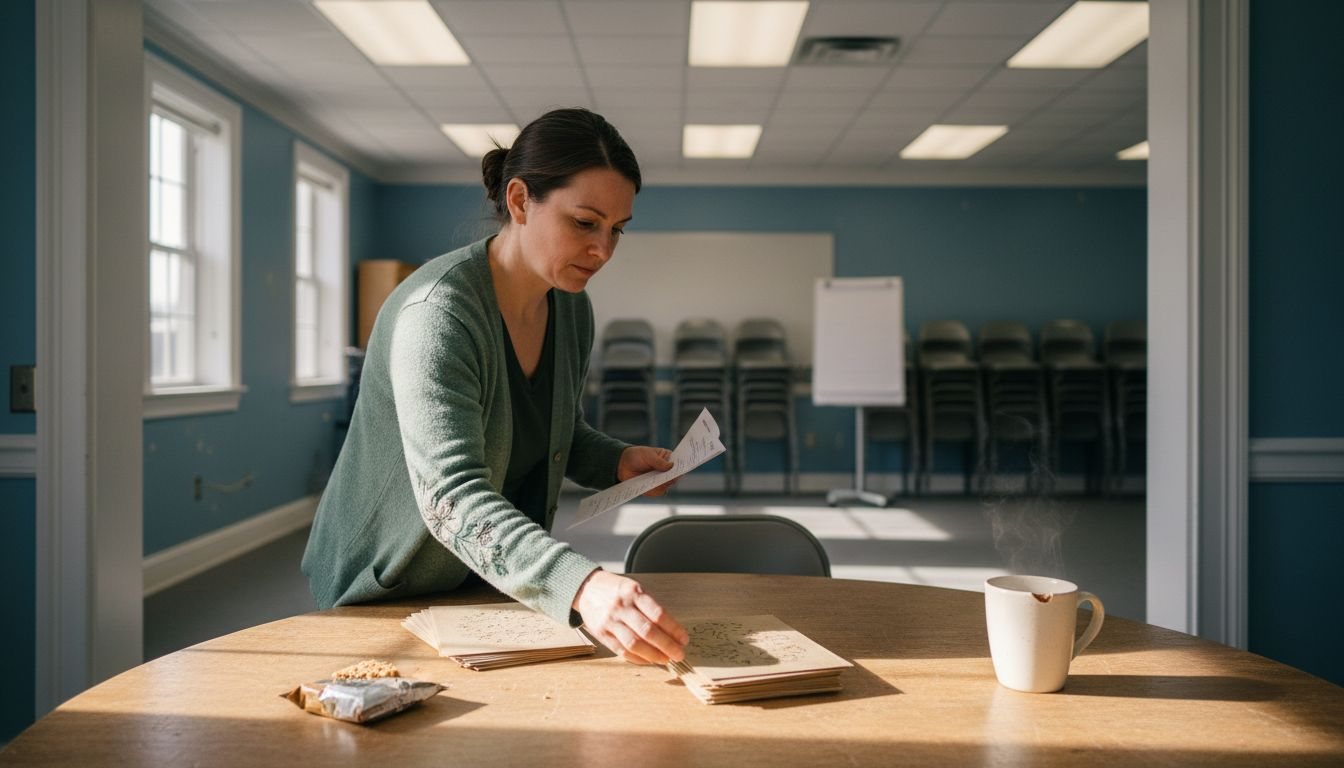
For physical spaces, consider room layout, seating arrangements, lighting, and accessibility. Ensure chairs are comfortable and arranged to facilitate interaction, with clear sightlines and minimal distractions. If hosting a hybrid session, test virtual connection equipment thoroughly and create a setup that allows online participants to feel equally included. NHS wellbeing environment recommendations emphasise creating spaces that feel safe, private, and conducive to open communication.
In digital environments, send comprehensive joining instructions at least 48 hours before the session. Include technical requirements, platform links, and troubleshooting guidance. Consider providing a brief technology test session for participants who might feel less confident with digital tools, ensuring everyone can participate comfortably regardless of their technical expertise.
Practical Tip: Create a digital welcome pack with clear joining instructions, session agenda, and technical support contact details to reduce participant anxiety and technical barriers.
Step 4: Facilitate meaningful group interactions
Creating an environment that encourages genuine connections and supportive interactions is fundamental to successful group wellbeing sessions. Therapeutic group session techniques provide strategic approaches to building trust and generating meaningful dialogue among participants.
Start by establishing clear ground rules that prioritise respect, confidentiality, and psychological safety. Use carefully designed icebreakers that invite participants to share without feeling exposed, such as low risk sharing activities or structured round robin discussions. The aim is to create a space where individuals feel comfortable expressing themselves while maintaining personal boundaries. NHS group facilitation guidelines emphasise creating collaborative environments where mutual respect and open communication are paramount.
As the session progresses, employ active listening techniques and ask open ended questions that encourage deeper reflection. Manage group dynamics by ensuring no single participant dominates conversations and create opportunities for quieter members to contribute. Balance is key allowing space for individual expression while maintaining a sense of collective support and shared learning experience.
Practical Tip: Develop a flexible facilitation approach where you read the room and adjust your communication style to match the group’s energy and comfort level.
Step 5: Monitor progress and gather feedback
Tracking participant progress and understanding the session’s impact are essential components of creating meaningful wellbeing experiences. Systematic progress monitoring techniques help facilitators evaluate session effectiveness and continuously improve their approach.
Implement a structured feedback mechanism that captures both quantitative and qualitative insights. This could involve short post session surveys, brief verbal check ins, or reflective group discussions that allow participants to share their experiences openly. Design feedback tools that explore not just satisfaction levels but also perceived personal growth, challenges encountered, and potential areas for future exploration. Ask specific questions about how the session influenced their understanding of wellbeing, what strategies they found most useful, and what additional support they might need.
Ensure follow up is personalised and demonstrates genuine commitment to participants ongoing wellbeing journey. This might involve sending individualised emails with additional resources, scheduling optional one to one check ins, or creating a supportive online community where participants can continue sharing their progress and insights.
Practical Tip: Create a simple digital feedback form with a mix of rating scales and open ended questions to capture nuanced participant experiences.
Unlock Lasting Stress Relief with Expert Wellbeing Coaching
The article highlights the vital steps involved in creating effective group wellbeing sessions tailored to reduce stress and build resilience. If you or your team are facing persistent stress, feeling overwhelmed by low energy, poor sleep or struggling to maintain balance across your mental and emotional health, these challenges are exactly what Tom Ryder Wellbeing helps you overcome. Rooted in the proven SCALES Model — Sleep, Creative, Active, Listen, Earth, Social — our coaching approach guides you to identify which areas need care and offers practical steps to reclaim your wellbeing.
Whether you prefer personalised support through Mental Health And Wellbeing Coaching or want to join engaging Workshops And Group Sessions inspired by the same principles discussed in the article, now is the time to take meaningful action. Explore how our Stress Management Coaching can help you create small, manageable changes with big impact. Begin your journey to improved mental clarity and emotional resilience today by visiting Tom Ryder Wellbeing and scheduling your free discovery session.
Frequently Asked Questions
How can I gather participant needs for a wellbeing session?
To effectively gather participant needs, create an anonymous survey or hold one-to-one consultations to explore their current challenges and expectations. Use this feedback to co-create session goals that are relevant to everyone, ensuring that participants feel included and valued.
What activities should I include in a group wellbeing session?
Incorporate activities that align with the SCALES Model, addressing dimensions like Sleep, Creative, Active, Listen, Earth, and Social. For example, you might introduce a sleep hygiene workshop or a group movement session to enhance resilience and engagement.
How should I prepare the physical space for a wellbeing session?
Ensure the physical space is welcoming by arranging comfortable seating, ensuring adequate lighting, and providing a layout that facilitates interaction. Pay special attention to accessibility, so all participants can feel at ease and involved in the session.
What ground rules should I establish for group interactions?
Establish ground rules that prioritise respect, confidentiality, and psychological safety. Encourage participants to express themselves while maintaining personal boundaries, which will foster a trusting environment where meaningful dialogue can occur.
How can I measure the success of a wellbeing session?
To measure success, implement a structured feedback mechanism, such as a post-session survey or group discussion. This helps capture insights on participant satisfaction and personal growth, allowing you to continuously improve future sessions.
What follow-up actions should I take after a wellbeing session?
After the session, send personalised follow-up emails to participants with additional resources and options for further support. Consider scheduling one-to-one check-ins to reaffirm your commitment to their ongoing wellbeing journey.
Recommended
Comments