


Why Use Wellbeing Workshops for Burnout Relief


Recent studies show that over half of British professionals feel persistent work stress impacting their wellbeing. Long hours, constant deadlines, and blurred boundaries create real obstacles for those striving to maintain mental resilience and a fulfilling work-life balance. If burnout feels all too familiar, practical wellbeing workshops offer fresh solutions to help you regain control, strengthen emotional health, and build lasting routines in the fast-paced world of British workplaces.
Table of Contents
Key Takeaways
Point | Details |
Importance of Wellbeing Workshops | These workshops provide employees with essential skills for managing mental health and enhancing workplace resilience. |
Types of Workshops Available | Various types exist, including workplace wellbeing, mental health awareness, and leadership development, each targeting different audience needs. |
Benefits for Organisations | Investing in wellbeing programmes leads to improved employee mental health, productivity, and a supportive workplace culture. |
Successful Implementation | Best practices include careful planning, tailoring content to organisational needs, and providing ongoing support post-workshop. |
Defining wellbeing workshops and their purpose
Wellbeing workshops are structured training sessions designed to support mental health and enhance workplace resilience. These targeted programmes aim to address the growing challenges of workplace stress and burnout by providing employees with practical strategies for managing their emotional and psychological well-being. By focusing on holistic mental health approaches, wellbeing workshops help organisations create supportive environments where staff can effectively manage workplace pressures.
At their core, these workshops serve multiple critical functions. They are not merely informational sessions but interactive experiences that equip participants with tangible skills for navigating professional challenges. Typical workshop objectives include reducing mental health stigma, teaching stress management techniques, improving emotional intelligence, and developing robust coping mechanisms. Participants learn how to recognise early signs of burnout, implement self-care strategies, and create healthier workplace boundaries.
The structure of wellbeing workshops typically involves a combination of expert-led presentations, group discussions, practical exercises, and skill-building activities. These sessions might cover topics ranging from mindfulness and resilience training to communication strategies and personal development techniques. The goal is to provide a comprehensive toolkit that empowers individuals to take proactive steps towards maintaining their mental health and creating a more balanced professional life.
Professional Insight: Practice one stress management technique learned in a wellbeing workshop immediately after the session to embed the skill into your daily routine.
Types of wellbeing workshops available in the UK
The United Kingdom offers a diverse range of wellbeing workshops tailored to address mental health and workplace resilience across various settings. Educational institutions are increasingly implementing comprehensive wellbeing approaches that include targeted mental health support programmes and interactive workshops designed to build emotional intelligence and coping strategies.
These workshops can be categorised into several key types. Workplace wellbeing workshops focus on stress management, communication skills, and creating healthy professional boundaries. Corporate programmes typically include sessions on burnout prevention, emotional regulation, and building team resilience. Mental health awareness workshops provide participants with tools to recognise and respond to psychological challenges, while leadership development workshops integrate wellbeing techniques to support management effectiveness.
In educational settings, wellbeing workshops are particularly nuanced. Schools and universities often provide specialised programmes targeting student mental health, including sessions on academic stress management, peer support strategies, and personal development skills. These workshops might address topics such as exam anxiety, transitional challenges, self-care techniques, and building emotional resilience. Professional development workshops for educators also focus on understanding mental health support and creating supportive learning environments.
Professional Insight: Research and compare multiple wellbeing workshop providers to find a programme that best matches your specific organisational or personal mental health needs.
The following table highlights common types of wellbeing workshops available in the UK and their core areas of focus:
Workshop Type | Target Audience | Main Focus | Example Topic |
Workplace Wellbeing | Employees | Stress management, communication | Setting boundaries |
Leadership Development | Managers | Wellbeing-integrated leadership | Emotional regulation |
Mental Health Awareness | All staff | Recognising and responding to issues | Identifying burnout |
Educational Wellbeing | Students/Educators | Academic stress, resilience | Exam anxiety coping |
Key benefits for mental health and resilience
Wellbeing workshops offer profound advantages for individuals seeking to enhance their mental health and build long-term emotional strength. Organisations investing in wellbeing programmes see significant improvements in employee mental health and productivity, demonstrating the tangible impact of structured mental health support.

These workshops provide participants with essential skills for managing stress, developing emotional intelligence, and creating sustainable coping mechanisms. By teaching practical techniques for self-regulation, participants learn to recognise early signs of burnout, develop healthier response patterns to workplace challenges, and build a more resilient mindset. The benefits extend beyond individual growth, contributing to a more supportive and understanding workplace culture that values mental health and personal well-being.
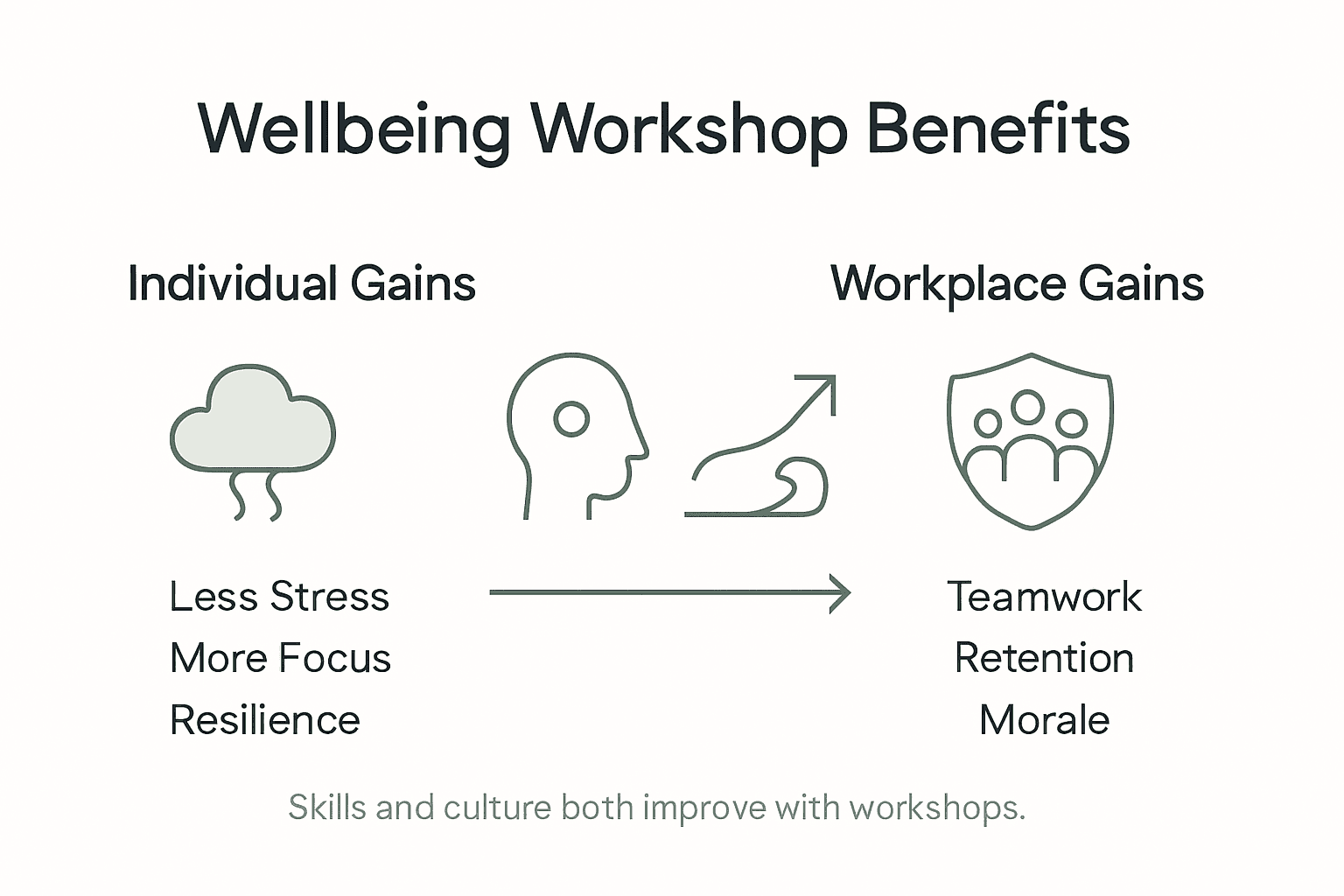
Participants typically experience multiple transformative outcomes from wellbeing workshops. These include improved emotional self-awareness, enhanced communication skills, better stress management techniques, and increased confidence in handling complex personal and professional challenges. Importantly, workshops also help reduce the stigma surrounding mental health discussions, creating environments where individuals feel supported and empowered to seek help and develop their emotional capabilities.
Professional Insight: Keep a personal reflection journal after each wellbeing workshop to track your progress and integrate learned strategies into your daily routine.
How workshops enhance work–life balance
Wellbeing workshops play a critical role in helping professionals establish and maintain a healthy work–life balance by providing targeted strategies for managing workplace stress and personal boundaries. Effective work-life balance workshops enable participants to create sustainable approaches to managing professional and personal responsibilities, addressing the complex challenges of modern professional life.
These workshops focus on developing practical skills that allow individuals to set clear boundaries between work and personal time. Participants learn techniques such as time management, prioritisation strategies, and stress reduction methods that help them create more intentional and balanced daily routines. By teaching employees how to recognize early signs of burnout and implement proactive self-care strategies, workshops empower individuals to take control of their professional and personal well-being.
Organisational benefits of work-life balance workshops extend beyond individual improvements. By supporting employees in developing healthier work patterns, organisations can create more resilient, engaged, and productive teams. These workshops help employees develop communication skills that enable them to negotiate flexible working arrangements, manage workload more effectively, and maintain clearer professional boundaries. The result is a workplace culture that values both professional achievement and personal well-being, ultimately reducing staff turnover and improving overall organisational performance.
Professional Insight: Implement a personal ‘transition ritual’ between work and home to mentally separate professional and personal spaces, such as a short meditation or walk.
Common pitfalls and best practice for success
Navigating wellbeing workshops effectively requires understanding both potential challenges and strategic approaches to implementation. Evidence-based best practices emphasise the importance of careful planning and organisational alignment, ensuring that workshops deliver meaningful, sustainable impact for participants.
Common pitfalls organisations encounter include treating wellbeing workshops as one-off events rather than integrated strategies. Ineffective approaches often lack clear objectives, fail to involve key stakeholders, and neglect post-workshop support and follow-up. Successful programmes, by contrast, create comprehensive frameworks that connect workshop learning with ongoing organisational culture, providing participants with continuous resources and opportunities to apply newly acquired skills.
Best practices for wellbeing workshop success involve multi-layered strategic approaches. This includes securing leadership commitment, tailoring content to specific organisational needs, engaging employees in design and feedback processes, and implementing robust evaluation mechanisms. Organisations should focus on creating supportive environments that normalize mental health discussions, provide practical tools for stress management, and demonstrate genuine commitment to employee well-being beyond the workshop setting.
Below is a summary of best practices and common pitfalls when implementing wellbeing workshops:
Aspect | Best Practice Example | Common Pitfall Example |
Planning | Align workshops with strategy | Treat as one-off event |
Follow-up | Provide ongoing support | Neglect post-workshop aid |
Content | Tailor to organisational needs | Use generic material |
Evaluation | Use feedback and measurable goals | No evaluation mechanism |
Professional Insight: Design a post-workshop action plan with specific, measurable goals to translate workshop learning into tangible workplace behavioural changes.
Take Control of Burnout with Expert Wellbeing Coaching
If you are feeling overwhelmed by stress or struggling to find balance in your work and personal life, wellbeing workshops can be a powerful step towards relief. The article highlights how structured workshops teach practical strategies for managing burnout and building resilience. At Tom Ryder Wellbeing, we understand the real challenges behind these symptoms, including low energy, anxiety, and difficulty switching off. Our coaching uses the proven SCALES Model, helping you regain control by improving Sleep, fostering Creative outlets, encouraging Active habits, and strengthening your Social connections.
Explore personalised support through Stress Management Coaching or deepen your emotional strength with Emotional Resilience Coaching. Whether you prefer 1:1 coaching near Bishop’s Stortford or online across the UK, our down-to-earth, practical approach can help you embed sustainable changes. Take the first step now by visiting Tom Ryder Wellbeing and discover how tailored coaching can move you from burnout towards balance and wellbeing.
Frequently Asked Questions
What are wellbeing workshops?
Wellbeing workshops are structured training sessions designed to support mental health and enhance resilience in the workplace through practical strategies for managing emotional and psychological well-being.
How do wellbeing workshops help with burnout relief?
These workshops provide participants with essential skills for stress management, emotional intelligence, and coping mechanisms, helping them recognise early signs of burnout and develop healthier responses to work-related challenges.
What types of topics are covered in wellbeing workshops?
Common topics include stress management techniques, emotional regulation, mindfulness practices, personal development skills, communication strategies, and building resilience in both personal and professional contexts.
How can organisations ensure the success of wellbeing workshops?
Success can be ensured by aligning workshops with organisational strategies, providing post-workshop support, using tailored content, engaging employees in feedback, and implementing robust evaluation mechanisms.
Recommended
Comments