


Role of Coaching in Organisations – Enhancing Workplace Wellbeing


Workplace stress and burnout have become familiar challenges for many British organisations as demands continue to rise. Finding practical ways to support employee wellbeing and build long-term resilience is more urgent than ever. Modern coaching practices offer a collaborative, goal-driven approach, empowering professionals to develop self-awareness and adapt to complex environments. This overview clarifies how structured coaching can drive meaningful growth by enhancing performance, nurturing wellbeing, and strengthening adaptive capacities within your teams.
Table of Contents
Key Takeaways
Point | Details |
Evolving Definition of Coaching | Coaching now emphasises personal development through collaborative, goal-oriented conversations instead of directive instruction. |
Diverse Coaching Approaches | Various coaching methods, like one-to-one, team, and leadership coaching, cater to specific organisational needs for improved performance. |
Benefits for Individuals and Organisations | Coaching enhances self-awareness and resilience for employees while driving organisational growth and engagement. |
Legal and Ethical Responsibilities | UK employers must establish clear policies on ethical coaching practices, ensuring confidentiality and non-discrimination to protect employees’ rights. |
Defining Coaching in Organisations Today
Coaching in modern organisations has evolved from a traditional performance management approach to a sophisticated developmental strategy that empowers individuals and teams. Professional coaching practices now focus on creating transformative learning environments where professionals can unlock their potential through non-directive leadership techniques.
At its core, organisational coaching represents a collaborative, goal-oriented conversation designed to enhance individual and collective performance. Unlike traditional mentoring or direct instruction, coaching emphasises reflective questioning and self-discovery. Coaches act as skilled facilitators who help professionals identify their own solutions, build self-awareness, and develop adaptive capabilities necessary for thriving in complex workplace environments.
The contemporary approach to coaching recognizes it as a strategic intervention that goes beyond individual skill development. Coaching frameworks now address systemic challenges, supporting organisational transformation by cultivating resilience, emotional intelligence, and continuous learning. This holistic perspective positions coaching as a critical tool for building workplace cultures that are agile, innovative, and psychologically supportive.
Pro tip: When implementing coaching programmes, organisations should prioritise matching coaches with individuals based on complementary skills and shared professional understanding, rather than solely relying on hierarchical structures.
Types of Workplace Coaching Approaches
Workplace coaching encompasses a diverse range of approaches tailored to address specific organisational and individual developmental needs. Professional coaching methodologies have evolved to include several key types that support comprehensive workplace transformation and personal growth.
The primary types of workplace coaching include one-to-one coaching, team coaching, and leadership coaching. One-to-one coaching focuses on individual professional development, helping employees enhance their skills, overcome personal challenges, and improve performance. Team coaching addresses collective dynamics, fostering collaboration, communication, and shared goal alignment. Leadership coaching specifically targets management and executive levels, supporting strategic thinking, emotional intelligence, and organisational change management.
Coaching qualification frameworks demonstrate the complexity and depth of modern coaching approaches. These frameworks range from foundational award levels to advanced diploma programmes, reflecting the nuanced skill sets required for different coaching contexts. Additional specialised coaching approaches include performance coaching, career transition coaching, and wellbeing coaching, each designed to address specific workplace challenges and individual developmental needs.
The table below outlines key differences among major workplace coaching approaches:
Coaching Approach | Target Audience | Primary Focus | Typical Business Impact |
One-to-One | Individual employees | Personal development | Skill growth, performance gains |
Team Coaching | Work teams/groups | Collaboration, communication | Better teamwork, goal alignment |
Leadership Coaching | Managers, executives | Strategic thinking | Improved change management |
Wellbeing Coaching | Employees needing support | Emotional resilience | Lower stress, increased retention |
Pro tip: When selecting a coaching approach, organisations should conduct a thorough needs assessment to match the most appropriate coaching methodology with their specific cultural and strategic objectives.
Key Benefits for Employees and Organisations
Workplace coaching strategies deliver profound benefits that extend beyond traditional performance management, creating transformative experiences for both individuals and organisations. By fostering a culture of continuous learning and personal development, coaching becomes a powerful catalyst for organisational growth and employee wellbeing.
For employees, coaching offers significant personal and professional advantages. Individuals gain enhanced self-awareness, develop stronger resilience, and build confidence in navigating complex workplace challenges. Coaching helps employees identify their strengths, overcome personal limitations, and create actionable strategies for professional growth. This personalised approach supports skill development, improves communication abilities, and empowers individuals to take proactive control of their career trajectories.

Organisations also reap substantial rewards from implementing robust coaching programmes. Workplace mentoring frameworks demonstrate that strategic coaching interventions can dramatically improve team performance, innovation, and organisational adaptability. Companies benefit from increased employee engagement, reduced turnover rates, and a more collaborative workplace culture. Moreover, coaching helps organisations develop strong leadership pipelines, enhance emotional intelligence across teams, and create more responsive, agile working environments.
Pro tip: Implement a structured feedback mechanism to continuously evaluate and refine your coaching programmes, ensuring they remain aligned with both individual and organisational development objectives.
Implementing Effective Coaching Strategies
Workplace coaching frameworks require a strategic and intentional approach to create meaningful organisational transformation. Successfully embedding coaching involves more than simply introducing a programme; it demands comprehensive planning, cultural alignment, and ongoing commitment to developing a supportive learning environment.
The first critical step in implementation involves establishing clear coaching objectives and defining specific organisational goals. This requires senior leadership buy-in and creating a structured approach that aligns coaching interventions with strategic business outcomes. Organisations must develop robust coaching protocols that include comprehensive goal setting, transparent communication channels, and measurable performance indicators to track coaching effectiveness and impact.
Coaching integration strategies emphasise the importance of developing a holistic coaching culture. This involves training managers and leaders in coaching techniques, creating supportive feedback mechanisms, and establishing ethical guidelines that protect both coaches and coachees. Successful implementation also requires ongoing evaluation, with regular assessments to ensure coaching programmes remain relevant, responsive, and aligned with evolving organisational needs.
Pro tip: Develop a pilot coaching programme with a select group of employees to test and refine your approach before full organisational rollout, allowing for iterative improvements and building internal credibility.
Common Challenges and Solutions in Coaching
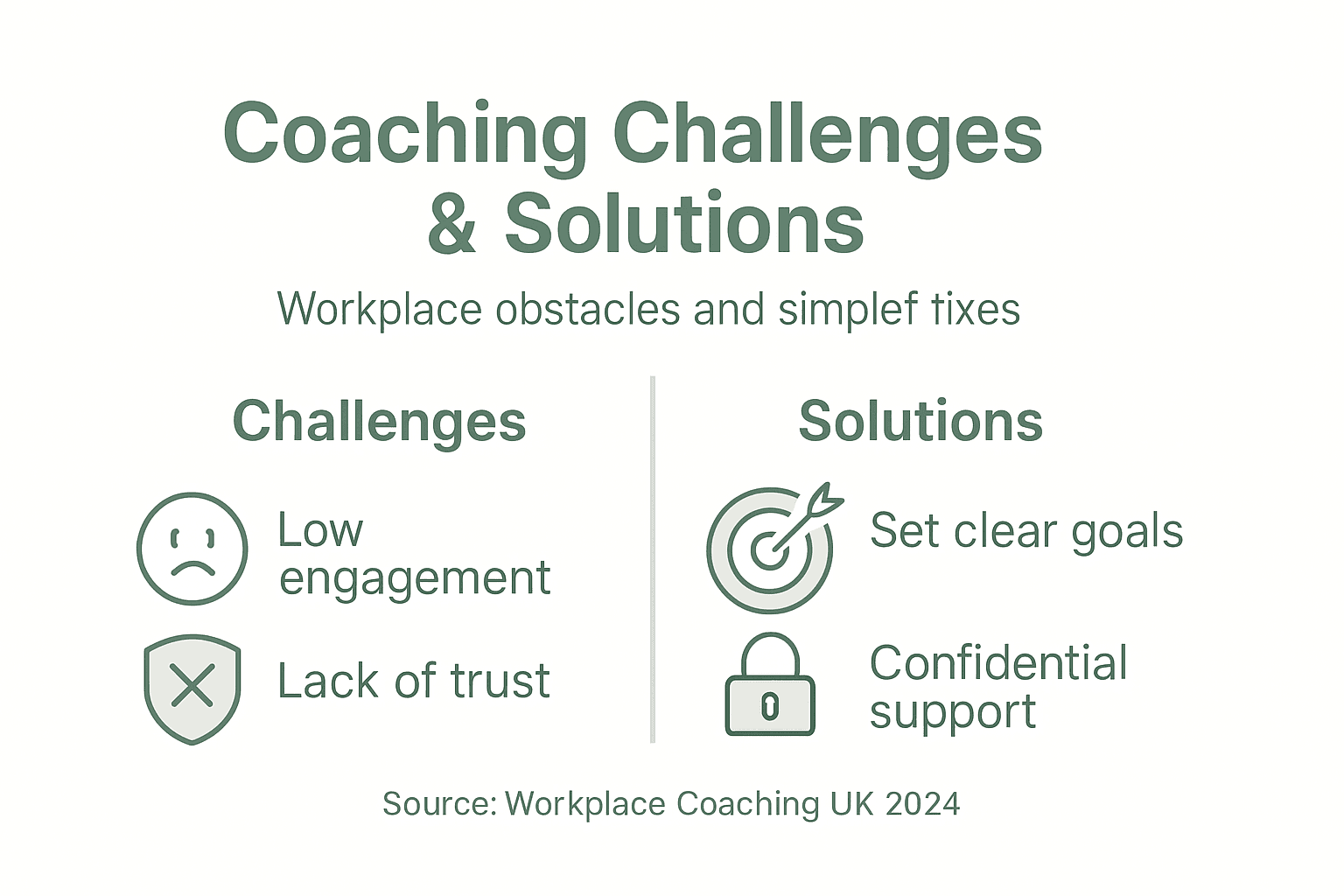
Coaching implementation strategies reveal multiple complex challenges that organisations must navigate carefully. These challenges range from individual psychological resistance to systemic organisational barriers, requiring nuanced and strategic approaches to overcome potential roadblocks in coaching programmes.
One primary challenge involves managing psychological resistance and individual reluctance to engage with coaching processes. Employees may feel vulnerable, perceive coaching as criticism, or fear potential career implications. Successful organisations address this by creating transparent coaching frameworks that emphasise personal development, build trust through confidential interactions, and demonstrate tangible benefits of coaching through clear communication and visible success stories.
Professional coaching guidelines highlight critical solutions for addressing coaching challenges. These include developing robust ethical frameworks, creating comprehensive coach training programmes, and establishing clear performance measurement mechanisms. Key strategies involve matching coaches with appropriate coachees, providing ongoing supervision, and creating safe environments that encourage open dialogue and genuine personal and professional growth.
Pro tip: Conduct anonymous pre and post-coaching surveys to understand employee perceptions, identify potential resistance points, and continuously refine your coaching approach for maximum organisational impact.
Legal and Ethical Responsibilities for UK Employers
Workplace coaching guidelines require UK employers to establish comprehensive frameworks that protect both organisational interests and employee wellbeing. These legal and ethical responsibilities extend beyond simple compliance, demanding a nuanced approach to professional development and interpersonal workplace interactions.
Employers must create robust policies that explicitly define the boundaries, expectations, and confidentiality protocols surrounding coaching programmes. This involves developing clear documentation that outlines the purpose of coaching, participant rights, and mechanisms for addressing potential conflicts or misunderstandings. Key considerations include ensuring non-discriminatory practices, maintaining strict confidentiality, and providing transparent mechanisms for employee consent and participation.
Ethical workplace standards require organisations to implement coaching practices that prioritise individual dignity, professional respect, and continuous learning. This demands ongoing training for coaches, regular review of coaching methodologies, and creating supportive environments that encourage open dialogue while protecting individuals from potential psychological or professional harm. Employers must balance developmental objectives with rigorous ethical safeguards that prevent potential misuse of coaching power dynamics.
Here is a summary of essential legal and ethical responsibilities for UK employers in coaching:
Responsibility | Description | Reason for Importance |
Confidentiality Protocols | Ensure private, protected communication | Safeguards employee trust |
Non-Discrimination Policy | Equal coaching access for all staff | Prevents bias or exclusion |
Consent Mechanisms | Obtain informed consent for participation | Upholds individual rights |
Ethical Guidelines | Define conduct and boundaries | Reduces risk of misuse |
Pro tip: Develop a comprehensive coaching code of conduct that explicitly outlines ethical boundaries, confidentiality protocols, and participant rights, and ensure all coaches and potential coachees review and understand these guidelines.
Empower Organisational Wellbeing Through Expert Coaching
The article highlights the critical role coaching plays in enhancing workplace wellbeing by addressing challenges such as stress, burnout, and emotional resilience. If you or your organisation are seeking practical ways to support mental health and foster a balanced, engaged workforce, understanding these coaching methods is essential. Key concepts like emotional resilience and reflective self-discovery align strongly with the personalised coaching experience we offer at Tom Ryder Wellbeing.
Our Wellbeing Coaching UK services are designed for individuals and professionals who feel overwhelmed or stuck, helping them regain balance through proven strategies such as the SCALES Model. We also provide targeted Stress Management Coaching to help manage workplace pressures effectively. By combining professional experience with lived insight, Tom Ryder Wellbeing delivers coaching that empowers sustainable change in both personal and organisational contexts.
Take the next step towards transforming workplace wellbeing and individual growth by exploring how our coaching can support your goals. Visit Tom Ryder Wellbeing today to discover tailored programmes that make genuine change possible.
Frequently Asked Questions
What is the role of coaching in organisations?
Coaching in organisations serves as a collaborative, goal-oriented conversation that enhances both individual and collective performance. It empowers employees through self-discovery and reflective questioning rather than traditional directive techniques.
What are the different types of workplace coaching approaches?
The primary types of workplace coaching include one-to-one coaching, which focuses on individual development; team coaching, which enhances collaboration within groups; and leadership coaching, which targets strategic thinking and management skills at executive levels.
How can coaching benefit employee wellbeing?
Coaching can significantly enhance employee wellbeing by fostering self-awareness, resilience, and confidence. It helps individuals navigate workplace challenges and develop personal strategies for professional growth, thereby contributing to a healthier work environment.
What challenges can organisations face when implementing coaching programmes?
Common challenges include psychological resistance from employees, a lack of clear objectives, and potential misunderstandings regarding coaching roles. Effective communication and transparency are crucial to overcoming these barriers and maximising the impact of coaching.
Recommended
Comments