


Resilience at Work: Transforming Wellbeing and Performance


Over one in five British professionals report feeling overwhelmed by workplace stress every week. The demands of striving for productivity often clash with the need for genuine wellbeing, leaving many mid-level employees in the UK searching for strategies that actually work. Discover how understanding and building workplace resilience can help transform stress into sustainable balance, offering proven approaches backed by research and tailored to real British working lives.
Table of Contents
Key Takeaways
Point | Details |
Understanding Resilience | Workplace resilience is the ability to maintain stability and performance amidst challenges, involving mental flexibility, emotional regulation, and behavioural adaptability. |
Types of Resilience | Personal resilience focuses on individual psychological resources, while team resilience emphasises shared processes and mutual support among colleagues. |
Impact on Wellbeing | Developing resilience serves as a protective mechanism against stress and burnout, enhancing both individual wellbeing and organisational performance. |
Coaching Strategies | Effective resilience coaching includes mindfulness training, cognitive reframing, and strengthening social support to empower employees in navigating workplace challenges effectively. |
Defining Resilience in the Workplace
Resilience in the workplace represents a complex psychological capacity that enables professionals to navigate challenging environments effectively. At its core, resilience is about maintaining psychological stability and performance while encountering workplace stressors. Workplace resilience research conceptualises this as a dynamic meta-construct that integrates individual adaptive capacities with organisational resources.
Understanding resilience requires recognising it as more than simple stress tolerance. The Chartered Institute of Personnel and Development (CIPD) defines employee resilience as the ability to adapt, cope, and respond positively to workplace challenges. This definition emphasises three critical dimensions: mental flexibility, emotional regulation, and behavioural adaptability. Professionals with strong resilience can maintain performance standards even under significant pressure, transforming potential setbacks into opportunities for growth and learning.
Effective workplace resilience involves developing specific psychological resources. These include emotional intelligence, cognitive flexibility, strong social support networks, and proactive coping strategies. Employees who cultivate these skills can better manage workplace uncertainties, maintain productivity during disruptions, and sustain their overall wellbeing. Practical resilience strategies help professionals build these critical capabilities systematically.
Pro-tip: Develop a personal resilience journal to track your emotional responses and identify patterns of stress and successful coping mechanisms.
Key Features of Workplace Resilience
Workplace resilience emerges as a multifaceted construct comprising several critical psychological and behavioural dimensions. Workforce resilience research identifies six core features that distinguish highly resilient professionals: calmness under pressure, intrinsic motivation, adaptability, sense of belonging, positivity, and future-oriented thinking.
The psychological landscape of workplace resilience involves complex interactions between individual capabilities and organisational support systems. Professionals with strong resilience demonstrate remarkable capacities for emotional regulation, cognitive flexibility, and proactive problem-solving. These individuals can navigate workplace challenges by maintaining composure, reframing difficulties as opportunities, and sustaining performance even during high-stress periods. Organizational coaching strategies play a crucial role in developing these essential resilience capabilities.
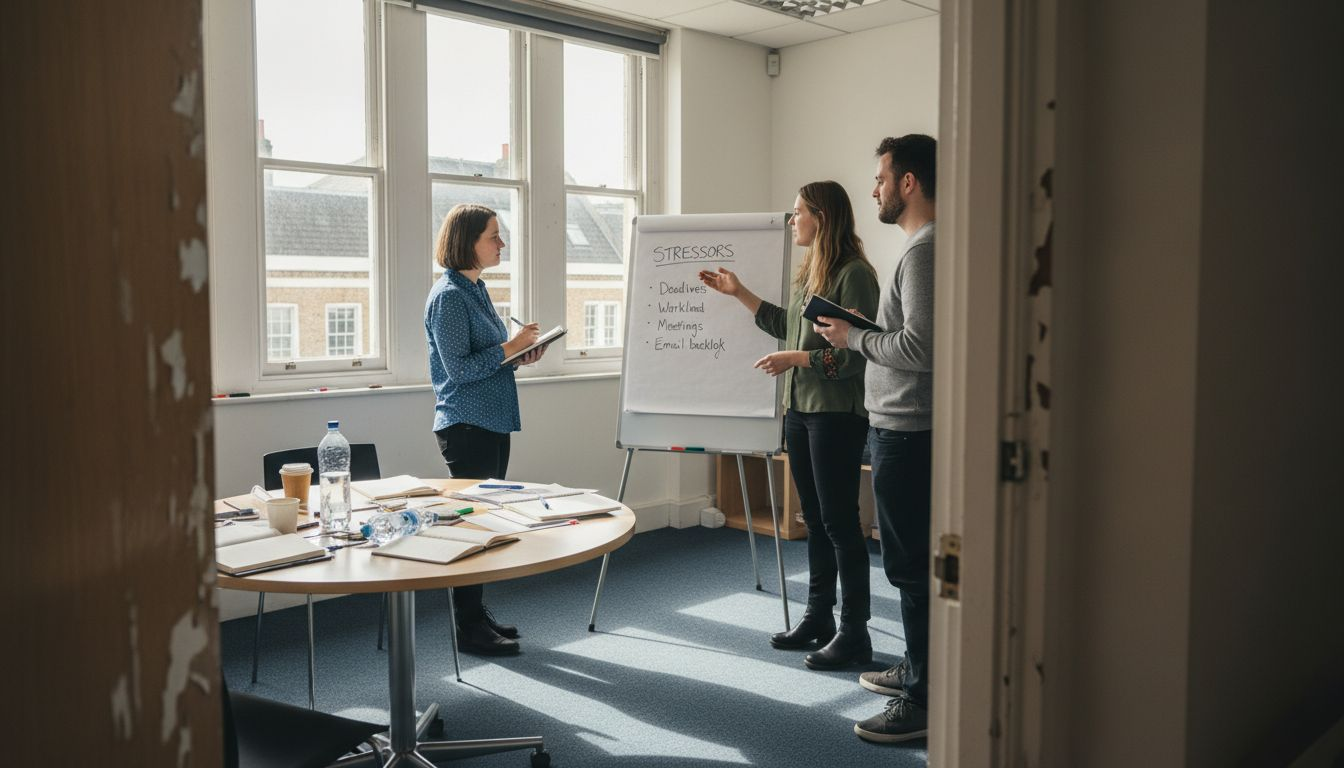
Key psychological resources that underpin workplace resilience include emotional intelligence, robust social support networks, and adaptive coping mechanisms. Employees who cultivate these resources can better manage workplace uncertainties, maintain productivity during disruptions, and protect their overall mental wellbeing. Organisations that prioritise resilience development create environments that not only support individual growth but also enhance collective team performance and organisational adaptability.
Pro-tip: Create a personal resilience toolkit that includes specific stress management techniques, self-reflection strategies, and a network of supportive colleagues to help you navigate workplace challenges.
Types of Resilience: Personal and Team
Resilience is not a monolithic concept but a dynamic construct with distinct yet interconnected dimensions. Multilevel resilience research reveals two primary types: personal and team resilience, each playing a crucial role in workplace effectiveness and psychological wellbeing.
Personal resilience represents an individual’s internal psychological resources. This includes emotional regulation, cognitive flexibility, self-awareness, and the capacity to adapt to changing circumstances. Professionals with robust personal resilience can manage stress, maintain performance during challenges, and recover quickly from setbacks. These individuals demonstrate strong self-management skills, positive self-talk, and the ability to reframe difficulties as opportunities for growth and learning.
Team resilience operates at a collective level, focusing on shared processes, mutual support, and collaborative problem-solving. Workplace resilience perspectives highlight how teams develop resilience through effective communication, shared goals, psychological safety, and adaptive group dynamics. High-performing teams cultivate an environment where members support each other, share emotional burdens, and collectively navigate workplace challenges. This collective capacity transforms individual vulnerabilities into collective strengths, creating a supportive ecosystem that enhances overall organisational performance.
Pro-tip: Conduct monthly team reflection sessions where colleagues share personal resilience strategies and create a collaborative support network that strengthens both individual and collective workplace resilience.
The following table summarises how personal and team resilience differ in their focus, benefits, and methods of development:
Aspect | Personal Resilience | Team Resilience |
Core Emphasis | Individual adaptability | Collective problem-solving |
Main Benefit | Enhanced stress management | Improved team cohesion and support |
Key Development Method | Self-awareness and self-reflection | Team workshops and shared reflection |
Impact on Performance | Maintains individual productivity | Sustains group effectiveness |
Impact on Stress, Burnout, and Wellbeing
Workplace resilience emerges as a critical defence mechanism against the pervasive challenges of stress and burnout. Workplace stress research reveals that resilience functions as a protective psychological shield, mitigating the negative impacts of chronic workplace pressures on mental health and professional performance.
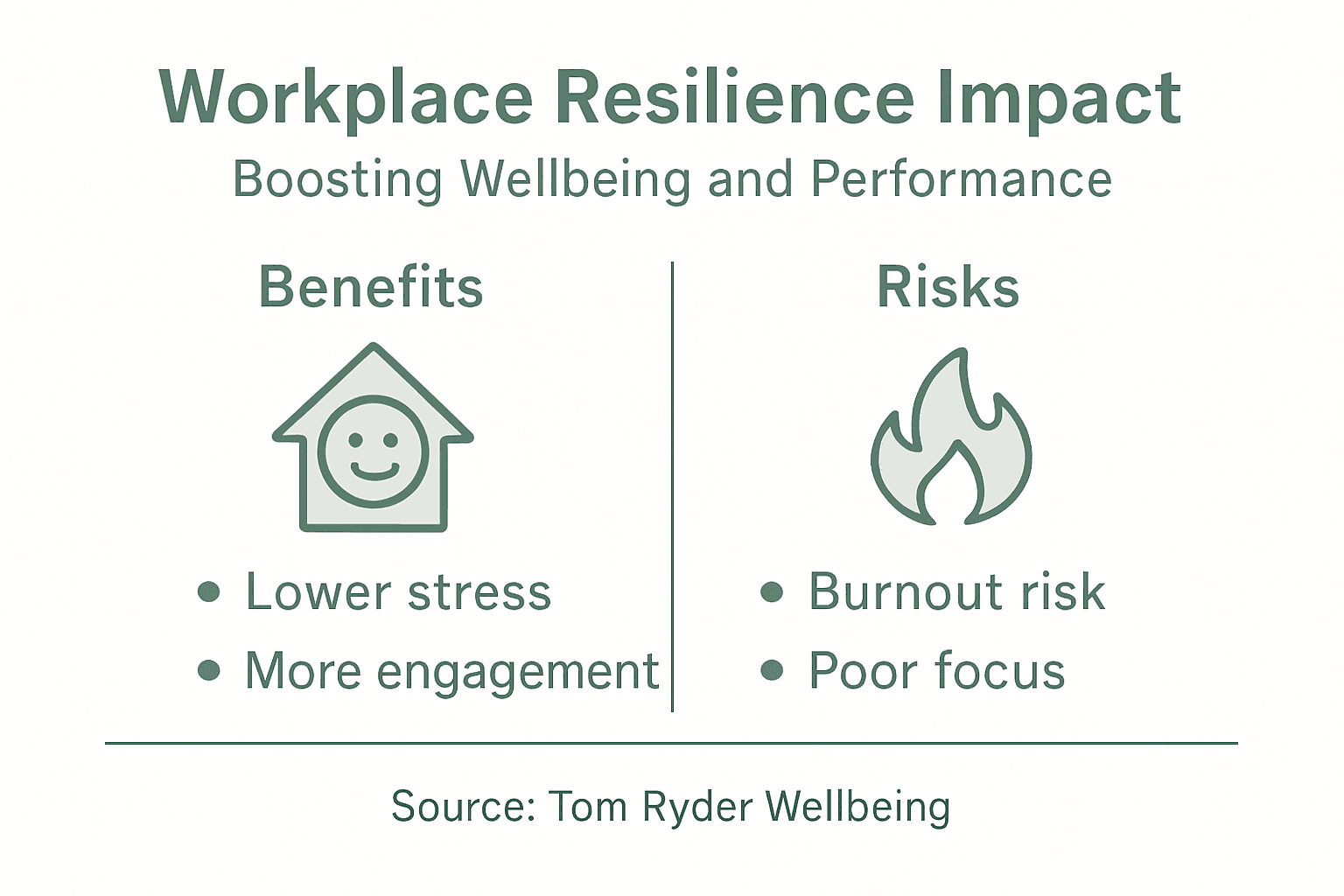
Stress and burnout represent complex psychological conditions that systematically erode an individual’s emotional and cognitive resources. Professionals experiencing prolonged workplace stress often encounter diminished motivation, reduced cognitive function, and increased vulnerability to mental health challenges. The cumulative effect can lead to significant performance declines, increased absenteeism, and potential long-term psychological damage. UK workplace stress insights underscore the critical importance of developing robust resilience strategies as a preventative approach to managing these detrimental workplace dynamics.
Resilient individuals and teams demonstrate remarkable capacities for transforming potential stress triggers into opportunities for growth and adaptation. By cultivating emotional regulation skills, maintaining strong social support networks, and developing proactive coping mechanisms, professionals can effectively interrupt the destructive cycle of stress and burnout. This approach not only preserves individual wellbeing but also contributes to creating more supportive, productive workplace environments that prioritise mental health and sustainable performance.
Pro-tip: Implement a personal stress monitoring system that tracks your emotional and physiological responses, allowing you to identify and address potential burnout triggers before they escalate.
Common Risks and Barriers to Resilience
Workplace resilience is frequently undermined by complex systemic and individual challenges that can erode psychological capacity. Organizational resilience barriers reveal multiple interconnected risk factors that systematically compromise professionals’ ability to maintain emotional and cognitive strength in challenging work environments.
Several critical barriers emerge as significant obstacles to resilience development. Toxic workplace cultures that stigmatise vulnerability, excessive workload expectations, and limited employee autonomy consistently undermine psychological resources. Professionals often encounter environments that demand high performance while simultaneously providing minimal support structures, creating a paradoxical situation where peak productivity is expected without corresponding emotional investment in worker wellbeing. Workplace resilience research highlights how contextual factors like leadership behaviours and organisational communication patterns directly impact an individual’s capacity to build and maintain resilience.
Individual psychological factors also contribute significantly to resilience barriers. Negative self-talk, imposter syndrome, chronic stress response patterns, and limited emotional regulation skills can create internal resistance to developing robust resilience. These personal mechanisms often interact with external workplace pressures, creating a complex ecosystem that diminishes psychological flexibility and adaptive capacity. Understanding these intricate interactions becomes crucial for professionals seeking to overcome resilience challenges and create sustainable workplace wellbeing strategies.
Pro-tip: Conduct a monthly self-audit of your psychological resources, identifying specific workplace stressors and developing targeted strategies to build emotional resilience.
Practical Coaching Strategies for Building Resilience
Resilience coaching represents a targeted approach to developing psychological strength and adaptive capabilities in professional environments. Organizational coaching strategies emphasise creating individualised intervention plans that systematically enhance employees’ capacity to navigate workplace challenges effectively.
Key coaching strategies focus on developing comprehensive psychological resources. These include cultivating adaptive coping mechanisms, strengthening social support networks, and promoting psychological flexibility. Coaches work with professionals to identify specific stress triggers, develop personalised emotional regulation techniques, and build robust mental frameworks that transform potential workplace pressures into opportunities for growth. Leadership resilience interventions particularly emphasise reflective practices, goal-setting methodologies, and developing growth mindsets that enable professionals to reframe challenges as developmental experiences.
Effective resilience coaching integrates multiple evidence-based approaches, recognising that psychological strength is a multidimensional construct. Practitioners typically employ techniques such as cognitive reframing, mindfulness training, stress management workshops, and personalised feedback mechanisms. The ultimate aim is to equip professionals with a toolkit of practical strategies that can be dynamically applied across different workplace contexts, enabling them to maintain performance and wellbeing even under significant organisational pressures.
Here is a concise comparison of major coaching strategies for building workplace resilience and their expected outcomes:
Strategy | Description | Expected Outcome |
Mindfulness Training | Teaches present-moment awareness | Reduces stress reactions |
Cognitive Reframing | Shifts negative perspectives positively | Increases psychological flexibility |
Social Support Building | Strengthens peer connections | Boosts emotional wellbeing |
Goal-setting | Defines actionable steps for growth | Fosters motivation and progress |
Pro-tip: Create a personal resilience development journal that tracks your emotional responses, identifies recurring stress patterns, and documents successful coping strategies.
Build Your Workplace Resilience with Practical Coaching Support
The challenges of maintaining resilience at work, managing stress, and preventing burnout can feel overwhelming when you face them alone. This article highlights how emotional regulation, adaptive coping strategies, and a strong support network are essential for thriving under pressure. If you find yourself struggling with feeling “off balance” in your career or seeking ways to transform setbacks into growth opportunities, tailored coaching can make a real difference.
At Tom Ryder Wellbeing, we offer specialised Emotional Resilience Coaching and Stress Management Coaching designed to equip you with practical tools to build psychological strength. Our unique SCALES Model supports your mental, physical, and emotional wellbeing, helping you regain clarity, shift negative self-talk, and create sustainable routines that enhance your work performance and overall life balance.
Ready to take control of your wellbeing and transform workplace stress into resilience? Explore how a personalised coaching journey can support your goals with Wellbeing Coaching UK. Visit Tom Ryder Wellbeing today and start building the resilience you need to thrive now.
Frequently Asked Questions
What is workplace resilience?
Workplace resilience refers to the ability of professionals to maintain psychological stability and performance while navigating stressors and challenges in their work environment. It encompasses emotional regulation, cognitive flexibility, and behavioural adaptability.
How can I develop my personal resilience at work?
To develop personal resilience, focus on cultivating emotional intelligence, practising self-reflection, and employing proactive coping strategies. Techniques such as mindfulness, goal-setting, and maintaining strong social support networks can also significantly enhance your resilience.
What are the key features of a resilient workplace?
A resilient workplace is characterised by calmness under pressure, intrinsic motivation, adaptability, a sense of belonging, positivity, and future-oriented thinking. These features encourage employees to support one another and effectively navigate challenges together.
How does resilience help in preventing burnout?
Resilience acts as a protective mechanism against stress and burnout by enabling individuals to transform stress triggers into growth opportunities. Cultivating resilience can preserve mental wellbeing, boost productivity, and create a healthier, more supportive work environment.
Recommended
Comments