


Why Use Wellbeing Coaching for Work-Life Balance


Nearly 60 percent of British professionals feel stress undermines their daily performance. When long office hours and relentless demands drain your energy, burnout can seem like just another part of working life in Essex. Wellbeing coaching offers practical frameworks to restore balance, boost mental strength, and help you reclaim control. This introduction explores what wellbeing coaching means, its proven strategies, and why so many British workers are turning to specialist guidance for lasting change.
Table of Contents
Key Takeaways
Point | Details |
Holistic Approach | Wellbeing coaching supports individuals in achieving balance across mental, emotional, and professional aspects. |
Personalised Strategies | Coaches design tailored plans to address unique challenges, focusing on forward-looking goals rather than past experiences. |
Types of Coaching Available | The UK offers diverse coaching options, including health, life, executive, and workplace wellbeing coaching tailored to specific needs. |
Long-Term Benefits | Wellbeing coaching fosters psychological resilience and emotional intelligence, ultimately leading to improved personal and professional outcomes. |
Defining Wellbeing Coaching and Core Concepts
Wellbeing coaching represents a holistic approach to supporting individuals in achieving mental, emotional, and professional equilibrium. At its core, this specialised form of coaching focuses on helping people develop strategies to manage stress, improve personal resilience, and create sustainable life balance. Wellbeing coaching explores practical support for a balanced life by addressing multiple dimensions of personal wellness.
The fundamental principles of wellbeing coaching centre on understanding an individual’s unique challenges and designing personalised strategies for improvement. Unlike traditional therapy, which often explores past experiences, wellbeing coaching maintains a forward-looking perspective. Coaches work collaboratively with clients to identify specific goals, recognise potential obstacles, and develop actionable plans that promote mental health and professional effectiveness.
Key components of wellbeing coaching typically include comprehensive assessments of current lifestyle patterns, stress management techniques, emotional regulation skills, and personalised intervention strategies. These approaches help professionals navigate complex work environments while maintaining personal wellbeing. Coaches utilise evidence-based methodologies to support clients in developing healthier routines, improving communication skills, and building psychological resilience.
Pro tip: Start your wellbeing coaching journey by conducting an honest self-assessment of your current stress levels, work-life boundaries, and personal energy management strategies.
Types of Wellbeing Coaching Available in the UK
The United Kingdom offers a diverse range of wellbeing coaching approaches tailored to meet various personal and professional needs. Exploring professional coaching models highlights the nuanced support available across different contexts and individual requirements. These coaching types are designed to address specific aspects of personal development, mental health, and professional performance.
Key wellbeing coaching categories in the UK include health coaching, life coaching, executive coaching, and workplace wellbeing coaching. Health coaching, often integrated within NHS frameworks, focuses on supporting individuals managing chronic conditions, lifestyle changes, and overall physical and mental wellness. Standardised coaching pathways in the UK healthcare system provide structured interventions that help patients develop self-management skills and improve their overall health outcomes.
Executive and workplace wellbeing coaching target professionals experiencing high-stress environments, offering strategies for stress management, performance enhancement, and work-life balance. These specialised coaching approaches help individuals develop emotional resilience, improve communication skills, and create sustainable personal development strategies. Life coaching, meanwhile, takes a holistic approach, supporting clients in achieving personal goals, navigating life transitions, and developing a more balanced, fulfilling lifestyle.
Here is a summary of key wellbeing coaching types available in the UK and their primary focus:
Coaching Type | Main Purpose | Typical Beneficiaries |
Health Coaching | Support lifestyle changes | Patients with chronic issues |
Life Coaching | Personal goal achievement | Individuals in transition |
Executive Coaching | Enhance leadership skills | Senior professionals |
Workplace Wellbeing | Improve team resilience | Employees and organisations |
Pro tip: When selecting a wellbeing coach, verify their professional qualifications and ensure their coaching approach aligns with your specific personal or professional development goals.
How Wellbeing Coaching Supports Change and Growth
Wellbeing coaching serves as a powerful mechanism for personal transformation, providing structured support that enables individuals to navigate complex life challenges and achieve meaningful growth. Group coaching interventions demonstrate significant potential for enhancing individual resilience and self-awareness by creating purposeful environments that encourage deep personal reflection and strategic change.
The coaching process facilitates change through several key mechanisms. By employing evidence-based techniques rooted in positive psychology, coaches help clients develop a more nuanced understanding of their strengths, limitations, and potential. Coaching conversations enhance wellbeing by driving behavioural change and supporting goal-setting strategies that align with an individual’s core values and aspirations. This approach moves beyond traditional problem-solving, instead focusing on building sustainable personal development frameworks that empower clients to take ownership of their growth trajectory.
Critical to the coaching journey is the development of self-awareness and emotional intelligence. Coaches guide clients in recognising unconscious patterns, challenging limiting beliefs, and constructing more adaptive mental models. Through reflective dialogue and targeted interventions, individuals learn to reframe challenges, develop greater psychological flexibility, and cultivate a growth-oriented mindset that supports continuous personal and professional evolution.
Pro tip: Create a personal growth journal to document insights, track progress, and maintain accountability during your wellbeing coaching journey.
Common Challenges Addressed by Wellbeing Coaching
Wellbeing coaching tackles a complex landscape of personal and professional challenges that increasingly impact modern professionals’ mental health and performance. Research from UK universities reveals the profound challenges of workplace stress and organisational barriers that prevent individuals from maintaining sustainable work-life balance and psychological resilience.
Primary challenges addressed through wellbeing coaching typically include chronic stress, emotional exhaustion, professional burnout, and communication difficulties. Organisational settings often struggle with relational barriers and lack of comprehensive support structures that can significantly undermine individual and collective wellbeing. Coaches work strategically to help clients develop adaptive coping mechanisms, reframe negative thought patterns, and build emotional intelligence that enables more effective navigation of complex workplace dynamics.

Wellbeing coaching additionally addresses nuanced personal challenges such as imposter syndrome, career transition anxiety, work-related confidence issues, and difficulties maintaining healthy boundaries. By providing a structured, non-judgmental environment, coaches support clients in identifying root causes of professional stagnation, developing personalised strategies for growth, and creating meaningful pathways towards improved mental health and career satisfaction.
Pro tip: Commit to regular self-reflection and keep a detailed log of your professional challenges to provide clear insights during coaching sessions.
Practical Outcomes and Long-Term Benefits
Wellbeing coaching delivers transformative outcomes that extend far beyond short-term interventions, creating sustainable improvements in personal and professional functioning. Research from NHS contexts demonstrates significant enhancements in patient activation and self-management capabilities through targeted coaching approaches that empower individuals to take greater control of their mental and physical health.
Employee wellbeing coaching research reveals profound long-term benefits for workplace performance and individual resilience across multiple professional domains. Participants consistently report improved confidence, enhanced emotional regulation, and more effective stress management strategies that persist well beyond the initial coaching engagement. These sustained outcomes include increased workplace satisfaction, better interpersonal relationships, and a more proactive approach to personal development.
The most significant long-term benefits encompass psychological resilience, enhanced self-awareness, and the development of adaptive coping mechanisms. Clients typically experience improved decision-making skills, greater emotional intelligence, and a more balanced approach to managing professional and personal challenges. By investing in wellbeing coaching, individuals cultivate a robust toolkit of strategies that support continuous personal growth, enabling them to navigate complex life transitions with greater ease and self-assurance.
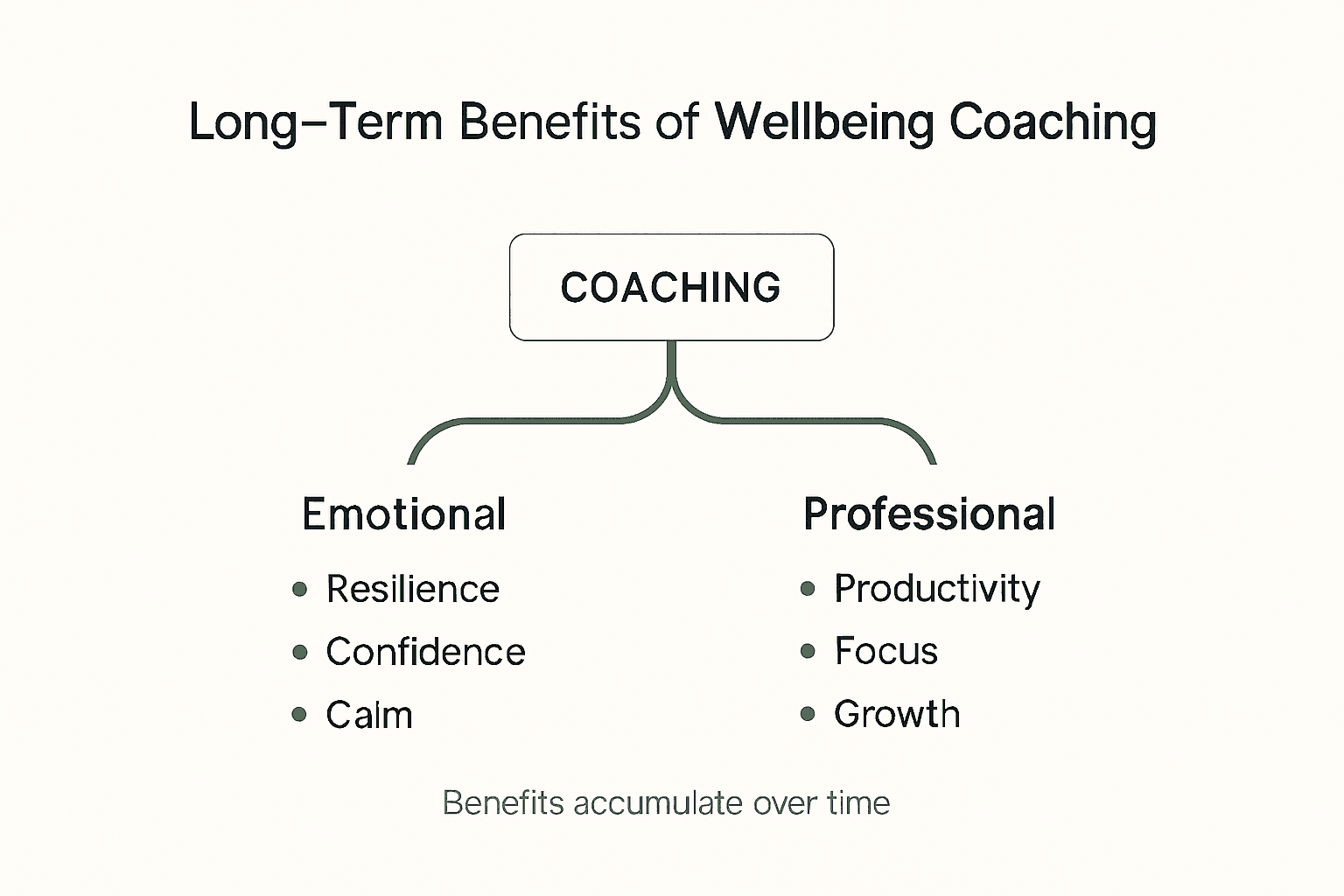
The following table highlights notable long-term benefits of wellbeing coaching and their impact on individuals:
Benefit Achieved | Description | Practical Impact |
Psychological Resilience | Improved stress management | Greater workplace stability |
Emotional Intelligence | Enhanced self-regulation | Stronger relationships |
Decision-Making Skills | Sharper analytical thinking | Better career progression |
Adaptive Coping | Effective response to change | Smoother life transitions |
Pro tip: Document your personal growth milestones systematically during coaching to track tangible improvements and maintain long-term motivation.
Achieve True Work-Life Balance with Expert Wellbeing Coaching
Struggling to manage stress and find equilibrium between your professional and personal life is a common challenge highlighted in the article. Key pain points such as chronic stress, burnout, low energy, and blurred boundaries often leave individuals feeling overwhelmed and unsure where to begin. Embracing the concept of wellbeing coaching, which focuses on practical strategies and sustainable change, can be a transformative step towards lasting balance and emotional resilience.
At Tom Ryder Wellbeing, we specialise in helping you regain control through tailored coaching grounded in the unique SCALES Model that addresses sleep, creativity, activity, listening, grounding, and social connection. Whether you seek support for stress management coaching or guidance from a trusted work life balance coach, our approach combines professional expertise with lived experience to provide practical, small steps that build confidence and resilience.
Ready to move beyond feeling stuck and create a balanced, fulfilling life? Discover how personalised coaching can empower you to break cycles of anxiety and overwhelm while nurturing wellbeing across all areas. Start your journey today by visiting Tom Ryder Wellbeing to book a free consultation and unlock your potential for real change.
Frequently Asked Questions
What is wellbeing coaching?
Wellbeing coaching is a holistic approach that helps individuals achieve a balance in mental, emotional, and professional aspects of their lives by developing strategies to manage stress and improve resilience.
How does wellbeing coaching differ from traditional therapy?
Unlike traditional therapy, which often focuses on exploring past experiences, wellbeing coaching maintains a forward-looking perspective, assisting clients in setting specific goals and creating actionable plans for personal and professional growth.
What are the main challenges that wellbeing coaching addresses?
Wellbeing coaching addresses challenges such as chronic stress, emotional exhaustion, professional burnout, work-related confidence issues, and difficulties in maintaining healthy boundaries in personal and professional life.
What long-term benefits can I expect from wellbeing coaching?
Participants in wellbeing coaching often experience improved psychological resilience, enhanced emotional intelligence, better decision-making skills, and more effective stress management, leading to greater overall satisfaction in both personal and professional domains.
Recommended
Comments