


Step by Step Mindset Coaching for Stress Relief and Balance


Over half of British professionals in Essex report feeling regularly stressed at work. That constant pressure makes work-life balance and emotional wellbeing harder to manage. Understanding your mindset is the first step toward real change. This guide provides clear steps and expert-backed strategies to help you build resilience and healthier habits so you can regain control and enjoy greater fulfilment every day.
Table of Contents
Quick Summary
Key Insight | Explanation |
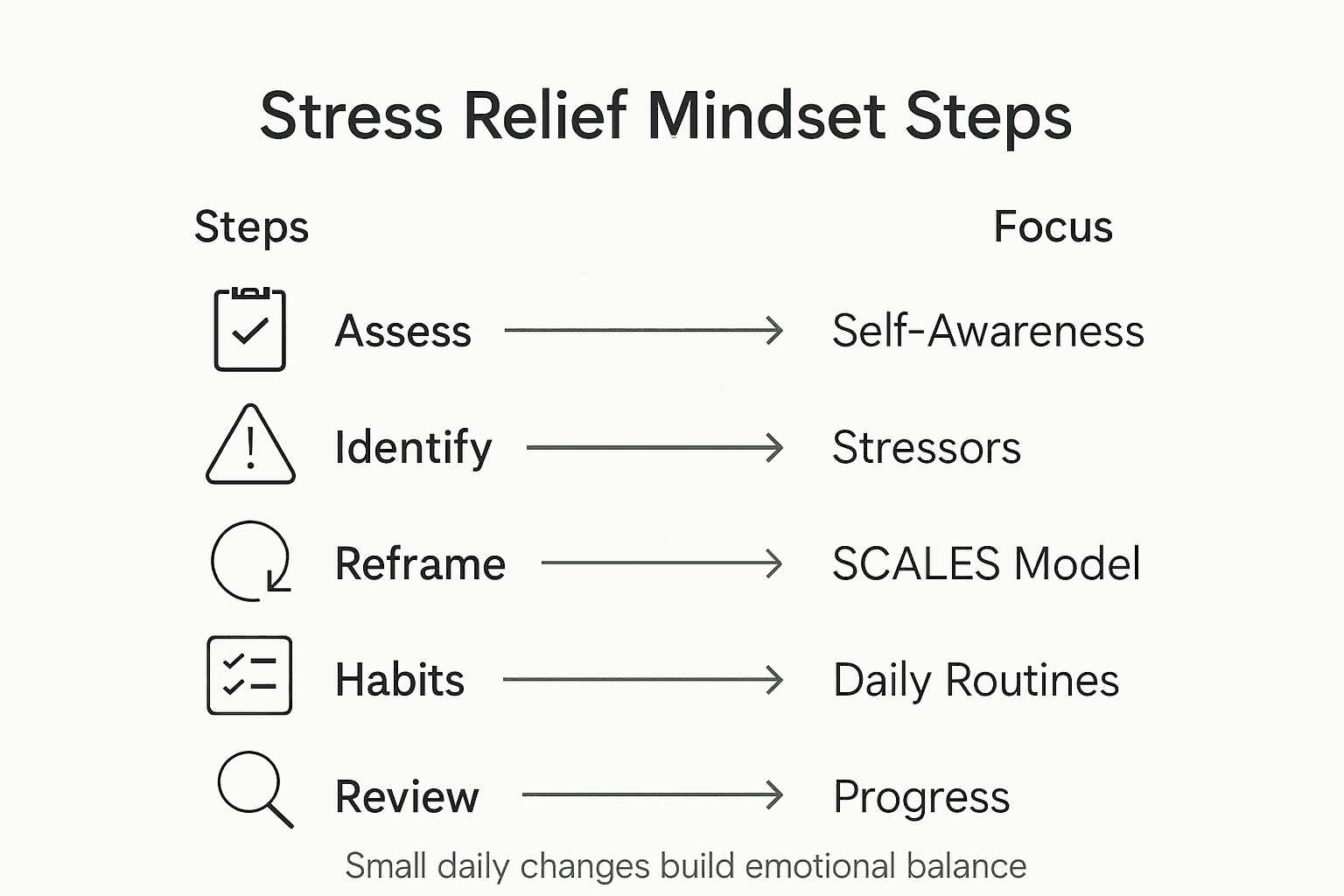
1. Assess Your Current Mindset | Self-assessment is crucial for understanding mental state and identifying areas for support and growth. |
2. Identify Stressors and Beliefs | Recognising the sources of stress and limiting beliefs can guide you in developing effective coping strategies. |
3. Use the SCALES Model | The SCALES Model helps reframe thought patterns, promoting emotional resilience through various techniques. |
4. Implement Daily Habits | Establishing intentional daily practices supports mental wellbeing and emotional balance over time. |
5. Regularly Review Progress | Continuous evaluation of your journey allows for adjustments and fosters ongoing personal growth and resilience. |
Step 1: Assess Your Current Mindset and Wellbeing
Gaining a clear understanding of your current mental and emotional state is the foundation for meaningful personal transformation. This step will help you identify your stress levels, emotional patterns, and areas where you might need additional support or development.
Begin by creating a comprehensive self assessment using the wellbeing evaluation strategies recommended by mental health professionals. Start by reflecting on different aspects of your life including work performance, personal relationships, physical health, emotional resilience, and overall satisfaction. Consider using a structured journal or worksheet to track your observations systematically.
During this assessment, pay attention to recurring emotional patterns. Are you experiencing frequent anxiety? Do you feel consistently overwhelmed? Notice physical signals like disrupted sleep, changes in appetite, or persistent tension. These can be key indicators of your current wellbeing status. Understanding these signals allows you to develop targeted strategies for improvement.
Expert Advice: Create a holistic snapshot of your current state by documenting both positive experiences and challenges, providing a balanced perspective for future growth.
Step 2: Identify Specific Stressors and Limiting Beliefs
Understanding the precise origins of your stress and self limiting patterns is crucial for developing effective coping strategies. This step will help you methodically uncover the underlying factors that contribute to your emotional challenges and mental barriers.
Start by conducting a comprehensive analysis of academic and personal stressors. Map out specific sources of tension such as work pressures, financial concerns, relationship dynamics, and personal expectations. Pay close attention to recurring thought patterns that undermine your confidence. These might include statements like “I am not good enough” or “I always fail”. Such limiting beliefs often stem from past experiences and can significantly impact your ability to manage stress effectively.
Utilise a structured approach to document these stressors and beliefs. Create a detailed journal where you categorise different types of stress environmental, professional, personal and note the specific thoughts or scenarios that trigger negative emotional responses. By externalising these internal narratives, you gain valuable perspective and can start developing targeted strategies for transformation.
Expert Advice: Approach your self reflection with compassion and curiosity rather than judgment, recognising that identifying your stressors is a courageous first step towards meaningful personal growth.
Step 3: Apply the SCALES Model to Reframe Thinking
The SCALES Model offers a powerful framework for transforming your mental approach and building emotional resilience. This step will guide you through systematically reframing your thinking patterns to reduce stress and enhance your overall wellbeing.

Begin by understanding how cognitive reframing interventions can shift your perspective on challenging situations. Focus on each element of the SCALES Model Sleep, Creative, Active, Listen, Earth, Social as a potential pathway for mental transformation. For instance, when experiencing work stress, consider how improving your sleep quality might alter your perception of challenges, or how engaging in a creative activity could help you view problems from a different angle.
Practice applying the model by deliberately challenging your existing thought patterns. If you notice a negative belief emerging like “I cannot handle this situation”, consciously reframe it through different SCALES lenses. Perhaps you can listen more deeply to your emotional responses, connect with your social support network, or ground yourself through active movement or time in nature. The goal is to develop a more flexible and adaptive approach to stress, recognising that your interpretation of events significantly impacts your emotional experience.
Expert Advice: Approach reframing as a skill to be practised consistently, understanding that small shifts in perspective can create substantial changes in your mental resilience over time.
Here is a summary of the SCALES Model dimensions and their impact on wellbeing:
SCALES Dimension | Key Focus | Potential Benefit |
Sleep | Restorative sleep patterns | Enhances emotional regulation |
Creative | Engaging in creativity | Promotes new perspectives |
Active | Physical movement | Reduces stress levels |
Listen | Attentive self-awareness | Improves self-understanding |
Earth | Connection with nature | Grounds and soothes the mind |
Social | Building support networks | Increases resilience |
Step 4: Implement Simple Daily Habits for Emotional Balance
Building sustainable emotional resilience requires creating intentional daily practices that support your mental wellbeing. This step focuses on developing practical routines that can transform your approach to stress and emotional regulation.
Start by integrating strategic daily habits that support mental health. These might include establishing a consistent morning routine, setting clear digital boundaries, practicing mindful breathing, and scheduling regular breaks throughout your day. Consider creating a structured yet flexible framework that allows for predictability while remaining adaptable to your changing needs. Focus on small achievable changes such as a ten minute meditation practice, a brief morning journaling session, or a consistent bedtime routine that signals to your body and mind that it is time to wind down.
Prioritise holistic wellbeing by incorporating multiple dimensions of self care into your daily rhythm. This means balancing physical activity, nutrition, social connections, and moments of personal reflection. Pay attention to how different habits interact and support each other within the SCALES Model sleep patterns influence your creative energy, active movement impacts your ability to listen to your emotional needs, and social connections ground you in your broader life context.
Expert Advice: Start with one or two small habits and build gradually, recognising that consistency matters more than perfection.
Step 5: Review Progress and Adjust Your Approach
Regular evaluation of your mindset coaching journey is essential for sustained personal growth and emotional resilience. This step focuses on developing a reflective practice that allows you to understand your progress and make intentional adjustments to your approach.
Implement systematic progress review strategies by establishing regular check-in moments with yourself. Create a structured framework for tracking your emotional development and measuring the effectiveness of your habits. This might involve weekly journaling sessions where you document your experiences, challenges, and breakthroughs. Pay attention to patterns in your thinking, emotional responses, and behavioural changes. Note which SCALES Model elements are working well and where you might need additional support or different strategies.
Be compassionate and curious during your review process. Understand that progress is not linear and setbacks are opportunities for learning rather than indicators of failure. Look beyond surface level metrics and consider the qualitative shifts in your mental approach. Are you more resilient? Do you respond to stress differently? Are your relationships improving? These nuanced changes often reveal the deeper impact of your mindset coaching work, even when quantitative measures might seem subtle.
Expert Advice: Treat your personal growth review like a scientific experiment with yourself as both researcher and subject, maintaining objectivity while staying emotionally connected to your journey.
The following table highlights reflective habits for sustained emotional growth:
Habit | Review Frequency | Intended Outcome |
Weekly journaling | Once per week | Track mindset shifts and patterns |
Self check-in | Daily or as needed | Raise self-awareness of changes |
Model assessment | Monthly | Identify effective strategies |
Support feedback | After key milestones | Gain outside perspective |
Take Control of Stress and Find Your Balance with Expert Mindset Coaching
Feeling overwhelmed by stress and searching for practical ways to regain emotional balance is exactly what our mindset coaching at Tom Ryder Wellbeing is designed for. This article clearly highlights the struggle with stress, low energy, and self-limiting beliefs — common challenges that can feel impossible to manage alone. Using the proven SCALES Model, which addresses Sleep, Creative expression, Activity, Listening to yourself, Earth connection, and Social support, you can transform how you respond to daily pressures and improve your overall wellbeing.
If you are ready to break free from constant stress and develop sustainable habits that create real, lasting change, explore our Mindset Coaching UK or Stress Management Coaching. Each coaching session is built around clear, actionable steps tailored to your unique needs, helping you build resilience and regain control. Take the first step today by visiting Tom Ryder Wellbeing and discover how personalised coaching can bring the balance and clarity you deserve.
Frequently Asked Questions
How can I assess my current mindset and wellbeing for stress relief?
Begin by creating a comprehensive self-assessment that reflects various aspects of your life, such as work performance and emotional resilience. Use a structured journal or worksheet to document your observations and identify patterns in your emotional responses. Aim to complete this assessment within one week to gain a clear understanding of your starting point.
What are some common stressors and limiting beliefs I should identify?
Common stressors include work pressures, financial concerns, and relationship dynamics. Document specific thoughts that undermine your confidence, such as “I am not good enough.” Spend a few days reflecting on these stressors to develop a clear map of your emotional challenges.
How can I apply the SCALES Model to improve my mental wellbeing?
To utilise the SCALES Model, focus on enhancing each dimension: Sleep, Creative, Active, Listen, Earth, and Social. For example, dedicate 20 minutes each day to creative activities or physical movement. Incorporate these practices consistently to foster a more resilient mindset over the course of a month.
What daily habits can I implement for better emotional balance?
Integrating daily habits such as mindful breathing, scheduled breaks, and a consistent morning routine can greatly support your mental health. Start with one or two small changes and maintain them daily for at least 30 days to notice significant improvements in your emotional resilience and overall wellbeing.
How should I review my progress in mindset coaching?
Regularly evaluate your progress by journaling weekly about your emotional development and the effectiveness of your habits. Aim for a self-check-in daily; this practice will help you identify patterns and make necessary adjustments. Assess your progress at least once a month to ensure you are on the right path towards personal growth.
Recommended
Comments