


Building a Wellbeing Routine for Lasting Balance and Health


Burnout rates among british professionals continue to climb, with stress now cited as a leading cause of absence from work in Essex. The daily pressure to perform can drain creativity and undermine wellbeing, making it tough to stay productive and mentally resilient. This guide breaks down proven strategies for building practical routines so you can reclaim your energy, improve focus, and sustain a healthier work-life balance.
Table of Contents
Quick Summary
Key Point | Explanation |
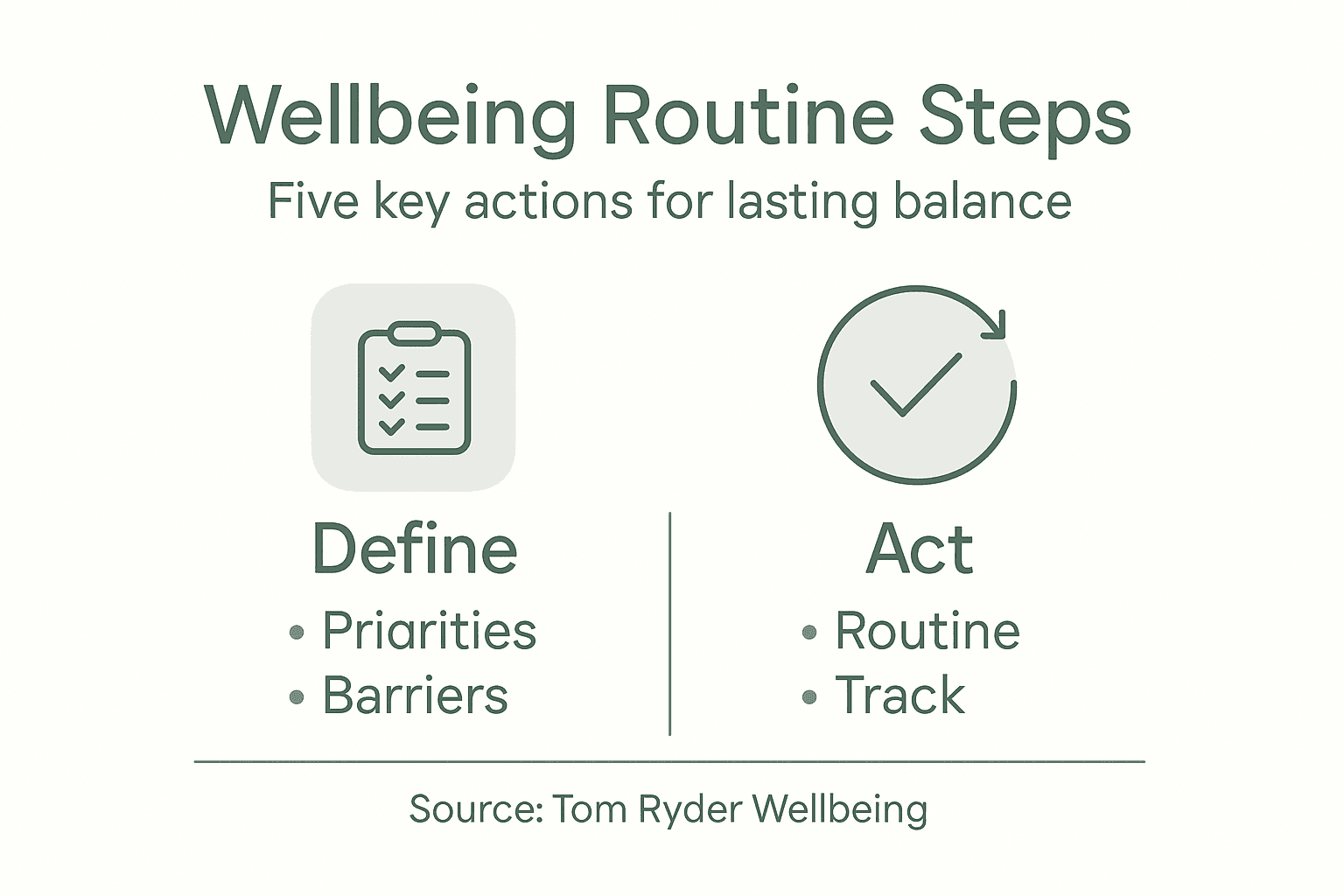
1. Assess Wellbeing with SCALES Model | Use the SCALES model to evaluate Sleep, Creative, Active, Listen, Earth, and Social aspects of your life for holistic balance. |
2. Set Specific Health Goals | Establish SMART health goals by identifying barriers and creating actionable, realistic targets for improvement. |
3. Design Flexible Daily Routines | Map your daily activities around energy levels and prioritise restorative practices to maintain balance and reduce stress. |
4. Track Progress Thoughtfully | Create a personal tracking system for wellbeing metrics, sharing updates with an accountability partner to stay motivated. |
5. Regularly Refine Your Routine | Schedule consistent review sessions to reflect on your wellbeing strategies and make necessary adjustments for continuous improvement. |
Step 1: Define your wellbeing priorities using the SCALES model
Understanding your current wellbeing landscape requires a strategic approach. The SCALES model provides a structured framework for mapping holistic wellbeing dimensions across multiple life domains.
Starting with the SCALES model means exploring six interconnected strings of your personal wellness: Sleep, Creative, Active, Listen, Earth, and Social. Each represents a critical area that contributes to your overall balance. Begin by rating yourself honestly in each domain on a scale of 1 to 10. Ask yourself questions like: How well am I sleeping? Do I have creative outlets? Am I physically active? Am I listening to my body and emotions? How connected am I to nature? What is the quality of my social relationships?
To help you better understand the SCALES model, here is a breakdown of each dimension and its focus:
SCALES Dimension | Focus Area | Example Self-Reflection Question |
Sleep | Rest and recovery | How rested do I feel each morning? |
Creative | Self-expression | Am I engaging in creative activities regularly? |
Active | Physical movement | Am I moving enough each day? |
Listen | Emotional awareness | Am I attentive to my emotions and body signals? |
Earth | Connection to nature | Am I spending time outdoors and feeling grounded? |
Social | Relationships and support | Do I feel connected to others in my life? |
The goal is not perfection but understanding. Once you identify which areas need attention, you can develop targeted strategies for improvement. Some strings might need significant work while others are already in good shape. By recognising your current state, you create a personalised roadmap for enhancing your wellbeing.
Top tip: Keep your initial assessment simple and compassionate. Wellbeing is a journey, not a destination.
Step 2: Identify barriers and set realistic health goals
Setting meaningful health goals requires honest self-reflection and a strategic approach. The process begins with understanding your unique obstacles and psychological factors influencing goal achievement.
Start by conducting a comprehensive personal assessment. List potential barriers that have previously prevented you from maintaining health goals: time constraints, energy levels, motivation dips, work pressures, or personal habits. Consider physical, emotional, and practical challenges. For each barrier, brainstorm potential mitigation strategies. For instance, if lack of time is an issue, explore shorter workout options, meal preparation techniques, or scheduling fitness around existing commitments. When setting goals, ensure they are specific, measurable, achievable, relevant, and time-bound (SMART). Instead of a vague goal like ‘get healthier’, opt for precise objectives such as ‘walk 30 minutes four times weekly’ or ‘prepare home-cooked meals for lunch five days per month’.
Remember that goal setting is an iterative process. Be prepared to adjust your approach, celebrate small victories, and approach your health journey with patience and self-compassion. Regular review and gentle recalibration will help you maintain momentum and progress.
Top tip: Write down your goals and place them somewhere visible as a daily reminder of your commitment.
Step 3: Create a daily routine that supports balance and energy
Designing a sustainable daily routine requires intentional planning and understanding personalised wellness strategies. Your routine should serve as a flexible framework that adapts to your changing energy levels and life circumstances, not a rigid set of rules that creates additional stress.

Begin by mapping out your typical day and identifying natural energy peaks and troughs. Consider blocking your most demanding tasks during high energy periods and scheduling restorative activities during lower energy times. For instance, if you are most alert in the morning, allocate complex work projects to that window. Incorporate regular breaks, movement intervals, and moments of mindfulness to prevent burnout. Practical strategies might include a morning meditation, midday walk, afternoon breathing exercise, or evening journaling. Prioritise consistent sleep schedules, balanced nutrition, and activities that replenish your physical and emotional reserves.
Remember that routine building is an experimental process. Monitor how different schedule configurations impact your energy and mood, and be willing to make incremental adjustments. Your ideal routine will evolve as your life and needs change.
Top tip: Review and refresh your routine every three months to ensure it continues supporting your wellbeing goals.
Step 4: Embed accountability and track wellbeing progress
Tracking your wellbeing progress requires a systematic approach that goes beyond casual observation. Monitoring personal health indicators helps you understand your ongoing personal development and maintain motivation.
Start by creating a simple tracking system that captures key aspects of your wellbeing. This might include a weekly journal or digital spreadsheet where you record metrics such as sleep quality, energy levels, mood, physical activity, and emotional resilience. Rate each area on a scale of one to ten and note any significant patterns or observations. Consider using colour coding or visual graphs to make trends more apparent. Introduce accountability by sharing your progress with a trusted friend, partner, or professional coach who can offer objective feedback and encouragement. Regular check-ins every four to six weeks will help you assess whether your current strategies are working or need refinement.
Here is a summary of effective wellbeing tracking methods and their benefits:
Method | Ease of Use | Benefit |
Weekly journal | Simple | Encourages regular self-reflection |
Digital spreadsheet | Moderate | Tracks multiple wellbeing indicators |
Mobile wellness app | Easy | Provides automated trend analysis |
Peer check-ins | Moderate | Adds accountability and support |
Remember that tracking is not about perfection but understanding. Some weeks will be more challenging than others, and your data should reflect your genuine experience without judgement.
Top tip: Choose tracking methods that feel natural and sustainable for your lifestyle rather than creating additional stress.
Step 5: Refine your wellbeing routine with ongoing feedback
Continuous improvement of your wellbeing journey requires thoughtful reflection and responsive adjustment strategies. Developing a flexible approach allows you to adapt your routine as your life circumstances and personal needs evolve.
Create a structured feedback mechanism that helps you assess your progress objectively. This could involve monthly self-review sessions where you critically examine what is working and what needs modification. Consider questions like: Which aspects of my routine are supporting my energy? Where am I experiencing resistance or difficulty? Are my current strategies aligned with my broader wellbeing goals? Use journaling, digital tracking apps, or simple spreadsheets to document your observations. Seek input from trusted friends, family members, or a professional wellbeing coach who can provide external perspective and constructive insights.
Remember that refinement is not about achieving perfection but maintaining a responsive, compassionate relationship with yourself. Your wellbeing routine should feel supportive, not restrictive.
Top tip: Schedule your routine review at a consistent time each month to build a reflective habit.
Start Building a Wellbeing Routine That Lasts Today
Feeling overwhelmed, stuck, or unsure where to begin your journey towards better balance and health is common. This article highlights the importance of assessing your wellbeing using the SCALES Model and creating realistic, personalised routines that nurture energy and emotional resilience. If you recognise challenges like poor sleep, low motivation, or difficulty maintaining healthy habits you are not alone — these are exactly the issues Tom Ryder Wellbeing specialises in addressing.
Our Wellbeing Coaching UK programmes use the proven SCALES framework to help you understand your unique wellbeing priorities. Through practical, compassionate coaching sessions you will build clear goals, simple routines, and strategies to break out of cycles of stress and burnout. Whether you want support with motivation, work-life balance, mindset, or emotional resilience you will find tailored guidance to move forward confidently.
Take the first step to lasting change now by exploring more at Tom Ryder Wellbeing. You can also discover targeted help with Stress Management Coaching or reach out for a personalised Life Coach Essex session. Build your wellbeing routine with expert support that understands the real-life obstacles and helps you create a balanced life worth living.
Frequently Asked Questions
How can I use the SCALES model to assess my wellbeing?
Begin by rating yourself on a scale of 1 to 10 in six dimensions: Sleep, Creative, Active, Listen, Earth, and Social. Reflect on how well you feel in each area, then identify where you need to focus your improvement efforts.
What barriers should I consider when setting health goals?
Identify personal barriers such as time constraints, motivation dips, or work pressures that hinder your health progress. List them out and brainstorm strategies to overcome each barrier, like scheduling shorter workout sessions or meal prepping on weekends.
How do I create a daily routine that supports my wellbeing?
Map out your typical day to identify when you have the most energy and plan demanding tasks during those times. Incorporate restorative activities and breaks throughout your day to maintain balance and avoid burnout.
What methods can I use to track my wellbeing progress?
You can use a weekly journal, a digital spreadsheet, or a wellness app to systematically record your wellbeing metrics such as sleep quality and physical activity. Choose a method that feels intuitive, and regularly review your data to identify trends and areas needing improvement.
How often should I review my wellbeing routine for adjustments?
Schedule a monthly review of your wellbeing routine to assess what is working and what isn’t. During this time, reflect on your progress, make necessary adjustments, and identify new strategies that align with your wellness goals.
What steps can I take if I’m not seeing improvements in my wellbeing routine?
Consider revisiting your goals to ensure they are specific and achievable. Adjust your strategies based on what you learn during your routine reviews and seek feedback from trusted friends or a professional coach to gain new insights.
Recommended
Comments