


Resilience Training: Regaining Balance for Creatives


Long hours, high expectations and constant pressure often leave creative professionals in Essex feeling drained and overwhelmed. Stress and burnout can make it hard to stay balanced and inspired, especially in roles where feedback and uncertainty never stop. By exploring resilience training, you can learn practical tools for emotional regulation, social support and adaptive coping that support wellbeing and help you grow even when facing setbacks.
Table of Contents
Key Takeaways
Point | Details |
Resilience Training Definition | Resilience training develops psychological flexibility and adaptive capacity, essential for creative professionals to recover and grow from challenges. |
Common Techniques in the UK | Key techniques include emotional awareness and cognitive behavioural methods, delivered through workshops and coaching, tailored to individual needs. |
Support for Mental Wellbeing | The training enhances mental health by teaching emotional regulation and adaptive coping mechanisms to navigate workplace pressures. |
Misconceptions about Resilience | Resilience is not innate; it can be developed through practice; understanding and embracing emotions is essential for true resilience. |
Defining Resilience Training and Core Concepts
Resilience training represents a strategic approach to developing psychological flexibility and adaptive capacity in professional environments. At its core, resilience is about understanding how individuals can effectively recover, learn, and grow when confronted with significant challenges. Resilience involves complex psychological processes that enable professionals to maintain emotional balance and performance under pressure.
For creative professionals, resilience training goes beyond simple stress management. It encompasses a holistic approach to building mental strength, emotional regulation, and strategic coping mechanisms. The training focuses on developing skills that help individuals transform potential setbacks into opportunities for personal and professional development. Key components include emotional intelligence, cognitive reframing, stress management techniques, and cultivating a growth mindset that views challenges as learning experiences rather than insurmountable obstacles.
The fundamental goal of resilience training is to equip individuals with practical psychological tools that enhance their ability to navigate complex professional landscapes. This involves understanding personal triggers, developing self-awareness, and building robust mental strategies that support sustained performance and wellbeing. By learning to recognise early signs of stress, practitioners can implement proactive interventions that prevent burnout and maintain psychological equilibrium.
Pro tip: Start building your resilience by dedicating 10 minutes daily to reflective journaling, tracking your emotional responses and identifying patterns of stress and recovery.
Common Approaches and Techniques in the UK
In the United Kingdom, resilience training has evolved into a sophisticated approach that integrates psychological insights with practical strategies. Wellbeing education focuses on building mental resilience through targeted interventions that address both individual and organisational needs. These approaches recognise that creative professionals require nuanced support systems that acknowledge the unique psychological demands of their work environments.
The core techniques in UK resilience training typically encompass several key strategies. These include developing emotional awareness, cultivating problem-solving skills, and building robust social support networks. Practitioners often employ cognitive behavioural techniques that help individuals reframe challenges, manage stress responses, and develop more adaptive thinking patterns. Group workshops, individual coaching, and experiential learning programmes are common methods used to deliver these interventions, allowing creative professionals to develop practical coping mechanisms tailored to their specific professional contexts.
Unique to the UK approach is the holistic integration of personal development with organisational support. This means resilience training extends beyond individual skill-building to include systemic approaches that consider workplace culture, interpersonal dynamics, and organisational structures. By addressing resilience at multiple levels, these techniques provide comprehensive support that recognises the interconnected nature of mental wellbeing in professional settings.
Below is a summary of key resilience training techniques commonly used in the UK and their distinctive features:
Technique | Main Focus | Typical Delivery Method | Unique Benefit |
Emotional Awareness | Recognising emotions | Group workshops | Reduces emotional reactivity |
Problem-solving Skills | Practical coping strategies | Individual coaching | Enhances decision-making under stress |
Cognitive Behavioural Methods | Adaptive thinking patterns | Experiential learning | Shifts perspective on challenges |
Social Support Building | Networking & collaboration | Peer group sessions | Fosters reliable professional support |
Pro tip: Create a personal resilience toolkit by identifying three specific stress management techniques that work best for your unique creative workflow.
How Resilience Training Supports Mental Wellbeing
Resilience training offers a comprehensive approach to supporting mental wellbeing by addressing the complex psychological challenges faced by creative professionals. Adaptive coping mechanisms enhance psychological health by providing individuals with strategic tools to manage stress, anxiety, and professional uncertainties. This targeted approach recognises that mental wellbeing is not about eliminating challenges, but developing the internal resources to navigate them effectively.
The primary mechanisms through which resilience training supports mental health include emotional regulation, confidence building, and strengthening social support networks. By teaching individuals to recognise and reframe negative thought patterns, these interventions help creative professionals develop more balanced perspectives on workplace challenges. Techniques such as cognitive restructuring, mindfulness practices, and stress management strategies enable individuals to respond to professional pressures with greater emotional intelligence and self-awareness.

Beyond individual skill development, resilience training addresses mental wellbeing by helping creative professionals understand the interconnected nature of their psychological experiences. This holistic approach considers personal emotional landscapes, professional demands, and broader environmental factors that influence mental health. By providing a comprehensive framework for understanding and managing psychological responses, resilience training empowers individuals to develop sustainable mental health strategies that support long-term professional and personal growth.
Pro tip: Develop a daily five-minute reflection practice to track your emotional responses and identify emerging stress patterns in your creative work.
Who Benefits: Creative Professionals Under Pressure
Creative professionals operate in uniquely challenging environments that demand extraordinary psychological resilience. Building resilience for creative roles addresses the specific pressures inherent in artistic and performance-driven careers, where uncertainty, criticism, and rapid professional transitions are constant companions. Musicians, designers, writers, performers, and digital creatives frequently encounter high-stress scenarios that require sophisticated emotional management skills.
The most significant beneficiaries of resilience training include professionals experiencing chronic workplace stress, frequent rejection, and unpredictable career trajectories. These might include emerging artists struggling with freelance instability, performers navigating competitive industries, designers managing client expectations, and creative entrepreneurs balancing multiple professional roles. Such individuals often face intense psychological challenges including imposter syndrome, creative blocks, financial uncertainty, and the emotional vulnerability inherent in presenting original work to critical audiences.
Resilient training provides targeted interventions that help creative professionals develop adaptive strategies for managing professional pressures. By teaching emotional regulation techniques, stress management approaches, and cognitive reframing skills, these programmes enable individuals to transform professional challenges into opportunities for growth. The training focuses on building internal resources that support sustained creativity, emotional stability, and professional confidence, ultimately helping creative practitioners maintain their artistic integrity while protecting their mental wellbeing.
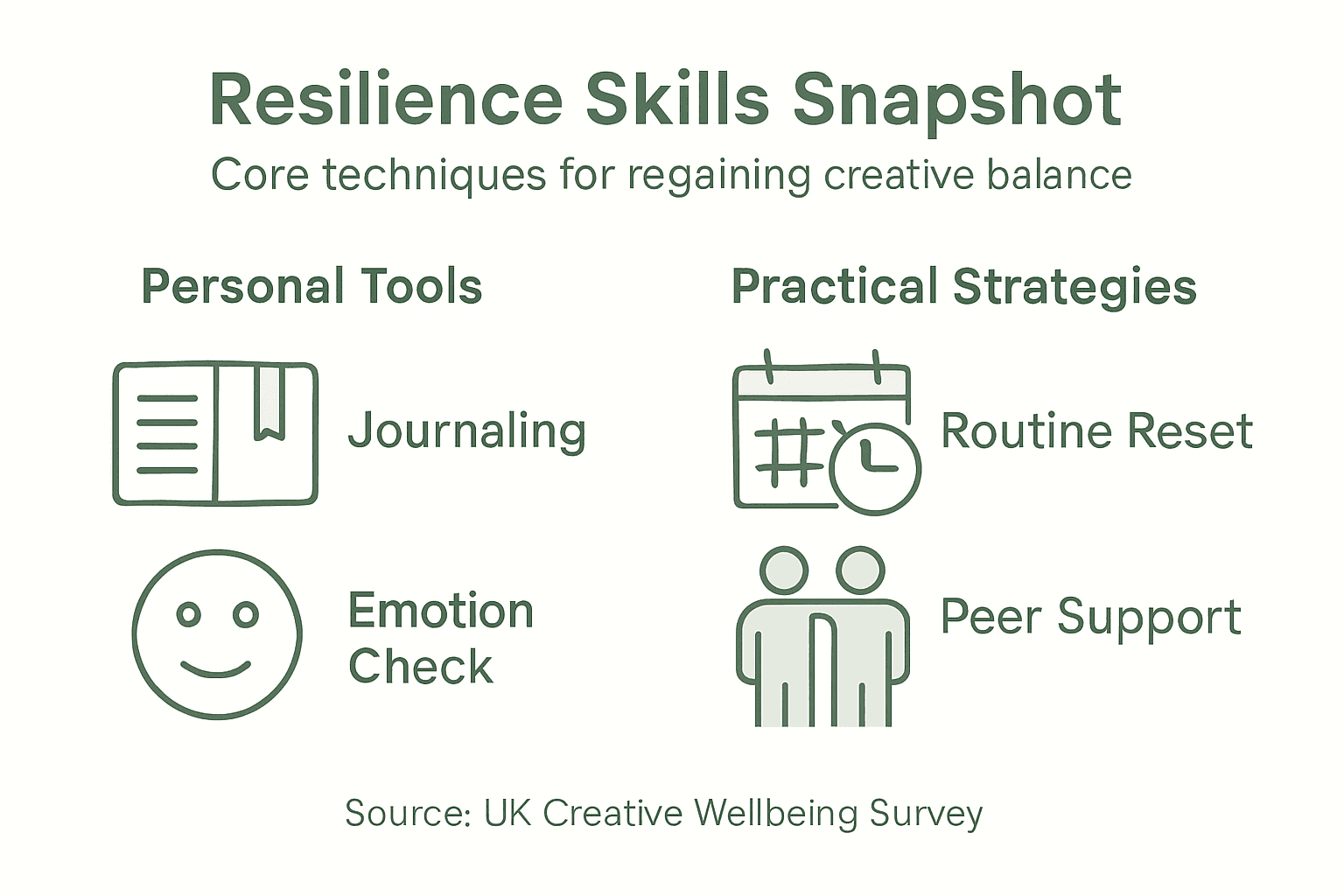
Pro tip: Create a personal resilience journal to document professional challenges, tracking your emotional responses and developing constructive coping strategies.
Pitfalls and Misconceptions to Avoid
Understanding resilience dynamics requires challenging several pervasive misconceptions that can undermine effective mental health strategies. Many creative professionals mistakenly view resilience as an innate, fixed characteristic rather than a dynamic skill set that can be developed and refined through intentional practice. This fundamental misunderstanding often leads individuals to believe they are either naturally resilient or permanently vulnerable, overlooking the potential for meaningful psychological growth and adaptation.
Another critical pitfall involves reducing resilience to simplistic concepts like ‘toughening up’ or ‘bouncing back’ from challenges. Creative professionals frequently misinterpret resilience as a requirement to suppress emotional responses or endure unlimited stress without acknowledging their genuine psychological needs. Such approaches can lead to burnout, emotional disconnection, and a diminished capacity for creative expression. True resilience involves developing nuanced emotional intelligence, understanding personal boundaries, and creating sustainable strategies for managing professional pressures.
Perhaps the most damaging misconception is treating resilience as a uniform, one-size-fits-all approach that ignores individual differences and contextual complexities. Different creative professionals require tailored strategies that consider their unique psychological makeup, professional challenges, and personal history. Effective resilience training must recognise the intricate interplay between individual coping mechanisms, environmental factors, and systemic workplace dynamics. Successful interventions demand a holistic, personalised approach that respects the complexity of human experience and supports individual growth pathways.
Here is a comparison of common misconceptions versus reality about resilience in creative professions:
Misconception | The Reality |
Resilience is innate and cannot be developed | Resilience is a skill that improves with practice |
It means ignoring emotional responses | True resilience embraces and understands emotions |
One-size-fits-all solution exists | Effective strategies must be personalised |
Resilience is simply ‘bouncing back’ after setbacks | It involves growth, adaptation, and self-awareness |
Pro tip: Regularly audit your resilience strategies, recognising that what works today might need adaptation as your professional landscape evolves.
Build Your Emotional Resilience with Practical Coaching Support
Resilience training helps creative professionals regain balance amid stress, burnout, and emotional challenges by developing adaptive coping skills and mental strength. If you often feel overwhelmed by constant pressure or struggle to maintain emotional regulation in your creative work, you are not alone. The article highlights how recognising personal triggers, reframing setbacks, and building a holistic resilience toolkit are vital steps to protect your mental wellbeing. At Tom Ryder Wellbeing, we understand these challenges and offer tailored Emotional Resilience Coaching and Stress Management Coaching designed specifically for individuals seeking practical, sustainable ways to cope with professional pressures.
Take control of your mental health journey by exploring personalised coaching that uses the SCALES Model to restore balance across sleep, creativity, activity, awareness, grounding, and social connection. Whether you are a musician, creative professional, or someone dealing with work–life imbalance, our Wellbeing Coaching UK offers clear steps to help you build resilience that lasts. Visit Tom Ryder Wellbeing today to book your free consultation and start transforming stress into strength.
Frequently Asked Questions
What is resilience training for creative professionals?
Resilience training is a strategic approach aimed at developing psychological flexibility and adaptive capacity among creative professionals. It equips individuals with skills to recover, learn, and grow when faced with challenges, focusing on emotional regulation, cognitive reframing, and building a growth mindset.
How can resilience training support mental wellbeing in creative roles?
Resilience training supports mental wellbeing by providing adaptive coping mechanisms that enhance emotional regulation, boost confidence, and strengthen social support networks. It helps creative professionals effectively manage stress and anxiety, fostering a balanced perspective on workplace challenges.
What techniques are commonly used in resilience training?
Common techniques in resilience training include emotional awareness development, problem-solving skills, cognitive behavioural methods, and building social support networks. These methods are typically delivered through group workshops, individual coaching, or experiential learning programmes, tailored to the needs of creative professionals.
What are common misconceptions about resilience in creative professions?
Common misconceptions include the belief that resilience is an innate trait, that it requires suppressing emotions, and that there is a one-size-fits-all solution. In reality, resilience is a skill that can be developed, involves embracing emotions, and requires tailored strategies that consider individual differences and contextual complexities.
Recommended
Comments