


Mindset Coaching: Regaining Work-Life Balance in the UK


More than half of british professionals report that workplace stress and burnout have disrupted both their career progress and personal wellbeing. For many in Essex, the struggle to maintain balance is not just exhausting, it is deeply frustrating. Mindset coaching offers a clear, actionable path to help you regain clarity, reshape negative thought patterns, and rebuild your confidence so you can thrive in your work and personal life.
Table of Contents
Key Takeaways
Point | Details |
Mindset Coaching vs. Therapy | Mindset coaching focuses on future growth and self-empowerment, whereas therapy addresses past traumas and healing. |
SCALES Model for Wellbeing | The SCALES Model integrates six pillars of wellbeing—Sleep, Creative, Active, Listen, Earth, and Social—to enhance personal development. |
Effective Stress Management | Mindset coaching offers techniques to transform workplace stress into opportunities for growth and improved professional relationships. |
Choosing the Right Coach | Selecting a mindset coach should involve assessing qualifications and ensuring compatibility to maximise personal growth outcomes. |
Defining Mindset Coaching and Its Purpose
Mindset coaching is a transformative process designed to help individuals reframe their thinking patterns and overcome mental barriers preventing personal and professional growth. Unlike traditional therapy, which often focuses on past experiences, mindset coaching explores why individuals think and behave in specific ways and provides practical strategies for positive change.
At its core, mindset coaching addresses the underlying beliefs and thought patterns that shape an individual’s perception of challenges, opportunities, and personal potential. A skilled mindset coach works collaboratively with clients to identify self-limiting beliefs, challenge negative thought cycles, and develop more empowering mental frameworks. This approach recognises that our thoughts directly influence our actions, emotional responses, and ultimately, our life outcomes.
The primary purpose of mindset coaching centres on personal transformation through conscious psychological restructuring. By helping clients understand the connection between their thoughts, emotions, and behaviours, coaches enable individuals to develop greater self-awareness, emotional resilience, and strategic thinking. This method is particularly beneficial for professionals experiencing workplace stress, career transitions, or personal development challenges.
Pro Tip for Mindset Transformation: Start a daily reflection journal where you document your thought patterns, identifying recurring negative beliefs and consciously reframing them into constructive, growth-oriented perspectives. This simple practice can significantly accelerate your mindset coaching journey.
How Mindset Coaching Differs From Therapy
Mindset coaching and traditional therapy represent distinctly different approaches to mental wellness, each serving unique purposes in an individual’s personal development journey. While therapy typically focuses on processing past traumas, diagnosing mental health conditions, and healing psychological wounds, mindset coaching offers a forward-looking strategy for professional and personal transformation.
The fundamental distinction lies in their methodological approach. Therapeutic interventions are often clinical, emphasising diagnostic frameworks and treating specific psychological conditions through structured psychological techniques. Mindset coaching, conversely, operates as a collaborative partnership centred on personal empowerment, goal achievement, and proactive psychological development. Coaches work with clients to identify limiting beliefs, develop strategic thinking patterns, and create actionable plans for overcoming professional and personal challenges.
Another critical differentiator is the time orientation of these practices. Traditional therapy frequently explores historical experiences to understand present psychological patterns, whereas mindset coaching maintains a robust future-focused perspective. Coaches help clients design clear roadmaps for personal growth, challenging existing thought structures and enabling individuals to reframe obstacles as opportunities for development. This approach is particularly potent for professionals seeking to enhance their emotional resilience, strategic thinking, and overall life satisfaction.
Pro Tip for Effective Personal Development: Choose your support method strategically by assessing your current needs - seek therapy for deep-rooted psychological healing and opt for mindset coaching when you require actionable strategies for personal and professional advancement.
Here’s a concise overview comparing mindset coaching and traditional therapy:
Aspect | Mindset Coaching | Traditional Therapy |
Focus | Future growth and achievement | Healing past experiences |
Orientation | Goal setting and action planning | Exploration of personal history |
Methodology | Collaborative and strategic | Clinical and diagnostic |
Typical Client Needs | Professional development, self-improvement | Mental health recovery, trauma support |
The SCALES Model: Six Pillars of Wellbeing
The SCALES Model represents a holistic approach to personal wellbeing, offering a comprehensive framework for individuals seeking to restore balance and enhance their overall quality of life. Holistic wellbeing goes beyond traditional wellness strategies by addressing interconnected aspects of human experience, providing a nuanced pathway to personal transformation.
Each pillar of the SCALES Model represents a critical dimension of human wellness, designed to work synergistically. Sleep focuses on rest and recovery, ensuring individuals have the physiological foundation for emotional resilience. Creative elements encourage personal expression and emotional processing through artistic or meaningful activities. The Active pillar emphasises physical movement and its direct correlation with mental health. Listen promotes self-awareness by teaching individuals to tune into their internal emotional and physical signals.
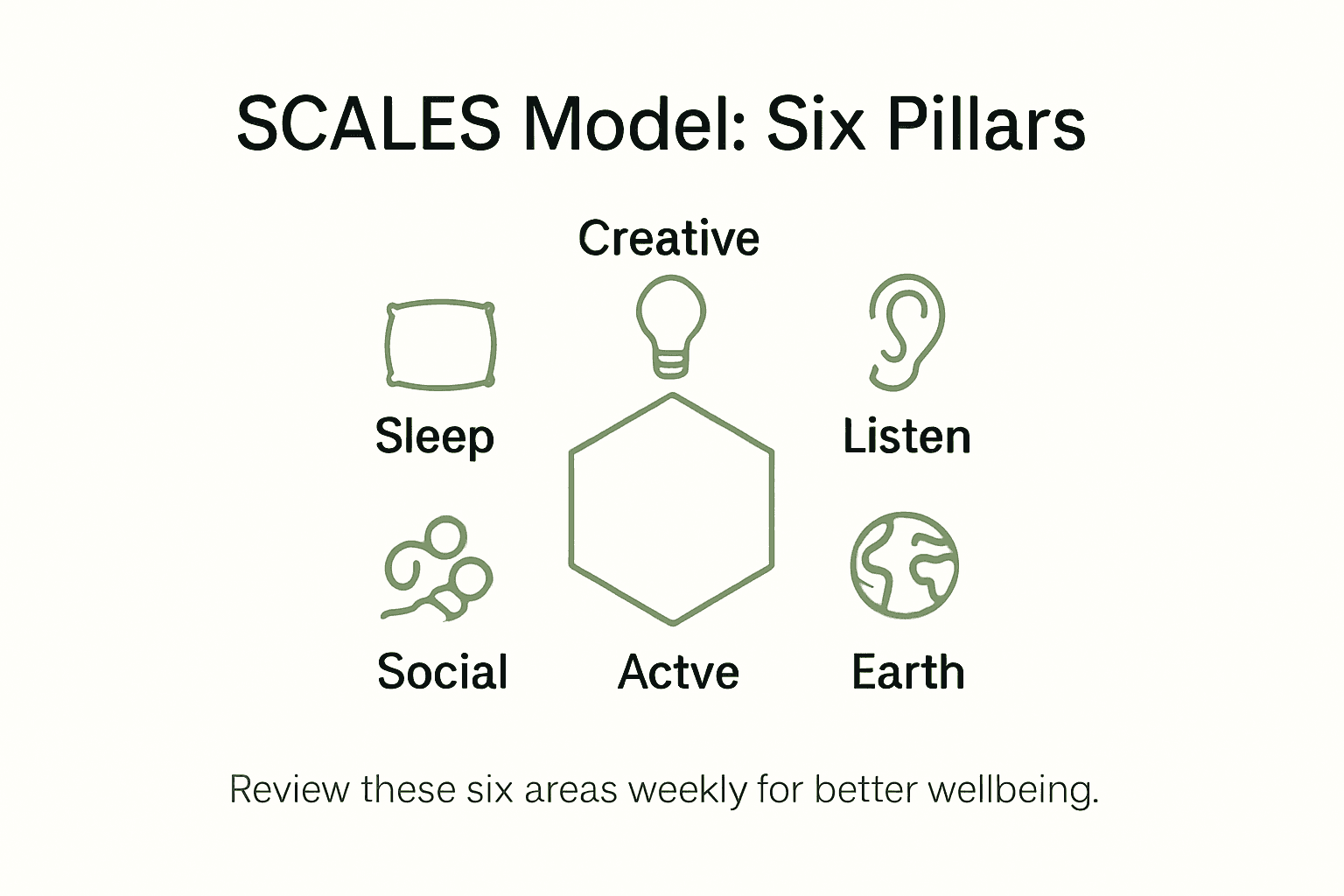
The final two pillars, Earth and Social, complete this integrative approach. The Earth component grounds individuals through connection with natural environments and mindfulness practices, while the Social pillar recognises the fundamental human need for meaningful interpersonal connections. By addressing these six interconnected domains simultaneously, the SCALES Model provides a robust strategy for professionals seeking comprehensive personal development and work-life integration.
Pro Tip for Holistic Wellbeing: Conduct a weekly personal audit across all six SCALES dimensions, identifying which areas need most attention and developing targeted strategies for gradual, sustainable improvement.
Below is a summary of the six pillars in the SCALES Model and their main contributions to wellbeing:
Pillar | Area Addressed | Primary Benefit |
Sleep | Rest and recovery | Enhances resilience |
Creative | Emotional expression | Facilitates stress release |
Active | Physical movement | Supports mental health |
Listen | Self-awareness | Promotes introspection |
Earth | Connection to nature | Grounds and calms the mind |
Social | Relationships | Builds support networks |
Real-World Uses for Stress and Burnout
Modern professionals increasingly encounter stress and burnout as significant barriers to personal and professional effectiveness, necessitating targeted interventions that address these complex psychological challenges. Practical resilience skills provide essential strategies for managing workplace pressure and preventing emotional exhaustion, offering individuals actionable pathways to regain emotional equilibrium.

In real-world contexts, stress and burnout management extends beyond traditional coping mechanisms. Professionals can leverage mindset coaching techniques to identify root causes of workplace strain, such as unrealistic expectations, poor boundary setting, and unmanaged workload pressures. These interventions help individuals develop personalised strategies for emotional regulation, including cognitive reframing techniques that transform perceived obstacles into opportunities for growth and learning.
Specific applications of stress management coaching include supporting career transitions, navigating high-pressure work environments, and rebuilding professional confidence after periods of prolonged emotional strain. By addressing underlying psychological patterns and implementing structured intervention strategies, individuals can gradually reconstruct their relationship with work, creating more sustainable and fulfilling professional experiences that align with their personal wellbeing goals.
Pro Tip for Stress Resilience: Create a daily 15-minute reflection routine where you consciously acknowledge workplace stressors, challenge negative thought patterns, and intentionally reframe challenges as opportunities for personal and professional development.
Choosing the Right Mindset Coach UK
Selecting an appropriate mindset coach represents a critical decision in one’s personal development journey, requiring careful consideration of multiple professional and personal factors. Understanding the landscape of mindset coaching programmes helps individuals make more informed choices about their wellbeing support, ensuring alignment between coaching approach and personal growth objectives.
Key criteria for selecting a mindset coach include verifiable professional qualifications, demonstrated expertise in specific areas of personal development, and a proven track record of supporting clients through meaningful transformations. Professionals should seek coaches with recognised certifications, practical experience in their specific industry or challenge area, and a holistic approach that goes beyond generic motivational strategies. Importantly, the right coach should demonstrate an ability to create personalised interventions that address individual psychological patterns and workplace dynamics.
The coaching relationship requires significant emotional investment, making personal compatibility a crucial selection factor. Potential clients should prioritise coaches who offer initial consultation sessions, allowing for mutual assessment of coaching chemistry and approach compatibility. This preliminary interaction provides insights into the coach’s communication style, methodological framework, and ability to understand complex personal and professional challenges specific to the individual’s context.
Pro Tip for Coach Selection: Schedule initial consultation sessions with multiple coaches, preparing a list of specific personal and professional challenges to assess their genuine understanding and proposed strategic approach.
Common Pitfalls and What to Avoid
Mindset coaching offers transformative potential, but several common pitfalls can significantly undermine an individual’s progress and emotional investment. Developing resilience requires understanding potential obstacles in personal development strategies, enabling professionals to navigate their coaching journey more effectively.
One primary pitfall involves unrealistic expectations about immediate transformation. Many professionals mistakenly anticipate rapid, dramatic changes without acknowledging the gradual nature of psychological growth. Expecting instant solutions can lead to frustration and premature disengagement from the coaching process. Another critical mistake is passive participation, where individuals attend sessions without implementing recommended strategies or engaging deeply with personal reflection and behavioural modification techniques.
Professionals should also be cautious of coaches who employ generic, one-size-fits-all approaches instead of personalised interventions. Effective mindset coaching demands nuanced understanding of individual psychological landscapes, workplace contexts, and specific personal challenges. Red flags include coaches who rely heavily on motivational platitudes, fail to provide structured accountability mechanisms, or cannot articulate clear, measurable progression frameworks tailored to the client’s unique circumstances.
Pro Tip for Coaching Success: Establish clear, realistic expectations with your mindset coach during initial consultations, discussing specific metrics for progress and agreeing on mutual accountability mechanisms to ensure meaningful personal development.
Regain Your Work-Life Balance with Expert Mindset Coaching UK
If you find yourself overwhelmed by stress, burnout or caught in a cycle of self-doubt and negative self-talk, you are not alone. This article highlights how mindset coaching can transform your thinking patterns and empower you to regain control over your work-life balance. At Tom Ryder Wellbeing, we specialise in practical, grounded coaching that tackles these exact challenges using the proven SCALES Model. Our approach helps you restore harmony across Sleep, Creative, Active, Listen, Earth, and Social pillars to feel more balanced and resilient.
Don’t let stress and overwhelm hold you back any longer. Begin your journey today with Mindset Coaching UK or explore specialised support through our Stress Management Coaching. For a comprehensive approach to your wellbeing and professional growth, visit Tom Ryder Wellbeing and take the first step with a free consultation. Real change starts with clear goals, simple strategies, and a coach who understands your unique experience.
Frequently Asked Questions
What is mindset coaching?
Mindset coaching is a transformative process that helps individuals reframe their thinking patterns and overcome mental barriers to achieve personal and professional growth.
How does mindset coaching differ from traditional therapy?
Mindset coaching focuses on future development and actionable strategies, whereas traditional therapy often explores past experiences and psychological healing.
What are the primary components of the SCALES Model in mindset coaching?
The SCALES Model encompasses six pillars: Sleep, Creative, Active, Listen, Earth, and Social, addressing interconnected aspects of wellbeing for holistic personal development.
How can mindset coaching help manage workplace stress and burnout?
Mindset coaching provides practical strategies to identify root causes of stress and teaches individuals emotional regulation techniques, enabling them to reframe challenges and improve professional confidence.
Recommended
Comments